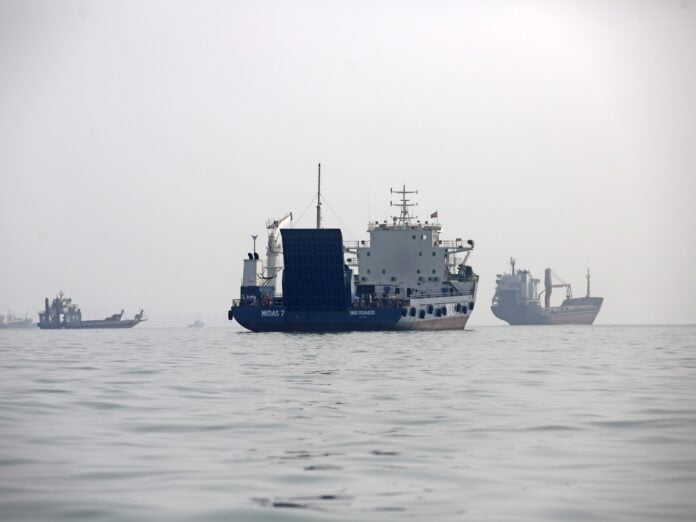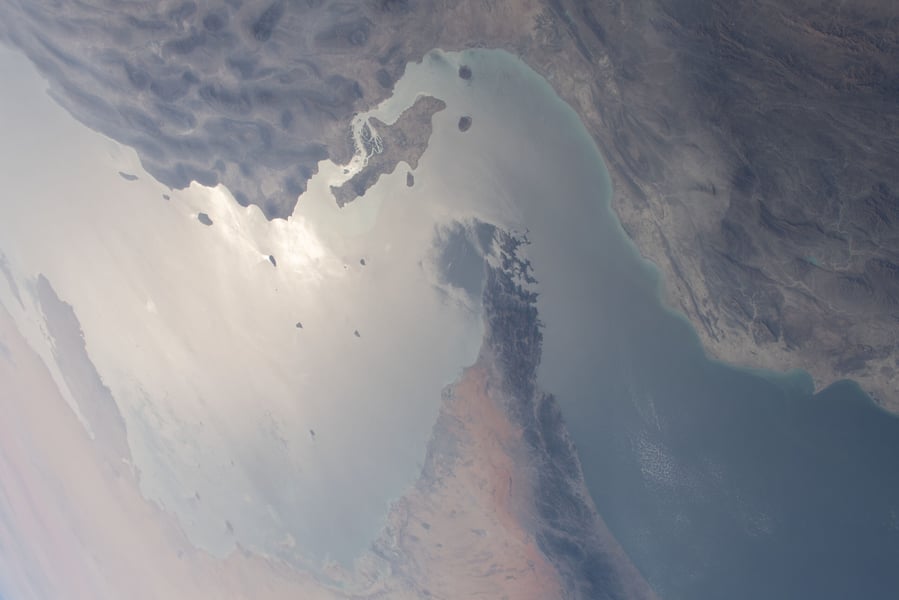

TEHRAN — Iran’s Islamic Revolutionary Guard Corps Navy said a gas carrier struck a naval mine near the Strait of Hormuz on Friday and suffered a powerful explosion, but the vessel’s identity and the condition of its crew were not established in the reports examined.
The force said the ship had ignored repeated warnings and entered a southern passage that Iran considers unauthorised and dangerous. The account places the reported explosion east of the strait, without providing a ship name, flag or operator that would allow the vessel to be independently identified.
Friday’s statement adds another unverified incident claim to a waterway where a separate maritime assessment, issued a day earlier, already described severe threats and restricted traffic. That assessment documents the wider disruption; it does not confirm the newly reported mine strike.
Al Jazeera reported that the IRGC Navy’s public relations office described a massive explosion after the carrier entered the disputed passage. The force said it was managing the strait with “full determination and firmness” and warned that vessels disregarding its restrictions would face a similar fate.
The IRGC also alleged that the carrier had attempted the crossing with protection from US fighter jets. The material reviewed does not independently establish that aircraft escorted the ship or provide a US acknowledgement of the claimed operation. That allegation remains part of the Iranian statement.
The cargo description requires caution too. Al Jazeera identified the vessel as a liquefied petroleum gas carrier, as did Middle East Eye’s account. Without a ship identity or operator confirmation in the material examined, the broader description “gas carrier” avoids treating the precise cargo as independently verified.
Both outlets were reporting the same IRGC statement. Their accounts establish what the force said, rather than providing two separate confirmations of an explosion, its cause or the vessel involved. Neither account supplies a crew list, casualty assessment or independently documented damage survey.
Iran has issued earlier mine-strike claims involving the Strait of Hormuz. Those reports provide context for the latest warning, but they should not be treated as evidence that Friday’s unnamed vessel was one of the ships mentioned in previous incidents.
The separate maritime picture is documented in the Joint Maritime Information Center’s November 12 assessment, published through United Kingdom Maritime Trade Operations. The advisory classified the threat in the strait as severe and said commercial traffic remained below its 2025 baseline, amid vessel attacks, routing pressure and US blockade enforcement.
It listed four recently reported attacks across the Strait of Hormuz and the Persian Gulf, including incidents involving unknown projectiles. The causes described in those entries must not be converted into mine strikes simply because the IRGC’s latest statement refers to a mine. They are separate reports with separate evidential limits.
The assessment’s cumulative total of 181 incidents since March 1 covers the wider Middle East maritime region, not the Strait of Hormuz alone. Its regional scope matters when judging the scale of disruption: that total is not a count of vessels mined in the strait, nor a count of Friday’s reported casualties.
Traffic figures need similar care. The report recorded 135 US-facilitated Hormuz transits over November 8–11 and cited a historical average of about 138 vessels a day. Separately, it described independent tracking observations as showing single-digit to low-double-digit daily crossings. Those figures do not measure the same set of movements.
The report’s methodology distinguishes US-assisted transits from a separate tracking series covering a defined subset of cargo vessels. The figures should therefore not be added together indiscriminately or used to calculate a precise decline in all shipping without matching the coverage and time periods. They support the assessment that normal traffic has not been restored.
The wider confrontation between Iran and the United States has left commercial shipping subject to competing restrictions. The November 12 advisory said the US blockade of Iranian ports continued, while Iranian forces maintained routing pressure around the strait. Iran’s description of a passage as unauthorised reflects its own stated position.
What remains missing from Friday’s account is the basic identification needed to connect the military statement to a particular commercial voyage. The material examined does not include confirmation from a shipowner or flag state, and it does not establish who laid the alleged mine. The crew’s condition remains unknown in those reports.