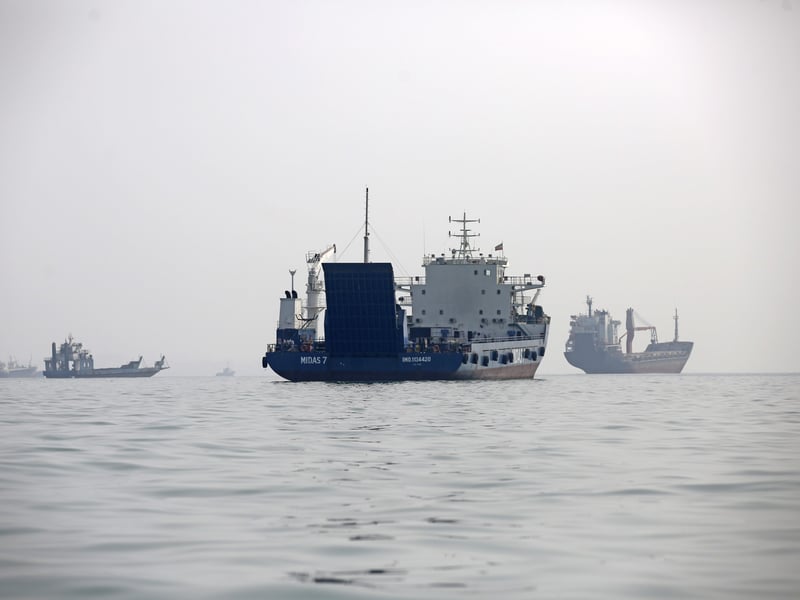

DOHA — Nakilat said its LNG carrier Al Mayeda remained operational after unidentified objects hit the ship in the Persian Gulf on October 30. The company reported no crew injuries or environmental impact.
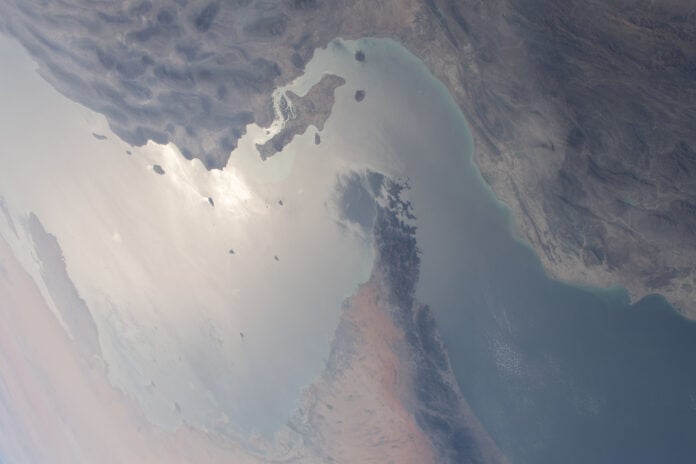
The incident occurred on Friday evening while the vessel was transiting the waterway. Nakilat said it was assessing the impact and coordinating with the crew and regional maritime security authorities.
Its account leaves the extent of any damage unclear. Describing a ship as operational does not establish that it escaped damage, and the company supplied no detailed inspection findings. It also did not identify what struck the vessel or who was responsible.
In its incident statement, Nakilat said Al Mayeda was “hit by unidentified objects” while passing through the waterway, which it called the Arabian Gulf. The statement described the vessel as safe and said the company remained in direct contact with those on board.
Qatar News Agency reported the company’s account on November 1. That report relayed Nakilat’s statement rather than a separate inspection of the ship. The assurances about its condition should therefore be read as the owner’s assessment, not independent confirmation.
Al Mayeda is a Q-Max LNG carrier with a rated cargo capacity of 266,000 cubic meters. Nakilat identified that capacity in a May 2020 announcement, which also said the company wholly owned the ship. The vessel was delivered in February 2009.
Q-Max is a class of very large LNG carriers, not a label unique to Al Mayeda. Nakilat’s corporate brochure lists 14 Q-Max vessels with capacities ranging from 263,000 to 266,000 cubic meters. Al Mayeda is at the upper end of that range.
The company also operates Q-Flex ships, which carry between 210,000 and 217,000 cubic meters, and conventional LNG carriers with capacities of 145,000 to 174,000 cubic meters. Against a 174,000-cubic-meter vessel, Al Mayeda’s rated capacity is about 53 percent greater. This is a comparison of ship designs, not a measure of the fuel carried on Friday.
Nakilat’s 2025 annual report places its Q-Max vessels within the oil and gas industry. The company said it operated and managed Q-Max, Q-Flex, ME-GI and X-DF LNG carriers, alongside floating storage and regasification units and very large gas carriers. Its chief executive also said the fleet remained chartered to leading international energy companies. These disclosures describe the company’s wider operations, rather than Al Mayeda’s individual charter or its cargo on October 30.
Cargo capacity matters because it sets how much LNG a vessel can transport on a fully loaded voyage. It does not reveal whether a ship was full, partly loaded or sailing without cargo when an incident occurred. Nakilat’s statement did not disclose Al Mayeda’s cargo status, loading port or destination.
LNG is natural gas cooled to about minus 162 degrees Celsius so it becomes a liquid for transport. At receiving terminals it is warmed back into gas. That process, described in an explanation of LNG supply and receiving facilities, connects the specialist carriers to the wider gas supply chain.
The Q-Max class forms part of Qatar’s established export fleet. QatarEnergy’s description of its shipping network lists 14 Q-Max and 31 Q-Flex carriers on long-term charter, alongside conventional vessels. It says the fleet serves customers in the Far East, the Indian subcontinent, Europe and the Mediterranean.
QatarEnergy describes the development of Q-Flex and Q-Max ships as a technological milestone that increased the typical maximum LNG cargo capacity from about 150,000 to 266,000 cubic meters. Those figures explain the scale of the class involved in Friday’s incident. They do not establish which market Al Mayeda was serving on this voyage.
The ship also has a documented role in Nakilat’s move to bring more vessel management in-house. In May 2020, the company said Al Mayeda was the first carrier transferred in the second phase of a management transition from Shell International Trading and Shipping Company Limited. Its technical management passed to Nakilat Shipping Qatar Limited.
That announcement establishes the vessel’s management history; it is not evidence about the cause of the October 30 incident. Neither the ship’s size nor its ownership identifies the objects that hit it. The incident statement did not name a weapon, an attacker or a precise location.
The commercial effect is also undisclosed. The statement gave no repair timetable and did not say whether the vessel’s delivery schedule had changed. Its reported ability to operate cannot, on its own, establish that a shipment was unaffected. Nor does the statement support a claim that cargo was lost or a delivery cancelled.
For now, the disclosed response is an assessment coordinated with the vessel and maritime security authorities. Nakilat did not name those authorities or describe any assistance they provided. A detailed account of the affected parts of the ship, and any repairs they require, has yet to be supplied in the company’s incident statement.