
WASHINGTON — The wooden crates moving across the Caspian Sea are carrying more than trade goods. Russia has been routing explosives, drone components and battlefield ammunition to Iran through the inland sea, in a transfer operation that Western officials say is rebuilding the military arsenal Tehran depleted fighting the United States and Israel this year.
A European government document obtained by NBC News, confirmed by a Western official, describes shipments that include trinitrotoluene, the explosive compound known as TNT, alongside drone parts and ammunition bound for Iran. The material represents exactly what Tehran needs to reconstitute the capabilities that American and Israeli strikes spent months targeting in the Iran war, and the route chosen to move it was selected precisely because Western forces cannot interdict it.
How far Iran’s reconstruction has advanced, and how much material has moved, remains outside what Western intelligence is publicly willing to quantify.
The Caspian is landlocked and bordered only by Russia, Iran, Kazakhstan, Turkmenistan and Azerbaijan. Under international convention, the sea falls exclusively within the jurisdiction of those five nations. No Western naval force has legal access to its waters, no allied warship can intercept cargo transiting between Russian and Iranian ports, and ships can turn off their Automatic Identification System transponders without attracting the kind of attention such a move would draw on open ocean. The route sidesteps every chokepoint the United States can monitor.
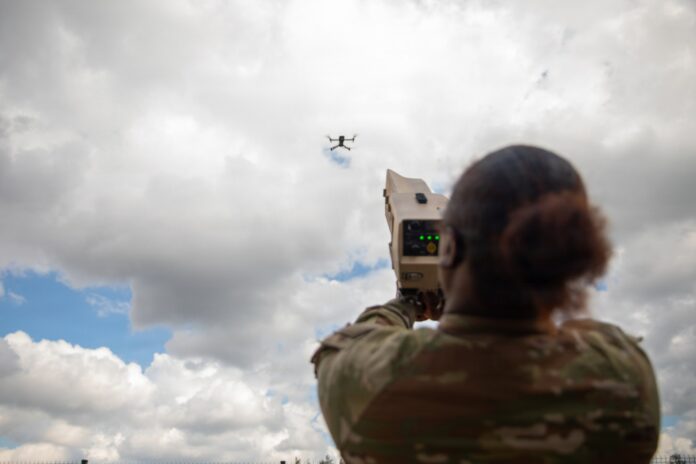
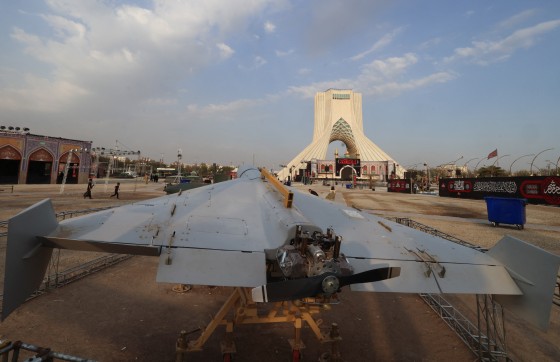
Iran had built its drone program, centered on the Shahed-type kamikaze drones it had also supplied in bulk to Russia for strikes against Ukrainian infrastructure, into one of the most consequential asymmetric capabilities in the region before the Iran war damaged it. Rebuilding requires exactly what the Caspian transfers are carrying: the explosive material to arm rebuilt drones and the components to reconstruct them.
Russia’s reasons for the shipments extend beyond alliance loyalty. Every Iranian drone that strikes an American position or a Gulf facility draws American attention and resources away from Ukraine. Tehran’s capacity to supply Hezbollah in Lebanon and affiliated groups in Iraq and Syria similarly depends on a rebuilt arsenal, and complications for American Middle East strategy have historically reduced the bandwidth Washington can devote to its operation in Ukraine.
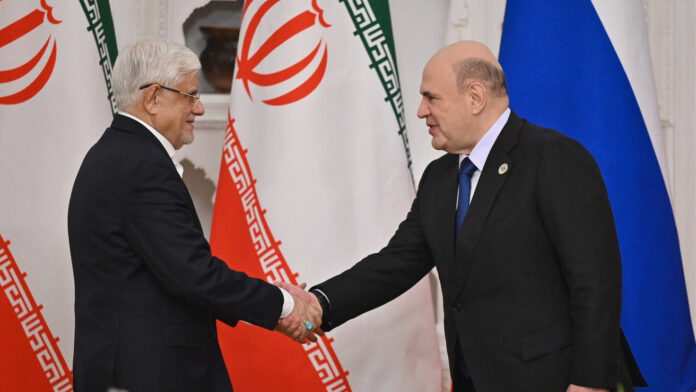
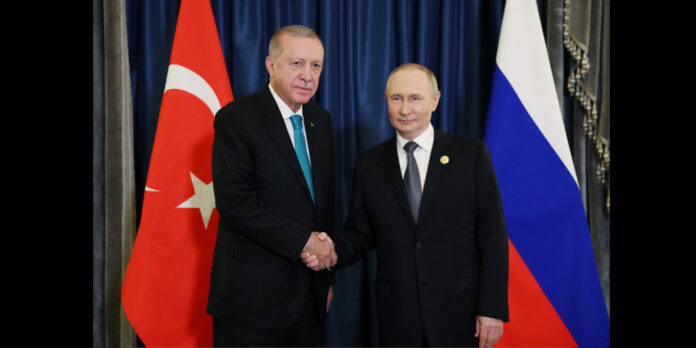
The Moscow-Tehran relationship had for years run primarily one direction: Iranian-manufactured drones flowing to Russian forces, alongside Iranian technical assistance for drone factories established on Russian soil. The European document describes something different. Russia is now actively resupplying Iran, not purchasing from it. That reversal marks a qualitative shift in a relationship that has expanded well beyond the battlefield, with Hamas backing Russia as a Gaza mediator even as Moscow deepens its Tehran ties.
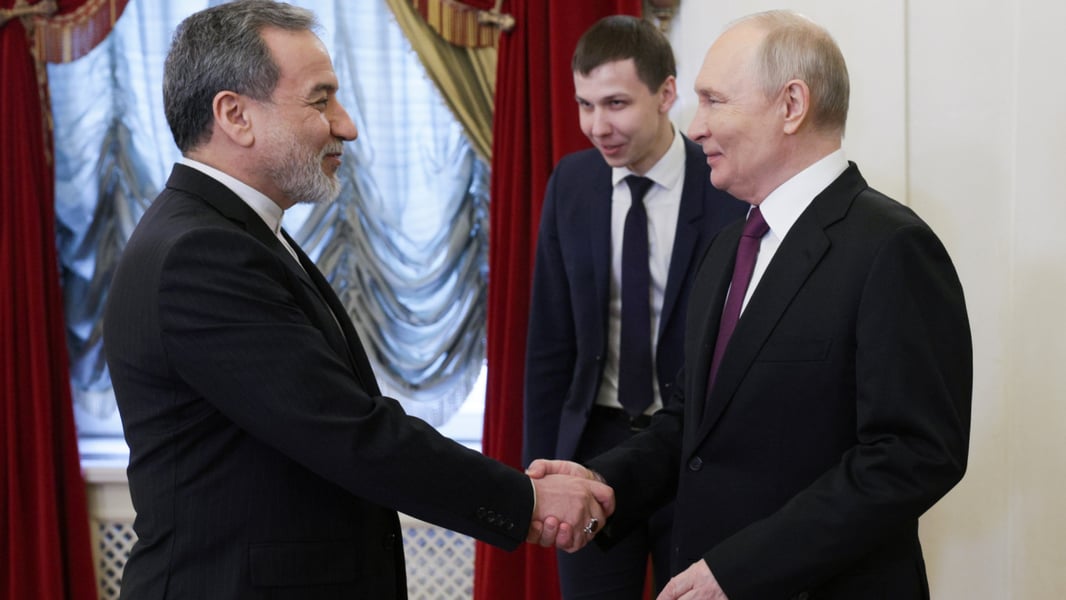
The Times of Israel reported that Israeli airstrikes in March 2026 targeted the Caspian route itself, striking the Bandar Anzali port facility on Iran’s northern coast and destroying Iranian Navy vessels and port infrastructure. Israeli officials characterized the strikes as disruption of the supply line. The NBC News document suggests the transfers have continued or resumed.
The March strikes on Bandar Anzali appear to have forced a temporary rerouting rather than a permanent halt. The five bordering Caspian nations have multiple port facilities between them, and an operation specifically designed to evade Western scrutiny is not easily constrained by airstrikes on a single port.
Iran peace talks have been declared effectively dead by Tehran since Israeli strikes on Beirut’s Ghobeiry district, and no diplomatic mechanism has emerged that could address the Caspian transfers. With no off-ramp in sight, both governments appear to be treating the supply relationship as a durable arrangement rather than a wartime stopgap.
Neither Moscow nor Tehran has commented publicly on the specific shipments described in the document. NBC News reported the document’s existence and its contents, citing a Western official who confirmed the findings. Russian officials have consistently denied providing military material to Iran beyond what was previously acknowledged. Iran has not addressed the state of its arsenal since the American and Israeli strikes.
The central question the document does not resolve is whether the scale of Russian resupply can offset the damage from the original strikes. American officials have stopped short of specific claims about how severely Iranian military capabilities were degraded, partly because post-strike battle damage assessments remain incomplete and partly because overstating the impact creates credibility problems when Iranian capabilities prove more resilient than announced.
What the document confirms is that Iran and Russia are treating the resupply as a strategic priority, the Caspian as the route of choice, and the West as having no practical means to stop it.