
MOSCOW – For nearly two years, one of the quieter arguments inside Gaza’s diplomatic corridor has been about who, exactly, is allowed to try to end the killing. On Sunday, Musa Abu Marzouk, deputy head of Hamas’s political office, put the answer on the record: not Russia, because Israel says so.
“We have consistently advocated for Russia to become one of the mediators in the conflict between the Palestinian resistance led by Hamas and Israel,” Abu Marzouk told RIA Novosti on the sidelines of diplomatic meetings in Moscow, “but the Israeli side has consistently rejected this proposal.”
The statement is short. Its implications are not. At the core of every ceasefire negotiation is a question that rarely surfaces in official communiqués: who decides which parties get to sit at the table? Abu Marzouk’s answer – Israel decides – exposes a structural constraint that has shaped, and stunted, every round of Gaza mediation since October 2023. The party that brought about the humanitarian catastrophe retains effective veto power over the composition of the diplomatic process designed to resolve it.
“Any intermediary must be accepted by both sides, and no one can impose an intermediary unilaterally,” the Hamas deputy head said. “That is why Israel’s disagreement prevents Russia from playing a more active role in the Palestinian issue.”
The formal mediators throughout the Gaza ceasefire process have been Egypt, Qatar, and the United States – a roster that, from the Palestinian side, doubles as a list of parties with close strategic ties to Washington. Hamas has never hidden its desire to broaden that group. Sunday’s statement to RIA Novosti came days after Abu Marzouk led a Hamas delegation to the Russian Foreign Ministry, where, according to Middle East Monitor, the group held “extensive political consultations” with Deputy Foreign Minister Georgy Borisenko on ceasefire negotiations and international efforts to prevent a renewed outbreak of war. The argument for Russian involvement has not changed in years; what has changed is the urgency with which Hamas is pressing it, as Israeli strikes have continued to kill senior figures connected to the ceasefire process.
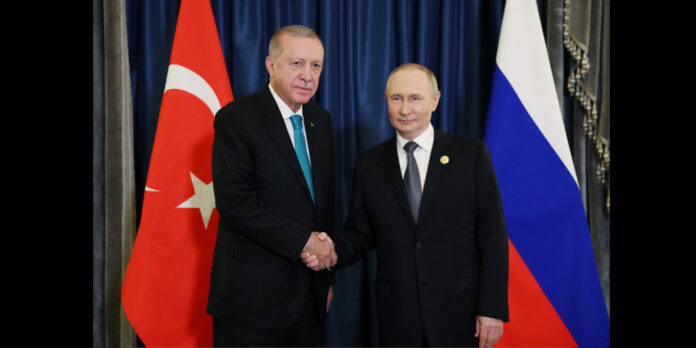
Russia’s exclusion from the Gaza mediation track has not, however, meant exclusion from the Gaza diplomacy landscape altogether. In January, President Trump invited Vladimir Putin to join the newly announced Gaza “Board of Peace” – a governance and reconstruction oversight body chaired by Trump himself. The Kremlin confirmed the invitation and said it was reviewing the details. The offer generated immediate alarm in Western capitals. British Foreign Secretary Yvette Cooper called Putin “not a man of peace,” CNN reported, while a former deputy US ambassador to the United Nations warned that Russia would use board membership to undermine the UN and sow further divisions in Western alliances. The UK, like most G7 states, declined to join the board partly over the question of Russia’s potential role.
That tension – Washington willing to seat Russia at a governance table, Israel unwilling to allow it anywhere near a mediation table – sits unresolved at the center of Gaza’s diplomatic architecture. Netanyahu accepted the Board of Peace invitation while simultaneously, according to Abu Marzouk’s account, blocking Russian involvement in the ceasefire mechanism itself. The distinction matters: oversight of reconstruction is one kind of influence; participation in negotiating the terms of a ceasefire is another, closer to the conflict’s raw edge.
For Palestinians, the preference for Russian involvement is grounded in a calculation that has not changed in years. Moscow has not supplied Israel with weapons, has not provided the diplomatic cover that allowed the operation in Gaza to continue as long as it has, and has abstained rather than vetoed at key moments in the UN Security Council. That is not a record of friendship, but from Gaza it looks different from Washington’s record. Whether Russia could actually deliver meaningful mediation is a separate question that Abu Marzouk did not address – and it is the one that matters most, though it goes unanswered here.
What Sunday’s statement does clarify is the rules of the game as Hamas understands them. Both parties to a conflict must agree on a mediator. Israel has said no to Russia, consistently and repeatedly. That veto is not a legal ruling – it is a political fact – but it operates with the force of law in a process that has no enforcement mechanism and no tribunal. The US, Egypt, and Qatar cannot insert a mediator Israel refuses to accept, and so Russia stays out.
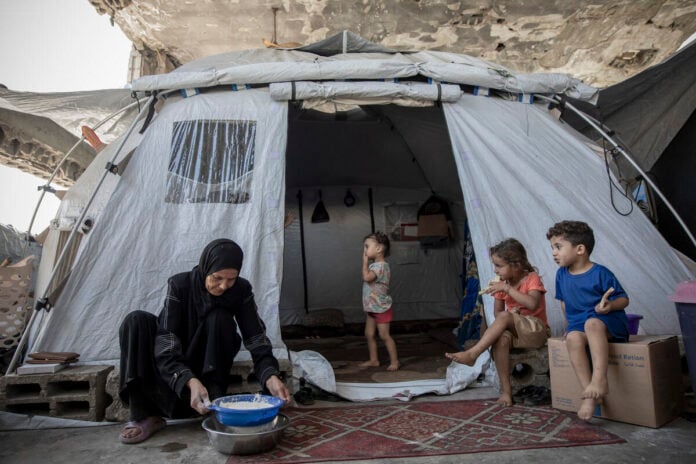
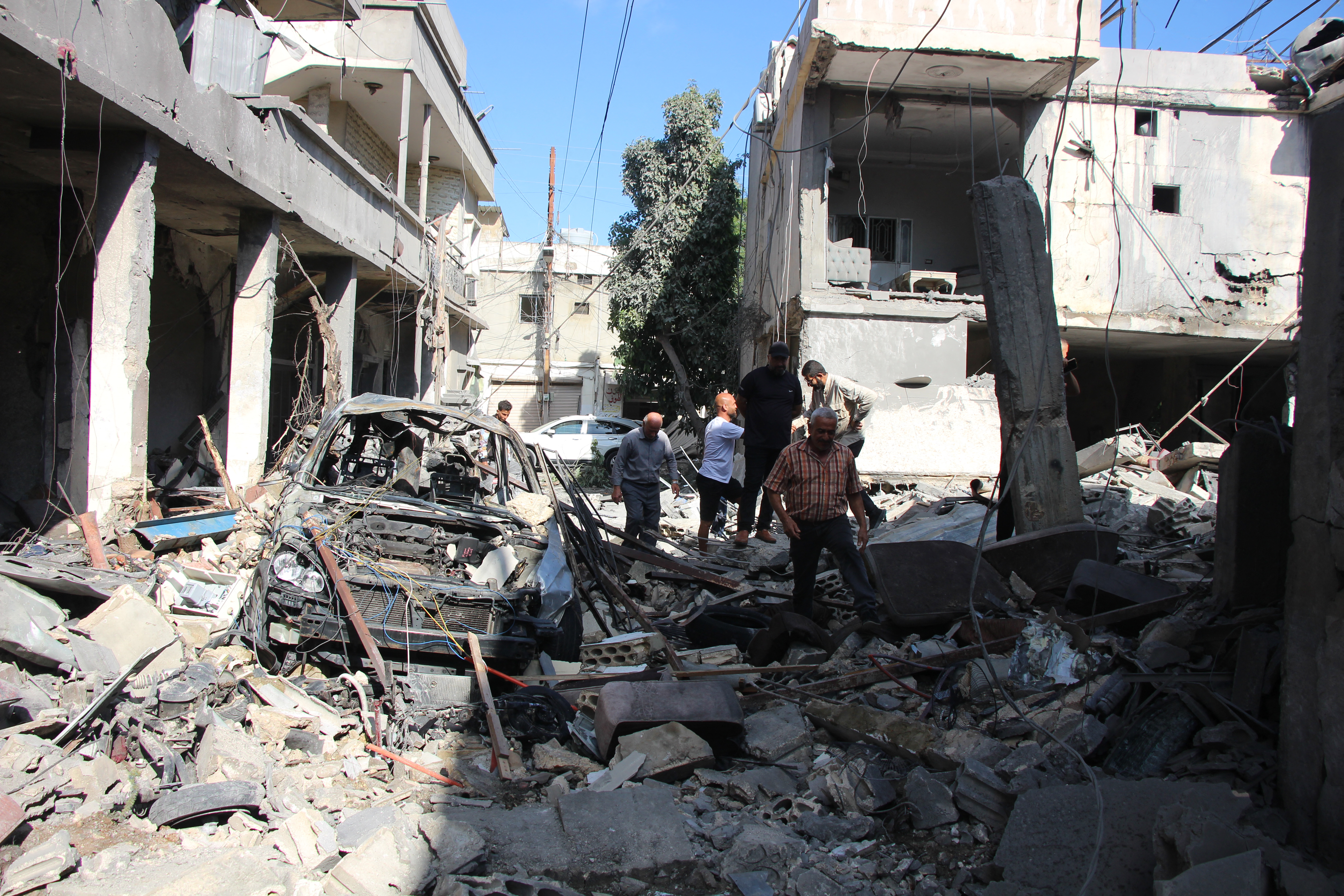
Israel has not issued a public response to Abu Marzouk’s comments. Its government has faced a cascade of competing diplomatic pressures in June 2026 – the collapse of the Lebanon ceasefire, Iranian ballistic missile strikes on the north, and an escalating public rift with Washington over Netanyahu’s military decision-making – that have left Gaza mediation several rungs below the immediate agenda. Meanwhile, 132,000 children under five in Gaza face acute malnutrition through September 2026, a humanitarian toll that grows with each week the diplomatic architecture remains deadlocked. Whether that means a door to Russia’s involvement is quietly opening, or remains firmly shut, is something Abu Marzouk himself acknowledged cannot be determined from Hamas’s side of the negotiating table.
“The decision to involve Russia in negotiations,” he said, “does not depend on us.”
That single sentence, more than anything else Abu Marzouk said, captures what Gaza’s diplomatic deadlock actually looks like from the inside: a party that wants a different process, facing a structural constraint it cannot move, speaking into a room where the party holding the veto is not listening.