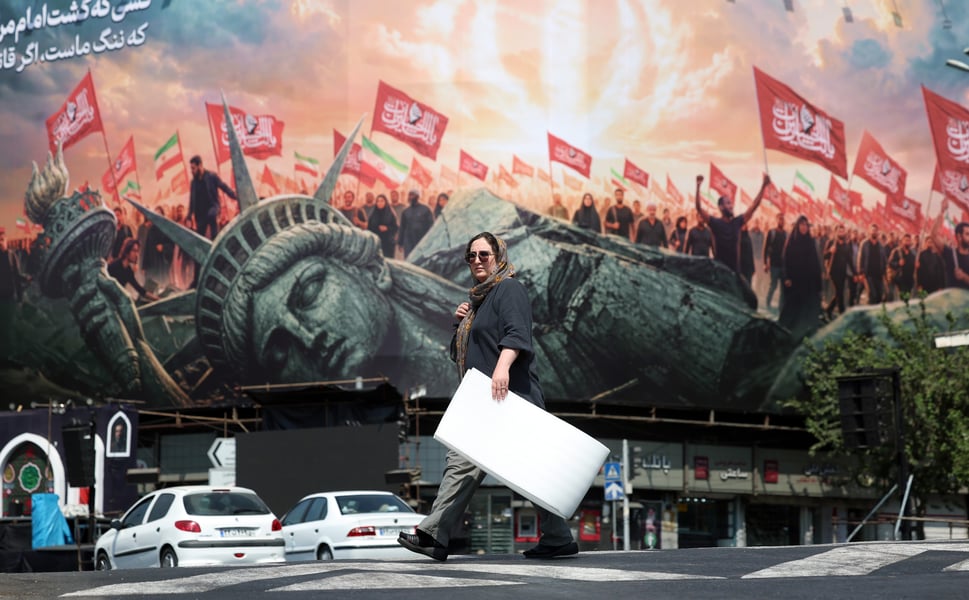

DUBAI — Every tanker captain transiting the Strait of Hormuz on Monday will be operating in a legal vacuum. The memorandum of understanding that ended three months of war between the United States and Iran expires that day, and neither side has made any move to replace it.
The agreement, signed in Islamabad on June 17 by President Donald Trump and Iranian President Masoud Pezeshkian following Pakistan-hosted mediation, was supposed to hold for sixty days while negotiators produced a final settlement. No settlement was produced. Both governments accuse the other of violating the terms before the ink was dry. The sixty days run out Monday.
Iran’s Foreign Minister Abbas Araghchi was unambiguous about where Tehran stands. “We have not yet made a decision to restart negotiations with the United States,” he stated on August 15. The statement carried the particular weight of a foreign minister ruling out talks two days before his country’s ceasefire agreement expires, as Al Jazeera reported.
The MoU had required Iran to clear mines from the Strait of Hormuz, allow ships to pass without charge for sixty days, and reaffirm its commitment to not pursuing nuclear weapons, while negotiating enrichment limits in a final deal. In exchange, the United States agreed to end its naval blockade within thirty days, withdraw forces stationed near Iran after a final deal, and provide a reconstruction package of at least $300 billion, alongside sanctions termination and access to frozen assets. By June 27, barely ten days after signing, Trump was calling Iranian strikes “a foolish violation” of the ceasefire. On July 7, he declared the agreement “over.” The Pentagon fired on a cargo vessel it alleged was violating American blockade measures.
Iran’s Parliament Speaker Mohammad Galibaf was not conceding defeat. “I can say with complete conviction that we truly emerged victorious in this war,” he told legislators, framing the ceasefire as a product of Iranian military resilience, not American leverage. The rhetoric on both sides has since hardened considerably. Trump has announced plans to declare the Strait of Hormuz territory of the United States, a claim without precedent in international maritime law and one that would effectively assert American sovereignty over a waterway that borders Iran, Oman, and the United Arab Emirates. Iranian Deputy Foreign Minister Kazem Gharibabadi rejected the claim in stark terms: “The Strait of Hormuz has been Iranian, is Iranian, and will remain Iranian.” Treasury Secretary Scott Bessent has promised what he called unprecedented economic measures against Tehran.
Neither posture accounts for the constraints that both sides face. Barbara Slavin, a fellow at the Stimson Centre with decades of Iran policy experience, noted that the United States has substantially depleted its military resources through the conflict: interceptor missiles, strategic petroleum reserves, and prolonged aircraft carrier deployments that strain the logistics of sustained naval presence. Few escalation options beyond economic pressure remain, she assessed, a reading that gives the Bessent threat more credibility than the Hormuz territorial claim.
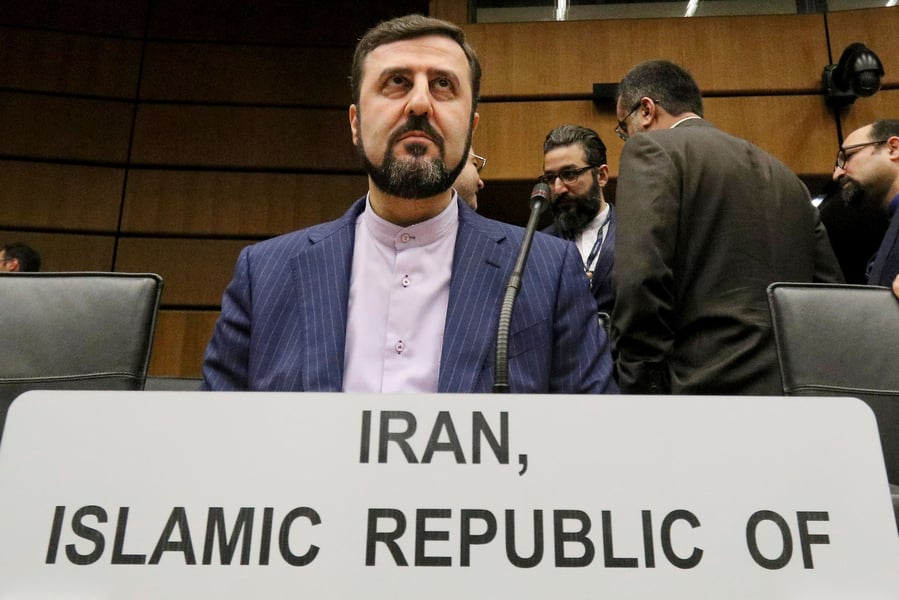
Iran, meanwhile, has its own vulnerabilities. The reconstruction package it was to receive has not materialized. Its economy, battered by the war and by sanctions that predate the conflict, has no obvious alternative to a negotiated settlement that eventually restores oil exports. Tehran has consistently attributed the ceasefire’s breakdown to American non-compliance. But the economic cost of non-resolution falls heavily on Iran’s population.
The Strait of Hormuz carries approximately twenty percent of the world’s traded oil. For India, which imports roughly eighty percent of its energy needs and sources much of that supply from Gulf producers, the waterway’s status is not an abstraction; it is a supply chain that connects directly to petrol prices, industrial output, and energy security policy. A formal breakdown of the ceasefire would push insurance premiums for Gulf shipping back toward the record levels reached during the height of the war. That calculus extends to Japan, South Korea, China, and every nation whose industrial base depends on uninterrupted Gulf oil transit.
The nuclear dimension adds a layer the MoU was explicitly designed to contain. Iran’s commitment to not pursue nuclear weapons, embedded in the agreement’s text, expires with the document unless both sides agree to extend it. Iran has not announced any intention to resume enrichment above previously agreed limits. But it also has not confirmed that it will hold to those limits absent a functioning agreement. That ambiguity, which Iranian officials appear comfortable sustaining, is by itself a form of leverage.
The window for a last-minute extension is effectively closed. Araghchi’s statement on August 15 ruled out imminent negotiations. No senior American diplomat is currently in contact with Iranian counterparts through any acknowledged channel. The Iran war diplomatic fallout continues to reshape US alliances across Asia, while Houthi attacks in Yemen show that regional forces aligned with Tehran remain active regardless of any ceasefire’s status. Analysts who follow the talks closely suggest that any resolution is unlikely before the US midterm elections in November create domestic political space for a quieter approach. What happens to Hormuz shipping in the meantime, and whether Trump’s territorial claim generates a legal and diplomatic confrontation with the waterway’s other littoral states, is the question that the expiry leaves unanswered.