
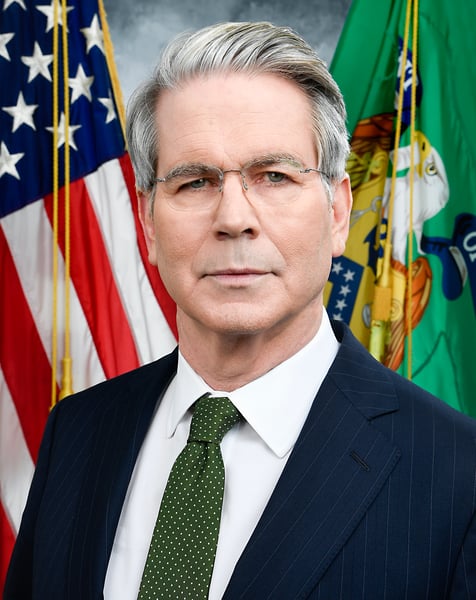
WASHINGTON – An oil tanker belonging to Abu Dhabi National Oil Company was struck Thursday evening inside the Strait of Hormuz, the latest violent chapter in a maritime standoff that Treasury Secretary Scott Bessent declared would soon enter an entirely new phase.
“Watch this space for more announcements coming next week,” Bessent said, “because we are going to apply measures like have never been seen in the history of economic isolation on a country.” The remarks, made in a Newsmax appearance Wednesday evening, landed as Brent crude climbed to $87.93 a barrel, a gain of roughly one percent on the day and five percent over the week, and as ceasefire negotiations between Washington and Tehran remained at a standstill.
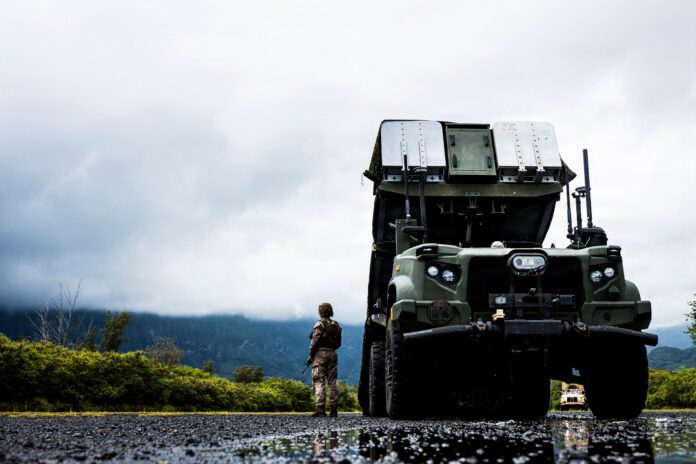
The war Bessent was threatening to intensify began February 28, when joint American and Israeli airstrikes struck Iran. A truce established in June ended three months of fighting. The subsequent talks, however, have failed to produce any framework for a final settlement, leaving both the naval blockade and aerial pressure campaign formally suspended but the underlying hostility intact. The Hormuz standoff has persisted as a consequence: the United States Navy patrols the strait while Iran contests passage, and occasional strikes on shipping have become a recurring feature of a conflict that has not formally resumed but has not ended.
Bessent framed the coming measures as a “one-two punch” paired with the naval blockade of Iran’s ports, which has severely curtailed Iranian crude exports since the fighting began. The United States has imposed approximately 2,200 sanctions on Tehran since 2018, targeting oil revenues, financial institutions, and shipping intermediaries. Whatever Bessent is preparing would, by his own description, exceed anything that has come before.
Defense Secretary Pete Hegseth reinforced the message Thursday, telling reporters the United States could maintain its Hormuz blockade “indefinitely” by rotating Navy ships through the area. The combination of Bessent’s economic announcement and Hegseth’s operational confidence statement appeared coordinated: the message to Tehran was that neither the economic nor the military pressure would relax. Joint Chiefs Chairman General Dan Caine had privately warned Vice President Vance weeks ago that airstrikes could not force Iran to capitulate, but that assessment has not slowed the public messaging from Bessent or Hegseth.
Iran’s Foreign Minister Abbas Araghchi struck a different tone Thursday, describing talks on using Oman’s shipping routes as “very close” to producing an agreement. The Oman route, which would allow some Iranian oil to move through alternative channels, has been discussed as a possible pressure-release valve that might prevent a complete market disruption. Araghchi gave no date for an agreement, and no confirmation came from either Oman or the United States. The absence of an American response to Araghchi’s signal was itself a signal: the administration appeared in no rush to offer Tehran a partial reprieve before Bessent’s announcement next week.
The disconnect between Bessent’s threat of unprecedented economic escalation and Araghchi’s careful language about Oman shipping talks illustrated the difficulty of the moment. Washington is pursuing maximum economic pressure while simultaneously leaving space, at least nominally, for diplomatic movement. Tehran is doing much the same: Araghchi speaks of talks even as Iran’s parliament advances legislation that would give the government authority to restrict Hormuz passage. Both sides are preserving options while applying pressure, and neither has yet accepted the cost of genuine concession.
Washington’s stated goal has also shifted. Early in the conflict, officials spoke of Iran’s military and nuclear programs as the primary targets of the pressure campaign. More recently, cheaper oil for American consumers has moved to the top of the stated priority list, a framing that suggests the administration is increasingly conscious of the domestic economic cost of a prolonged Hormuz standoff. Oil near $88 a barrel, five percent higher on the week, is not yet at the threshold that drives significant American consumer pain, but it is moving in that direction. The administration’s willingness to frame energy prices as the metric of success changes the political incentive structure around any eventual deal.
What Bessent will unveil next week remains unspecified. Analysts who track Iran sanctions have pointed to secondary sanctions on China as the most consequential unexplored option, penalties targeting Chinese companies and financial institutions that continue to buy Iranian crude in violation of American designations. China has remained Iran’s primary oil export customer throughout the war, and American reluctance to move aggressively against Chinese buyers has been a notable gap in the existing sanctions architecture. Whether Bessent’s “unprecedented” measures close that gap is the central question hanging over next week’s announcement. Bessent had claimed in early August that a Hormuz deal could arrive within hours, a prediction that proved wrong. His current assurance of coming economic measures carries the same confidence and, as yet, the same lack of specifics.
The ceasefire that ended June’s fighting had required both sides to step back from positions each held with conviction. Trump’s subsequent refusal to revive the ceasefire framework returned the situation to a state of neither war nor peace, an unstable equilibrium that Bessent’s announcement suggests Washington now intends to press harder. Iran, meanwhile, has managed to sustain some oil exports and preserve enough foreign currency to avoid immediate economic collapse, which explains why the existing 2,200 sanctions have not forced the capitulation American officials initially predicted. If Bessent’s “unprecedented” measures are to succeed where the existing framework has not, the question is which lever has not yet been pulled, and whether pulling it brings Tehran to the table or deeper into confrontation.