
NEW YORK — The S&P 500 climbed to a fresh all-time record Tuesday as Treasury Secretary Scott Bessent said the United States might reach an agreement with Iran within 24 hours to reopen the Strait of Hormuz, a claim Tehran swiftly denied even as a cargo ship was struck by a projectile in the same waterway he promised would open.
The benchmark index rose 1.1 percent, the Dow Jones Industrial Average gained 722 points, or 1.4 percent, and the Nasdaq Composite advanced 1.6 percent by the close. West Texas Intermediate crude dropped roughly 3 percent to near $77.95 a barrel, and Brent crude declined 2 percent to approximately $81. The 10-year Treasury yield held at 4.69 percent.
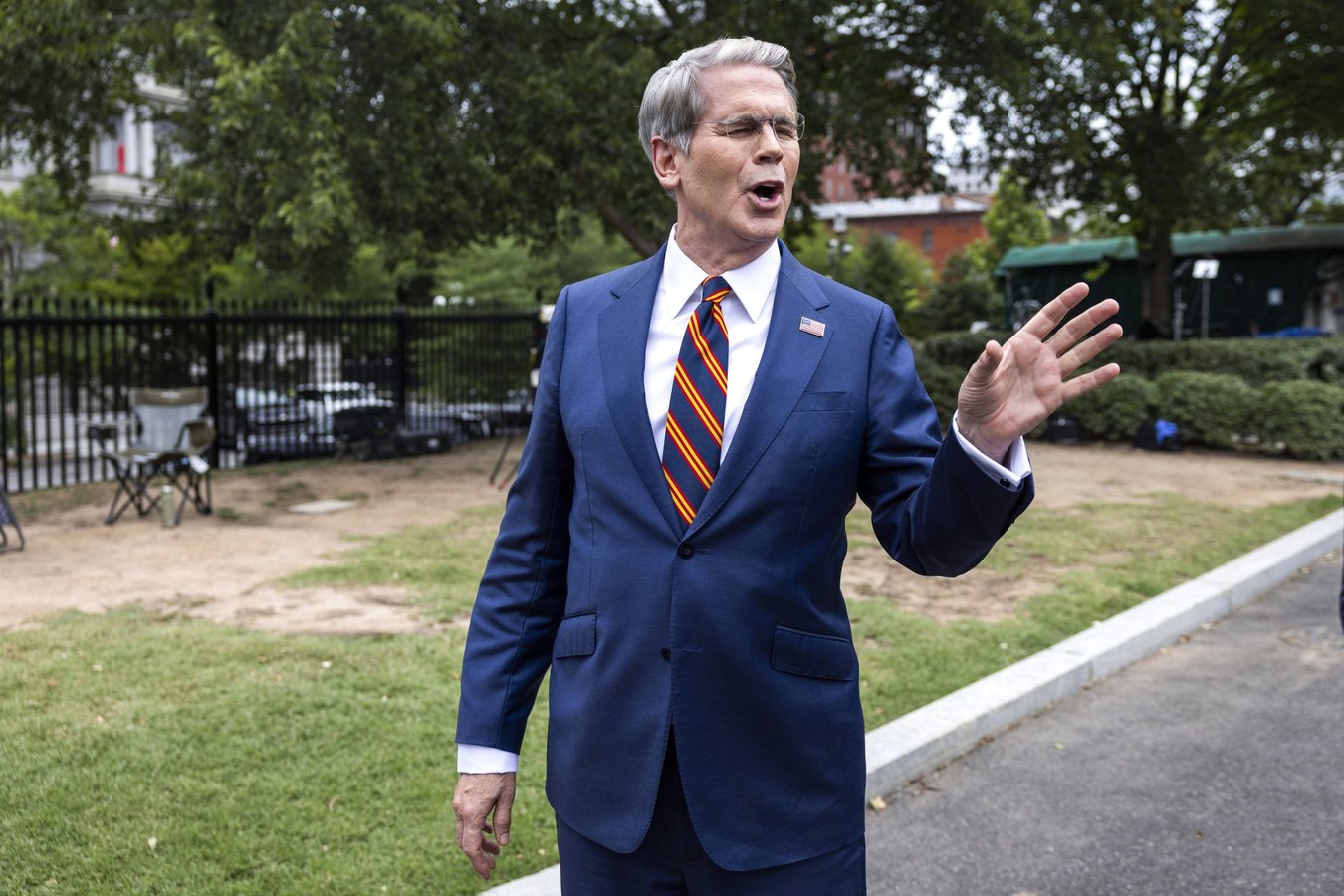
“We are in talks with the Iranians and I think there is a chance we may have a deal today or tomorrow to open the strait,” Bessent said in an appearance on CNBC’s Squawk Box. The Treasury secretary framed the potential agreement as guaranteeing “freedom of movement” for international shipping, according to Daily Sabah. It is a formulation Tehran has never publicly endorsed.
The timing of his remarks was striking. Within hours of Bessent’s broadcast, reports emerged that an unknown projectile had struck a cargo vessel inside the strait, the precise waterway he described as on the verge of reopening. No group immediately claimed responsibility.
Iran’s Foreign Ministry offered no confirmation that talks were progressing as Bessent described. Iranian officials have consistently maintained that any shipping arrangement in the Strait of Hormuz must reflect Tehran’s sovereign authority over the passage: inbound vessels subject to Iranian inspection and control, outbound shipping requiring routing through an Oman-notified corridor with Tehran’s approval. That position remains fundamentally at odds with Bessent’s “freedom of movement” language, Xinhua reported.
That gap proved wide enough to drive one of Wall Street’s stronger sessions of the year.
The Dow’s move marked its largest single-day gain in weeks, built on a simple calculation: if Hormuz opens, global oil supply normalizes, input costs fall, and corporate earnings improve across the industrials, transport, and consumer sectors that depend on stable crude markets. Traders moved before diplomats had anything to show.
For Iran, the subtext was harder to miss. Tehran has watched U.S. markets convulse for weeks over a waterway it controls. The strand of logic runs in one direction only: Wall Street needs Iran to cooperate. Iran has leverage; Washington has urgency. Bessent’s confidence may reflect genuine back-channel progress, or it may reflect a Treasury secretary trying to talk markets into doing what diplomacy has not yet accomplished.
The Hormuz strait carries roughly a fifth of the world’s traded oil. Since U.S. forces launched strikes against IRGC installations in late July, Tehran has used its position at the entrance to the Gulf to reshape shipping costs and insurance rates. Tankers transiting the strait have faced elevated premiums, rerouting costs, and, for some operators, outright refusal from their insurers. A confirmed deal would immediately ease that pressure; an unconfirmed one, as Tuesday demonstrated, could move markets nearly as far, Al Jazeera noted.
An LNG tanker navigated the contested zone last week as US-Iran diplomacy stalled publicly while proceeding quietly through Oman. Whether Tuesday’s cargo ship strike represented a deliberate warning from a party opposed to any deal, or a routine escalation on a waterway that has seen sporadic incidents throughout the conflict, was unclear. No forensic assessment was available by market close.
Bessent addressed the energy market consequences directly. “I’d expect the energy prices to settle back down, which, as I said, will be good for the entire world,” he said. That may be true in the long run. In the short run, the deal he described remains unannounced, its terms undisclosed, and Iran’s acknowledgment of it conspicuously absent.
Trump administration officials have repeatedly called for Tehran’s “total surrender” as the price of ending hostilities, a formulation no Iranian government could publicly accept. Whether any Hormuz arrangement would be described as a deal by Washington and a unilateral operational decision by Tehran, each side claiming what it needs domestically, remained the central uncertainty for analysts tracking the negotiations.
Energy traders noted that even a partial Hormuz arrangement would not fully normalize supply. Iranian crude remains under U.S. sanctions. The core conflict, suspended in the form of an informal ceasefire, has not been formally concluded. Nothing Bessent said Tuesday addressed the underlying military standoff that sparked the crisis in the first place.
What moves oil prices is barrels flowing through a strait. What moves the S&P 500, on a Tuesday in August, is a Treasury secretary saying those barrels might be flowing by Wednesday. The gap between those two statements is where Tuesday’s record close lived.