
TOKYO – Anna Yagi walked into a hotel in Naha early Saturday and never walked out. Within a day a 20-year-old US Marine was in a Japanese cell, and the oldest grievance on Okinawa was back on the desk of Prime Minister Sanae Takaichi.
Okinawa prefectural police arrested Lance Cpl. Devin Jacob Ballard of the US Marine Corps on suspicion of robbery and murder. Investigators say Yagi, a 39-year-old Naha resident, died of suffocation after being strangled, and that her wallet and backpack were gone. Security cameras showed the two entering the hotel together and the Marine leaving alone, police said. An officer spotted him hours later in an entertainment district in Okinawa City, about 25 kilometers away, and he was formally arrested at around 1 a.m. on Sunday. Ballard has denied the allegations and told investigators he knows nothing about the killing.

On Monday she went further. Takaichi opened her policy speech to the Diet, the address that sets her government’s agenda for the autumn session, with the killing in Naha before turning to anything else. Foreign Minister Toshimitsu Motegi had already summoned US Ambassador George Glass and told him he felt strong indignation, while Defense Minister Shinjiro Koizumi called in Lt. Gen. Stephen Jost, the commander of US Forces Japan.
Washington’s answer so far has been condolences. Glass said he had spoken with Japan’s foreign ministry and with Okinawa Gov. Genta Koja, pledging full cooperation. The III Marine Expeditionary Force, the Marine command headquartered on the island, said it takes the allegations very seriously. Asked whether the arrest would bring new limits on troops off duty, 1st Lt. Tyler N. Thomas, a III MEF spokesperson, told ABC News there were “no announcements regarding changes to liberty policies at this time.”
Koja is not prepared to leave it there. On Monday he handed a letter of protest to Lt. Gen. Benjamin T. Watson at the prefectural office in Naha, and he said the case “deals a major shock and adds fear to the Okinawans who have already been forced to live next to US bases,” NPR reported. That phrase, forced to live, is the one that will travel furthest across the island.

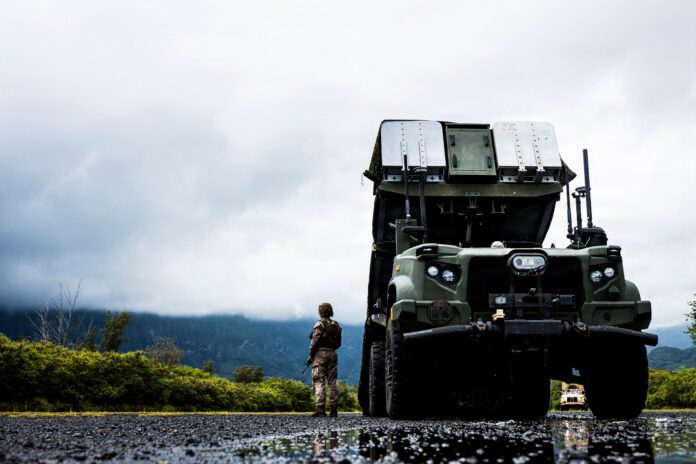
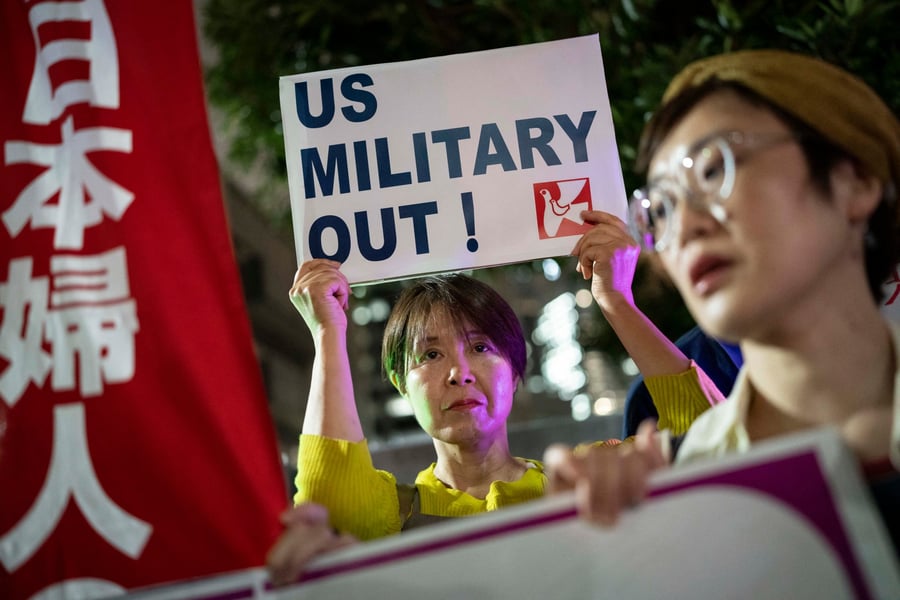
The anger on the streets is older than this case. About 100 people rallied in Naha on Sunday holding placards of strong protest, and on Monday demonstrators outside the Prime Minister’s Office in Tokyo held up signs reading “US Military Out.” Most of the roughly 54,000 American troops stationed in Japan are based on Okinawa. Al Jazeera, citing a Yomiuri Shimbun count, put the number of US military personnel arrested on the island since its 1972 return to Japan at about 6,000, with 80 arrests in 2024 alone, the most in 20 years. US Forces Japan has not confirmed those figures.
Okinawans do not need the numbers to remember. In 1995 the rape of a 12-year-old girl by three American servicemen brought mass protests. In 2017 a former Marine working on a base was sentenced to life in prison for the rape and murder of a local woman. Each case ended with American promises of tighter discipline, curfews and off-base drinking rules, and each promise held until the next case.
The timing cuts straight into Takaichi’s security agenda. Her government has drawn closer to the American military to deter China and is preparing a record Japan defense budget for fiscal 2027. It also wants to move Marine operations from Futenma, which sits in the middle of crowded Ginowan, to Henoko on the island’s quieter northern coast, a plan Okinawans have resisted for nearly three decades. The Naha killing hands that resistance a new name to carry.

Much is still unknown. Police have not said how Ballard and Yagi met, or what happened in the room between their arrival and his departure. No charge has been filed. Washington has not said whether it will accept any new limits on its troops, and Tokyo has not said what American response it would consider enough.
The people who rallied in Naha on Sunday were not waiting for those answers. For them the case is already about something larger than one hotel room: whether a woman on Okinawa can expect the same safety as a woman anywhere else in Japan, with tens of thousands of foreign troops living around her.