
Poland said two missiles and a jet-powered drone fell on its territory in the southeast during Russia’s overnight attack on Ukraine on November 20. No injuries or damage were reported in Poland. Prime Minister Donald Tusk said the incident appeared to be “an intentional provocation” by Russia, and NATO Secretary-General Mark Rutte called it a “grave violation” of Polish airspace.
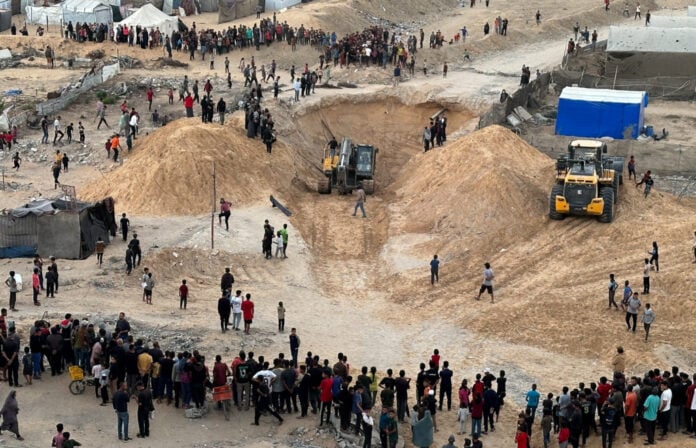
Defence Minister Władysław Kosiniak-Kamysz told a news conference in Warsaw that the missiles came down at Nowy Lipowiec and Rudnik nad Sanem and the drone at Mołodycz, Al Jazeera reported. One missile fell about 35 km (22 miles) from where European troops were holding military exercises. A Kh-101 cruise missile went down about 50 km (31 miles) from the Ukrainian border, and what officials believe was a jet-powered drone hit about 30 km (20 miles) from it. Al Jazeera also reported that security cameras captured the moment a suspected missile struck.
Poland blames Russia
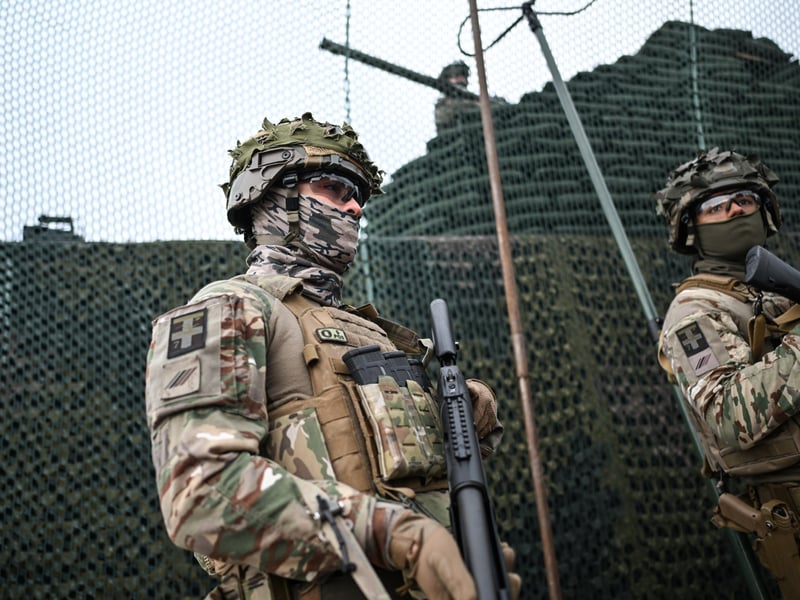
Tusk said the incident was likely timed to coincide with the multinational exercise in southeastern Poland. The two-week drill began on November 9 and is preparing forces for a possible post-war mission in Ukraine. Gen. Ireneusz Nowak, the operational commander of the Polish Armed Forces, said there was no doubt on the Polish side about who was behind the attack, Ukrainska Pravda reported. Russia’s response was not included in the reports reviewed.
Nowak told Rzeczpospolita that the attack unfolded in two stages. Russia first sent drones, including high-speed jet-powered ones, followed by Kalibr and Kh-101 missiles. He said Poland knew where they were launched from, how many there were and their flight paths, and used data provided by Ukraine through the Virazh system.
Swedish pilot did not fire
Two Swedish Gripen jets were operating under NATO’s Combined Air Operations Centre in Uedem, Germany, which issued a condition-based order letting pilots decide for themselves whether to shoot down an object. One pilot tried to intercept an object preliminarily identified as a Kh-101 but could not identify it visually or with the aircraft’s electro-optical systems. Nowak said extremely difficult weather prevented identification, so the pilot did not fire despite having authorisation.
The military tracked 11 objects that could have threatened Polish airspace on November 20, and three crossed the border, Nowak said. None caused casualties. Two Polish F-16s, two Swedish Gripens, a Saab 340 airborne early warning aircraft, a Dutch tanker and ground-based air defences were deployed.
Russia’s attack on Ukraine
President Volodymyr Zelenskyy said Russia fired more than 400 drones and at least 110 missiles, including 27 ballistic missiles, some with cluster warheads. At least eight civilians were killed and more than two dozen wounded, according to Al Jazeera.
Reaction from allies
UK Prime Minister Andy Burnham called the incident “utterly unacceptable.” Germany’s Foreign Ministry called it “yet another example of Russia’s ongoing provocations.” Rutte is expected to visit Poland this weekend. US President Donald Trump had played down earlier incursions hours before, saying Putin had been landing drones in Poland and “a couple of little missiles, by mistake.”
The incident came as the US pushes to revive talks on ending the war. Analyst Scott Lucas told Al Jazeera that it fits a pattern of Russia testing how NATO responds. Harry Nedelcu of Rasmussen Global said Poland is asking for more support under the existing Eastern Sentry mission.
Eastern Herald previously examined NATO’s defence plan presented in Warsaw and the questions surrounding the US military presence in Europe.
Article 4 and Article 5
Article 5 treats an attack on one ally as an attack on all 32 members. Invoking it is a political decision that requires agreement from all members, and it is not automatic. Article 4 provides only for consultations, and Poland used it in September 2025 after Russian drones entered its airspace. Nedelcu noted that Warsaw had stopped short of invoking Article 4 this time. Lucas said the bar for Article 5 is very high and would likely require a sustained attack. Both analysts said direct Russia–NATO confrontation looked unlikely for now.