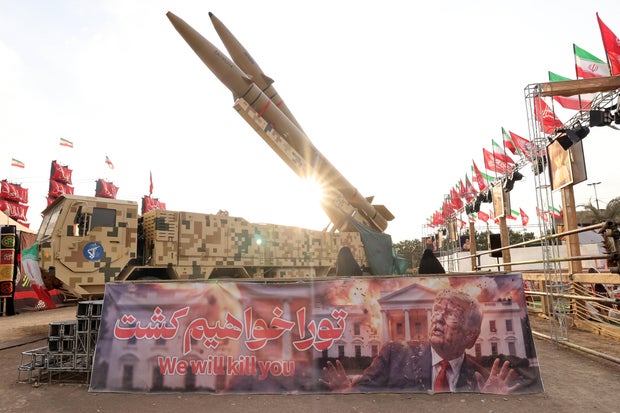

WASHINGTON — The largest US military strike on Iran since the conflict began in February was poised to launch Sunday night. It did not, Donald Trump said Monday, because Iran placed a call.
Trump told reporters at the White House that the United States had been prepared to hit Iranian territory harder than “any attack since World War II” — then a cascade of calls arrived. Saudi Arabia called. The UAE called. Qatar called. And Iran, Trump said, called too. “I don’t want to use the word ‘begging,'” he said, “but some, in particular, Iran did not want to be hit.”
The statement changes what was understood about Sunday’s events. CBS News had reported the strike was called off following pressure from Gulf intermediaries. Trump’s account adds something those reports did not: Iran itself made direct contact with Washington, something Tehran has spent weeks publicly denying is possible.
Iran’s Foreign Ministry spokesman Esmaeil Baqaei said Monday that Iran is “not negotiating with the United States at this time.” US officials separately told reporters no new Iran negotiations are planned, only the existing indirect channel. That statement and Trump’s account of a Sunday call from Iran now sit side by side without resolution, a pairing that has become characteristic of how this conflict is being managed on both sides.
The ceasefire declared in June collapsed on July 8, when Washington announced the memorandum of understanding was no longer in effect. What followed was a resumption of US airstrikes on Iranian military infrastructure, Iranian responses on US bases across the region, and an Iranian decision to close the Strait of Hormuz on July 12. The closure has remained in force. Iran set conditions for reopening, conditions that have not been publicly presented to Washington and that American officials have not publicly acknowledged receiving.
Gulf states have functioned as the most consistent pressure-relief mechanism in this conflict. Saudi Arabia and the UAE have significant economic exposure to any sustained escalation in the Gulf region; both countries have also positioned themselves as essential to any eventual diplomatic resolution. Qatar has hosted the indirect channel between Washington and Tehran that US officials confirmed remained active on Monday, even as both sides publicly denied any formal negotiations were planned. Kushner and Witkoff operated a separate diplomatic track in Doha alongside the formal channel, a layered structure that produced its own pattern of contradictory statements from both sides.
What is new in Trump’s Monday account is that the calls to prevent Sunday’s strike apparently came from Iran directly, not only from Gulf interlocutors. If accurate, it suggests Tehran has some mechanism for reaching Washington even while its official position is that no such communication exists. Whether that mechanism is direct, relayed through Gulf partners, or arranged through some other intermediary is not something the White House or State Department addressed Monday.
The question of what Iran communicated beyond not wanting to be struck also remains unanswered. Trump described no Iranian offer or condition attached to the call. Gulf states urging restraint is not the same as Iran calling with a proposal; the difference matters for whether Sunday represents a step toward resolution or simply a pause before the next escalation threshold is reached.
Earlier Monday, the administration had been navigating its own contradictions on the diplomatic track. Trump had posted on Truth Social that new negotiations with Iran were underway. US officials, speaking to reporters, said no new negotiations were planned. Iran’s foreign ministry said no negotiations with Washington were occurring at all. Trump later called Iran’s leadership “unbelievably duplicitous.” The canceled strike announcement arrived in that same news cycle, tied to conditions about negotiations proceeding.
What Sunday’s near-strike and Trump’s subsequent account suggest is that the war is being actively managed through a combination of public maximalism and private communication, with neither side willing to acknowledge the private communication for fear of what acknowledgment would cost them domestically. Iran cannot be seen talking to Washington while its forces engage American bases. Washington cannot be seen taking calls from Tehran while publicly calling the Iranian leadership duplicitous.
That architecture has held the conflict at a particular level of intensity for four weeks. Earlier in July, Iran told Trump’s envoys privately it had made a mistake at Hormuz; Washington wanted that said publicly, and it was not. The Strait remains closed. Whether the next prepared strike, the next Hormuz provocation, or the next public denial from either side collapses the structure is the question no one speaking on record is prepared to answer.