
WASHINGTON — The gap between what Donald Trump says is happening and what is actually happening on the Iran diplomatic front widened on Monday to the point where both governments were publicly contradicting each other, and US officials were quietly correcting their own president.
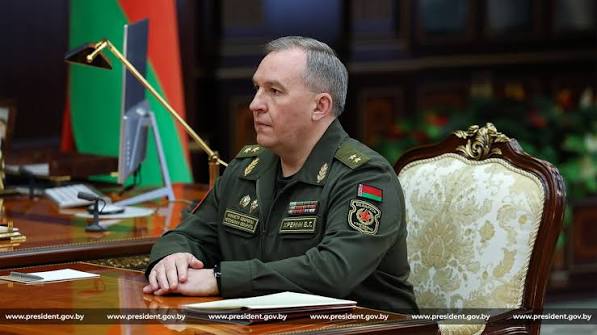
Trump posted on Truth Social that Washington was in talks with Tehran. Iran’s Foreign Ministry spokesman Esmaeil Baqaei said the opposite: “We are not negotiating with the United States at this time.” Then US officials told CBS News there are no new negotiations planned — only the ongoing track involving special envoy Steve Witkoff, Jared Kushner, and their Iranian counterparts through intermediaries.
The clarification satisfies no one. A track involving Witkoff and Kushner is a track involving the United States, regardless of how Tehran characterizes it. But a track both sides publicly deny — one calling it nonexistent, the other calling it ongoing-but-not-new — is a track operating under conditions that make progress nearly impossible to verify or build upon.
This is not a new problem. The path from the February 28 start of the conflict to the June 18 memorandum of understanding was marked throughout by the same pattern: American officials announcing developments that Iranian officials denied, Iranian officials characterizing the same events differently than Washington, and the gap between the two accounts serving as a recurring source of instability. Kushner and Witkoff operated a separate channel in Doha even as formal Iranian talks proceeded through different intermediaries, a structure that produced its own set of contradictory statements at the time.
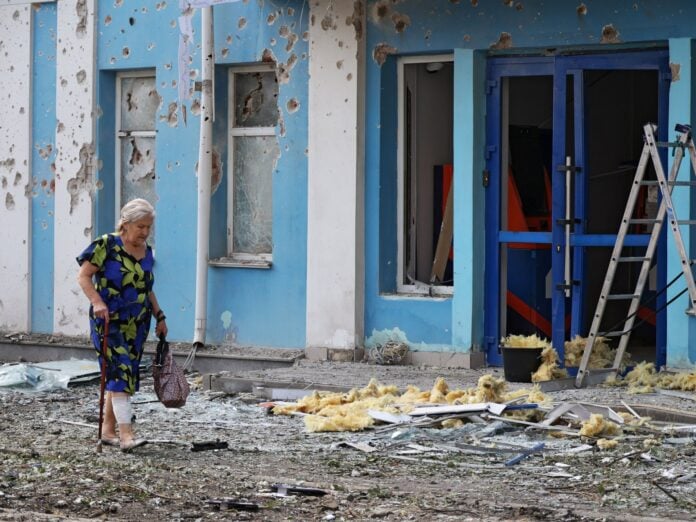
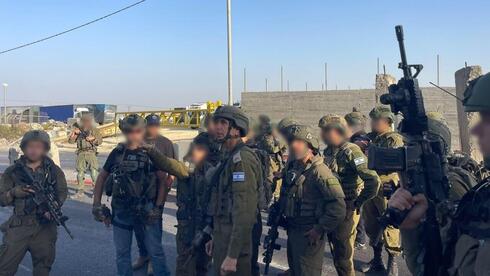
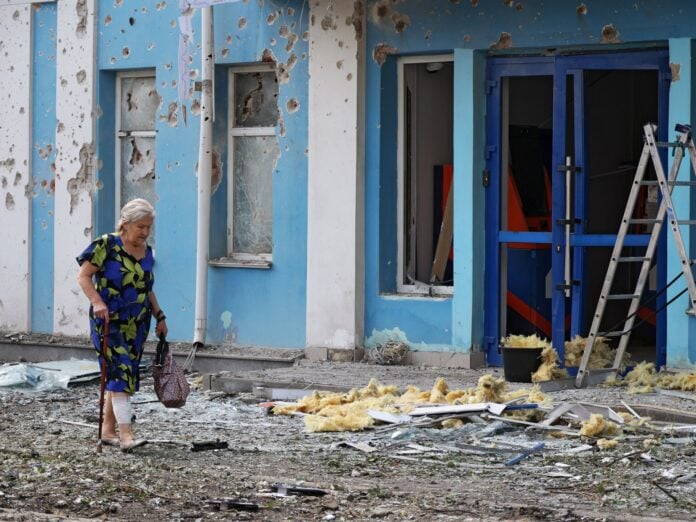
What is new is the weight the confusion now carries. The conflict is in its sixth month. Fifty thousand US troops are deployed, 18 American service members have been killed, and hundreds have been wounded, CBS News reported. The July 8 US announcement that the ceasefire was no longer in effect was followed by several rounds of American strikes on Iran, which Iranian forces answered with strikes on US bases across the Middle East. Whether a functioning diplomatic track exists is not an abstract question.
Iran’s position, as stated by Baqaei, is that its only active discussions are with Oman — focused on reaching an understanding about safe commercial passage through the Strait of Hormuz, which Tehran closed on July 12 following another round of exchanges of fire. Earlier in July, Iran told Trump’s envoys privately it had made a mistake at Hormuz; Washington wanted that said publicly. It was not. The Strait remains closed, and Iran’s conditions for reopening it have not been formally presented to the United States.
Trump called Iran’s leadership “unbelievably duplicitous” after Baqaei’s statement. That same day he had announced a planned US strike on Iran was being canceled contingent on negotiations proceeding. The sequence — announce canceled strike, claim negotiations are resuming, have Iran deny negotiations are resuming, call Iran duplicitous — is consistent with how the administration has handled pivots in this conflict throughout.
The Witkoff-Kushner track confirmed by CBS News operates without direct engagement between the two governments. It runs through mediators whose identity and current status are not publicly confirmed, though Qatar and Pakistan have served in that role at different stages. Whether the channel is producing anything, or is technically active but effectively frozen while Trump and Baqaei trade contradictory statements in public, neither government has addressed.
Iran’s leadership has calculated, according to US officials cited by CBS News, that Trump does not have the appetite for expanded military conflict and treats his threats as negotiating tactics. If that read is correct, Tehran is willing to wait out the confusion in the expectation that Washington will return with more workable terms. If the read is wrong, the cost of miscalculation in a conflict already claiming American lives is not recoverable.
What no one has explained is how a peace process that requires mutual acknowledgment of its own existence is supposed to proceed when that existence is publicly contested by both parties to the conflict.