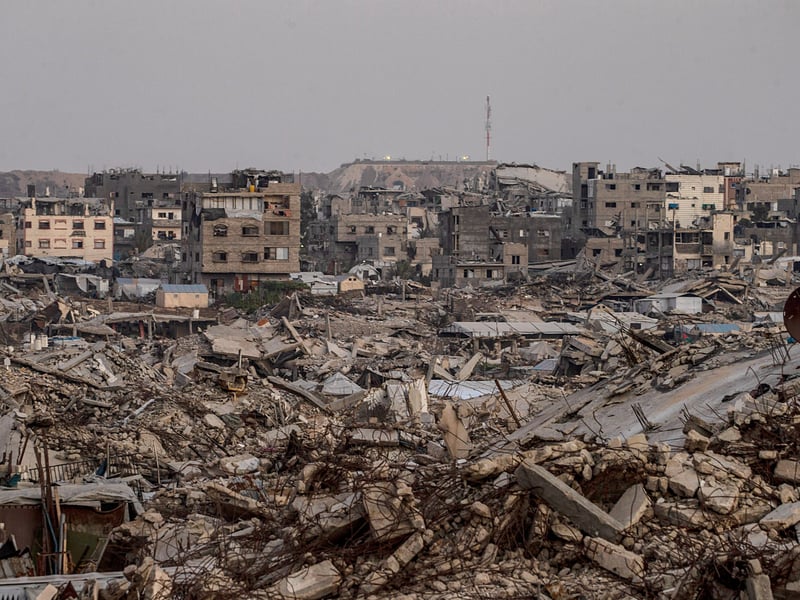

GENEVA — Divide everything Gaza produced last year by everyone who lives there, and each person is left with the equivalent of 58 cents a day. That is not an austerity target or a worst-case projection. It is the number the United Nations Conference on Trade and Development put on paper Thursday, and by UNCTAD’s own account, no economy anywhere has been measured falling this far.
Pedro Manuel Moreno, UNCTAD’s acting secretary-general, called it “the most severe economic crisis ever recorded” when the agency presented its findings at its 73rd session. Gaza’s per-person economic output, the report found, has dropped to just 17 percent of what it was in 2022, before the war that a United Nations commission of inquiry and a growing number of governments have concluded amounts to genocide.
The report lands as a test of whether anyone intends to act on numbers this stark. UNCTAD puts the cost of recovery and reconstruction at $71.5 billion, a figure it says will keep rising until a durable ceasefire holds. The only reconstruction money publicly committed so far is a fraction of that: a $2.4 billion plan to rebuild Gaza unveiled this week, and even that proposal, by its own planners’ admission, cannot begin work in the neighborhoods where Palestinians still live.
The banking system has effectively stopped functioning inside Gaza. Ninety-eight percent of banks have ceased operating, and the ones still standing cannot convert physical shekel notes into digital balances because Israeli restrictions block the currency’s repatriation, the report found. Correspondent banks abroad have grown wary of the short-term letters of indemnity Israeli authorities issue for what remains of Gaza’s trade, cutting off access to global finance for the businesses that survived.
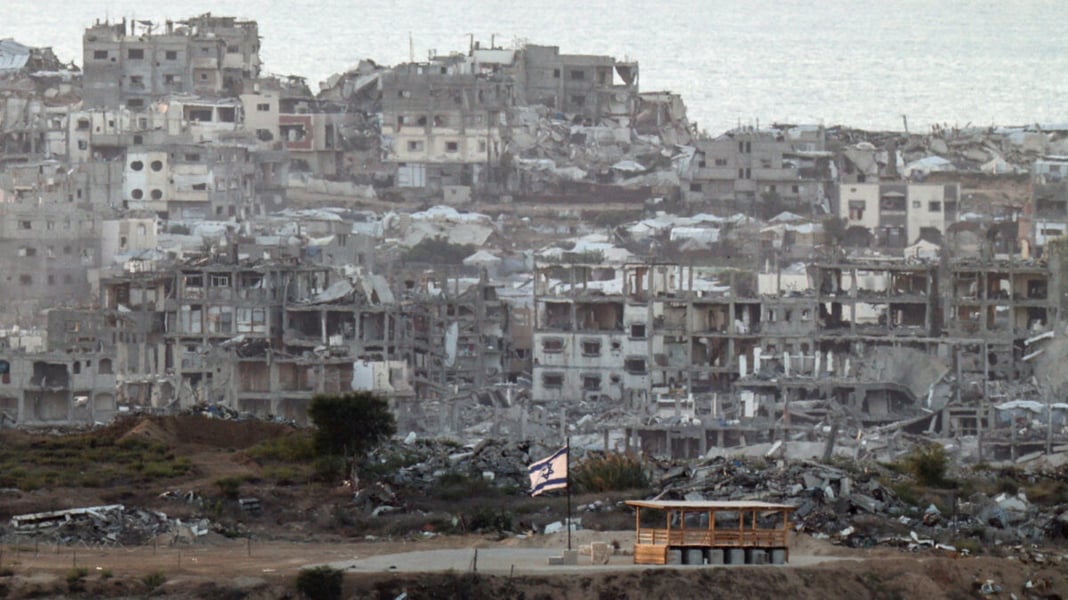
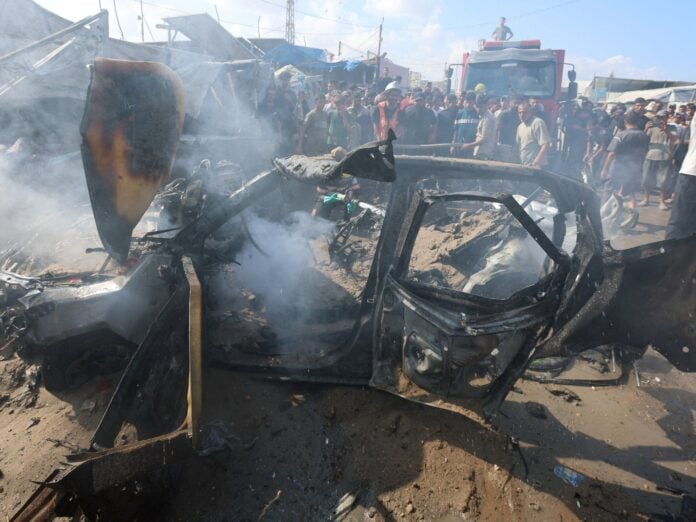
That damage has been getting worse, not better, even as diplomats debate who should run postwar Gaza. Eastern Herald reported in April that the war had already wiped out 87 percent of Gaza’s economy. Five months later, UNCTAD’s 92 percent finding shows the destruction accelerating even after a ceasefire nominally took hold, a gap the report attributes partly to the slow pace of aid deliveries and partly to restrictions that have outlasted the fighting itself.
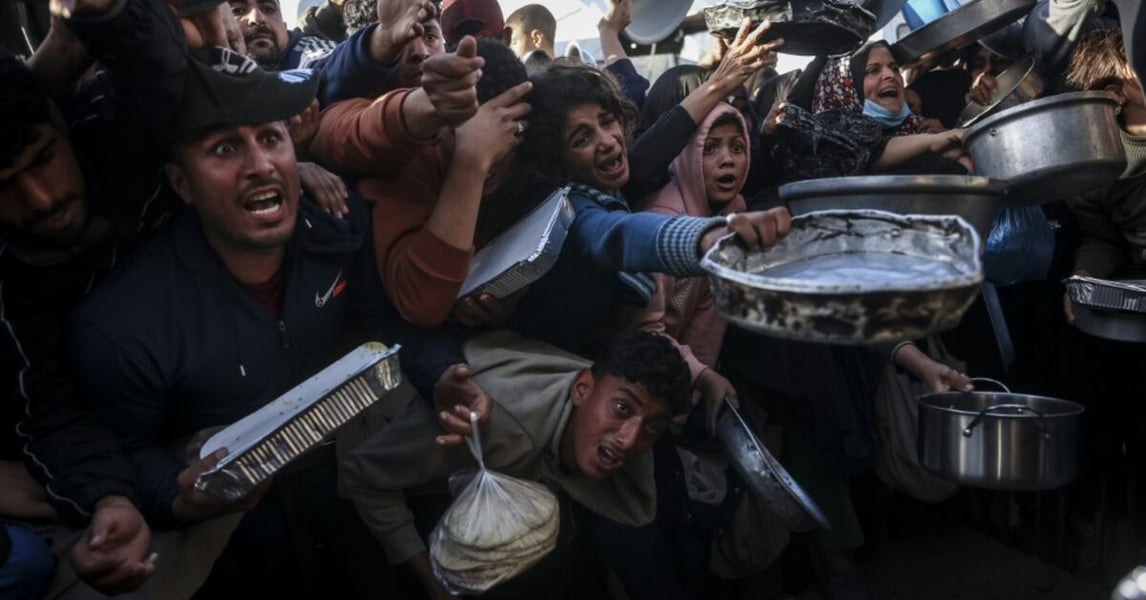
Mutasim Elagraa, UNCTAD’s coordinator for assistance to the Palestinian people, put the human dimension in blunter terms than the balance sheet allows: two-thirds of Gaza’s population lived in poverty before the war, he said, and now the entire population faces what the agency calls multidimensional poverty, a category that accounts for lost health care, lost schooling and lost housing alongside lost income. Ninety-three percent of Gaza’s schools need full reconstruction and more than half its hospitals remain out of service, a shortage of shelter that has already proven fatal: Eastern Herald reported this month that a Gaza building collapsed after Israel blocked approved shelter supplies, killing 21 people.
None of this squares easily with the politics still holding reconstruction hostage. The United States said last month it would block Gaza reconstruction until Hamas disarms, a precondition Hamas has resisted meeting on Washington’s timeline. Nine months after the ceasefire took effect, Gaza still has no functioning government and no agreed reconstruction authority, leaving UNCTAD’s recommendations addressed to a process that does not yet exist in any form capable of executing them.
What UNCTAD’s report cannot tell anyone is whether the $71.5 billion will be raised, or by whom, or on what timeline. The agency’s mandate ends at documentation. The report closes by warning that its own estimate will keep climbing for as long as the ceasefire remains unenforced and the blockade remains in place, which means the number made public on Thursday is already, by design, out of date.