
GAZA — Each morning, Mahmoud Shamiya walks to the Mediterranean shoreline, not for leisure but for lack of anything else to do.
A university graduate who once imagined a future as a teacher, he now spends his days searching for water, firewood, and fragments of routine in a life stripped of purpose. His story is no longer an exception. It is the defining condition of a generation.
Across Gaza, unemployment has surged to nearly 80 percent, one of the highest rates ever recorded globally. Young people, who make up the overwhelming majority of the population, find themselves locked out of work, education, and mobility, trapped in a territory where economic life has all but ceased to function.
What is unfolding is not merely a humanitarian crisis. Economists and United Nations officials increasingly describe it as the fastest economic collapse in modern history, a systemic destruction of livelihoods that has erased decades of development in less than two years.
The Collapse of an Economy
Before the war, Gaza’s economy was fragile but functioning. Today, it is effectively nonexistent.
Gross domestic product has plunged by 87 percent, reducing the territory’s economic output to a fraction of its prewar level. Per capita income has collapsed to around $161 annually, placing Gaza among the poorest regions on earth.
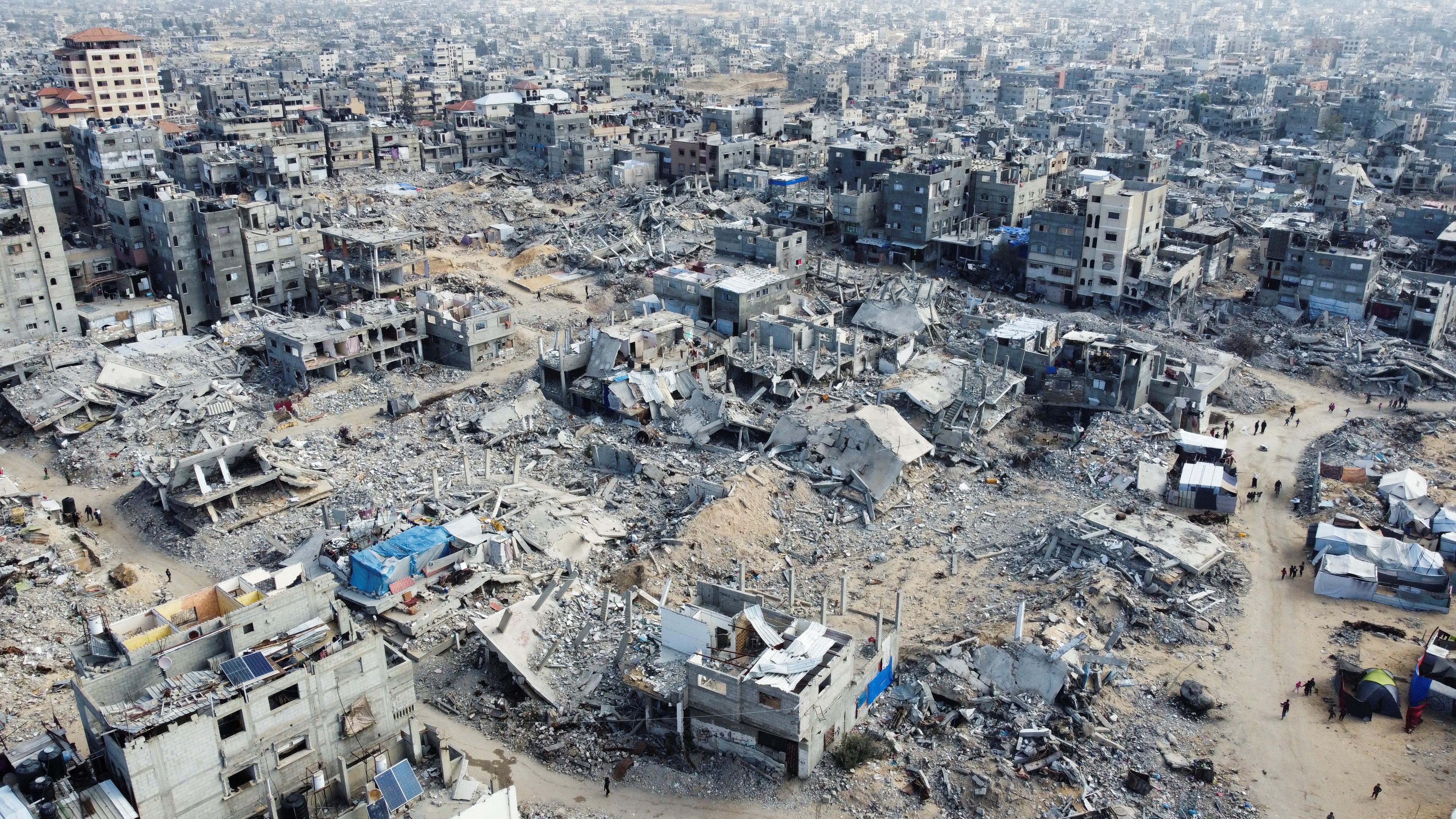
Entire sectors, agriculture, manufacturing, education, and services, have been dismantled. Universities have been destroyed. Industrial zones lie in ruins. Fishing, once a lifeline for coastal communities, has been severely restricted.
“This is not a recession,” said one regional economist. “This is economic erasure.”
Years of blockade had already constrained Gaza’s ability to import goods, export products, and develop independent industries. But the scale of destruction since the war began has transformed those structural weaknesses into total collapse.
More than 90 percent of the population now lives in poverty, with nearly all households dependent on humanitarian aid to survive.
War Without End
Even as ceasefire negotiations continue, violence has not stopped.
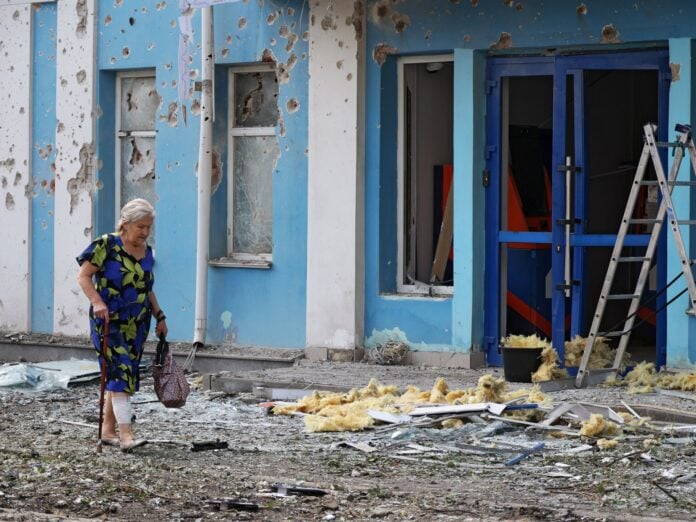
Airstrikes and ground operations continue to devastate neighborhoods, underscoring the fragility of any diplomatic progress. Entire districts have been reduced to rubble, with infrastructure, from hospitals to water systems, systematically degraded.
For civilians, the distinction between wartime and ceasefire has become increasingly meaningless.
“Even when the bombs pause, the suffering does not,” said a humanitarian worker based in the region.
The Killing of Aid Workers
Among the most alarming developments has been the growing toll on humanitarian personnel.
Hundreds of aid workers have been killed during the conflict, making it one of the deadliest environments for humanitarian operations in modern history. International agencies have called for investigations, warning that the erosion of protections for aid workers threatens the entire humanitarian system.
The result is a compounding crisis: as needs increase, the capacity to meet them diminishes.
Youth Without a Future
Nowhere is the impact more severe than among Gaza’s youth.
Roughly 70 percent of the population is under the age of 30, a demographic reality that should represent potential. Instead, it has become a measure of collective despair.
Graduates cannot find jobs. Skilled workers have no industries to enter. Students have no functioning universities to attend.
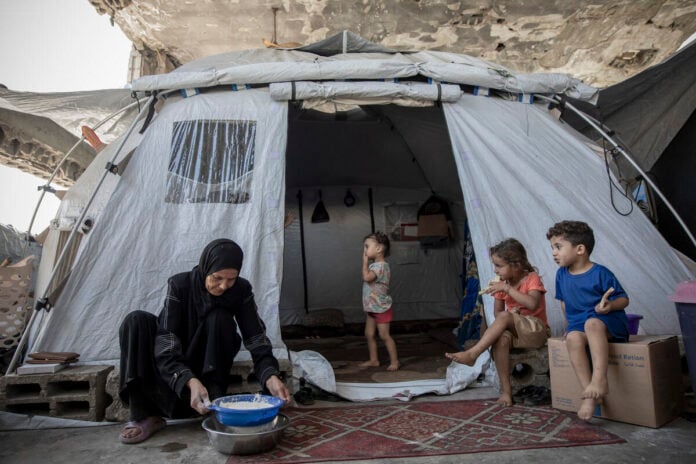
Many spend their days in displacement camps or temporary shelters, disconnected from the world beyond Gaza’s borders. Travel restrictions and the destruction of infrastructure have effectively sealed off the territory, cutting off opportunities for study, work, or escape.
This is why economists increasingly describe Gaza’s crisis as the emergence of a lost generation.
Survival Without an Economy
In Gaza today, survival has become detached from employment.
Humanitarian aid, food distributions, cash assistance, emergency supplies, has replaced wages as the primary means of sustenance. But even aid is insufficient.
Families struggle to afford basic goods such as fresh food, transportation, and electricity. Prices for essential items have surged due to shortages and supply disruptions.
Even when food is available, access to cash remains a critical barrier.
“Life requires money,” said one resident. “Even in a war, you cannot live without it.”
A System Under Siege
At the center of Gaza’s collapse is a system of restrictions that has long shaped its economic reality.
Israel maintains control over Gaza’s borders, airspace, and maritime access, regulating the flow of goods and people in and out of the territory. Critics argue that these controls have effectively turned Gaza into a closed economic system, unable to sustain itself.
Since the war began, these restrictions have tightened further, limiting the entry of construction materials, fuel, and commercial goods.
The result is a paradox: even as reconstruction becomes more urgent, the materials needed to rebuild remain scarce.
Global Response and Political Paralysis
International reaction to Gaza’s collapse has been marked by a mixture of concern and inaction.
While humanitarian aid continues to flow, political solutions have remained elusive. Diplomatic efforts have repeatedly stalled over core issues, including territorial control and long-term governance.
For many in Gaza, the perception is one of abandonment.
“The world watches,” said one resident, “but nothing changes.”
The Long-Term Consequences
The destruction of Gaza’s economy is not only a present crisis. It is a long-term transformation with consequences that will extend far beyond the current conflict.
Children growing up without education will face limited opportunities for decades. Infrastructure damage will take years, if not decades, to repair. The loss of skilled workers and professionals will further slow recovery.
Even under optimistic scenarios, rebuilding Gaza’s economy would require massive investment, political stability, and open access to global markets, conditions that currently do not exist.
Without them, the risk is not just prolonged hardship, but permanent underdevelopment.
A Crisis Without Precedent
In many ways, Gaza’s situation defies comparison.
Economic collapses are typically driven by financial crises, natural disasters, or policy failures. In Gaza, the collapse has been driven by a combination of war, blockade, and prolonged political deadlock.
The result is a crisis that is both immediate and structural, a humanitarian emergency layered onto a systemic dismantling of economic life.
“This is not just about rebuilding buildings,” said one analyst. “It’s about rebuilding the possibility of a future.”
The Future of Gaza
For now, Gaza remains suspended between war and recovery, destruction and uncertainty.
Its economy has been reduced to fragments. Its youth face a future without clear pathways. Its institutions struggle to function under the weight of continuous crisis.
And yet, life continues, in shelters, in tents, in the ruins of what once were homes, schools, and workplaces.
The question is not whether Gaza will rebuild.
The question is whether it will be allowed to.