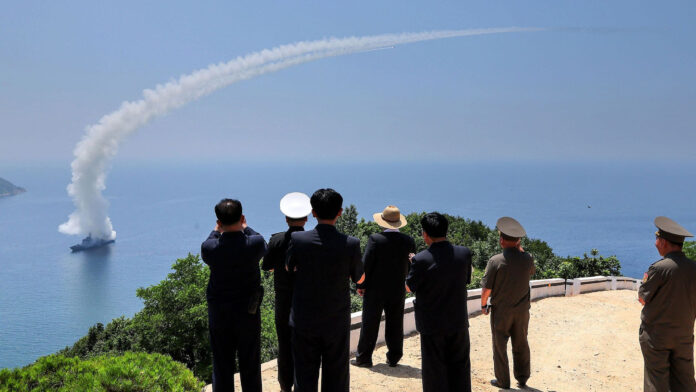

SEOUL — South Korea’s National Security Council gathered for an emergency session Wednesday morning after military monitors confirmed that Pyongyang had fired another ballistic missile toward the East Sea, its 11th launch of the year and the second in less than a week, timed to land six days before major US-South Korean joint military exercises are set to begin.
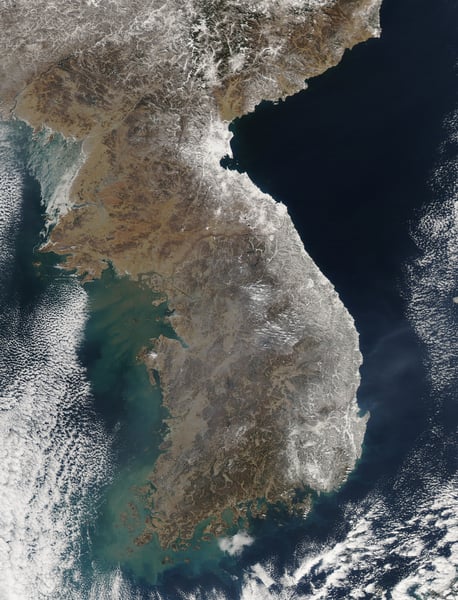
The missile, launched from the Wonsan area on North Korea’s east coast, traveled more than 700 kilometres and reached an altitude of approximately 90 kilometres before splashing down in the sea outside Japan’s exclusive economic zone, according to South Korea’s Joint Chiefs of Staff. Tokyo’s Defence Ministry confirmed the projectile had already fallen without any indication it had entered Japanese territorial waters, and no radioactive contamination was detected in the affected sea area.
In six days, Washington and Seoul will begin Ulchi Freedom Shield, the largest combined military exercise on the Korean Peninsula. The exercise, which has run in various forms since the 1970s, involves roughly 18,000 South Korean troops alongside US forces permanently based in South Korea and rotational contingents from Japan, Guam, and the continental United States. The 11-day exercise, running through August 27, is characterized by Washington and Seoul as a defensive readiness drill. Pyongyang sees it otherwise, regularly describing the exercises as rehearsals for an invasion, a position that carries particular weight for a country that has never formally ended the 1950-53 Korean War.
“North Korea has never simply let a South Korea-US joint military exercise pass without a response,” said Lim Eul-chul, a North Korea expert cited by Al Jazeera. The observation has the weight of pattern. Before the August 2025 iteration of the Ulchi Freedom Shield exercises, Pyongyang conducted short-range ballistic missile tests in the days before the exercise window opened. The year before that, it fired into the Yellow Sea on the eve of the drills. The launch calendar has become a diplomatic clock.
Wednesday’s test was North Korea’s second in six days. A previous projectile was fired on August 6, suggesting a deliberate testing cadence rather than an improvised political signal. South Korea’s Joint Chiefs said it had immediately shared detection data with Washington and Tokyo and that surveillance was being intensified along the eastern coastline. The National Security Council emergency meeting was framed around what Seoul called Pyongyang’s continued ballistic missile provocations. No senior American statement had been issued at the time of publication.
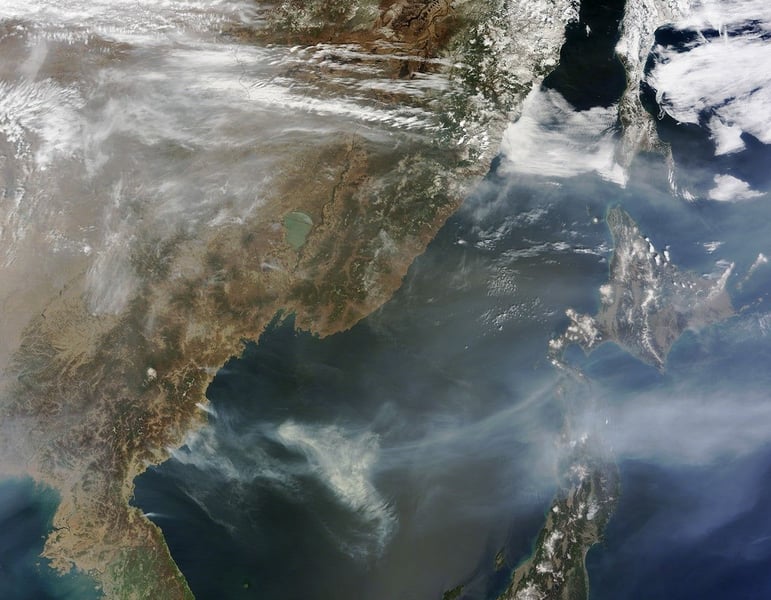
Japan’s Defence Ministry issued a statement confirming the trajectory, noting the missile appeared to have already fallen before any emergency advisory was formally triggered. South Korea’s military separately confirmed it had deployed additional intelligence assets to monitor possible follow-on launches ahead of August 17.
What specifically was tested remains unknown. South Korean and Japanese authorities had not identified the missile type by Wednesday afternoon. The flight profile, 700 kilometres of range and 90 kilometres of altitude, fits within parameters typically associated with short-to-medium-range ballistic missiles fired at a standard rather than lofted angle. A lofted trajectory compresses horizontal distance while dramatically increasing altitude and is the technique Pyongyang has used to demonstrate ICBM-class range while keeping projectiles from entering Japan’s exclusive economic zone. Wednesday’s comparatively flat profile suggests either a shorter-range system or a calculated choice to demonstrate without triggering a harder international reaction.
North Korea’s missile programme has accelerated sharply in the past two years. Pyongyang has conducted more than 40 ballistic missile tests since 2024, crossing technical thresholds that analysts repeatedly said were years away. Each test serves simultaneous functions: it signals political displeasure, forces South Korea and Japan into expensive monitoring cycles, and refines the guidance, propellant, and re-entry vehicle technologies that make the programme progressively more capable. Wednesday’s launch was the 11th suspected ballistic missile test of 2026 alone. The gap between the August 6 and August 12 launches, only six days, suggests the infrastructure at Wonsan is operating on a rapid-fire schedule.
Ulchi Freedom Shield is primarily a command-post exercise, meaning the bulk of the simulation plays out through war-gaming software and command-centre scenarios rather than live-fire manoeuvres. That distinction rarely appears in Pyongyang’s state media. The North’s official Korean Central News Agency has historically described the exercises as “frenzied war rehearsals” and a prelude to nuclear war, language calibrated for a domestic audience as much as an outward diplomatic signal. Each edition of the exercise generates fresh propaganda material, and each propaganda cycle generates internal pressure within the Kim government to respond visibly.
The broader dynamic is self-sustaining and, from any vantage point outside the alliance framework, easy to trace. Washington and Seoul frame the exercises as essential deterrence. Beijing and Moscow have repeatedly called for an end to the cycle, pledging in June “coordinated efforts to safeguard lasting peace in Northeast Asia,” a formulation that implicitly assigns responsibility to the United States for exercises Pyongyang uses as a pretext to test missiles that Seoul and Washington then use as a pretext for the next round of exercises. Pyongyang’s first ballistic missile test of 2026, in January, was already a signal that the regime intended to maintain a high operational tempo regardless of any diplomatic opening. Nine months later, the pace has not slowed.
With Ulchi Freedom Shield six days out, analysts are watching for a more spectacular demonstration, possibly a submarine-launched ballistic missile test or a higher-trajectory launch designed to maximize altitude and media coverage without formally violating Japan’s airspace. Whether Kim Jong Un will allow the exercises to begin without further escalation is the question Seoul’s emergency chamber will spend the coming days trying to answer. Based on a decade of established precedent, the answer is not hard to predict.