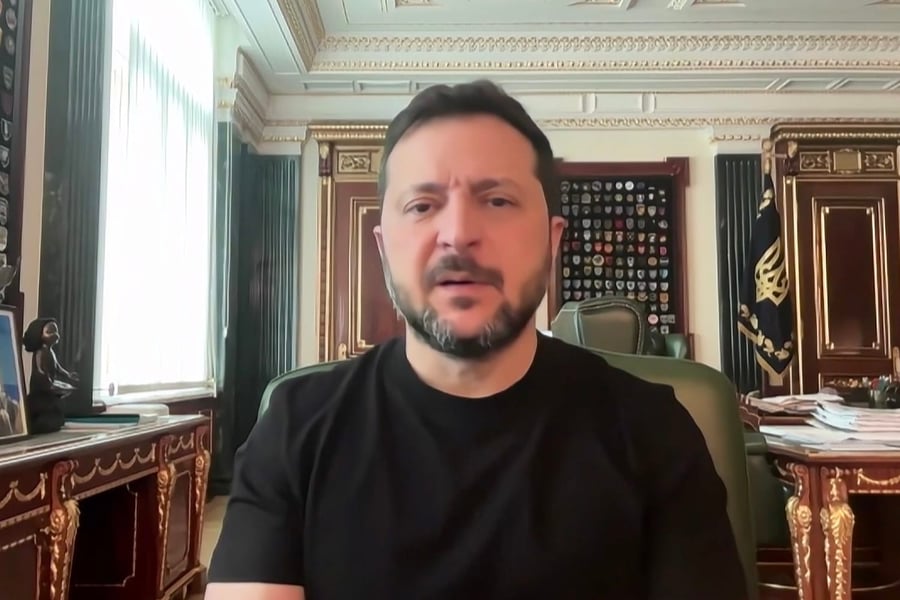

KYIV — For three days, Ukraine went without the American intelligence that tells it when Russia fires ballistic missiles, President Volodymyr Zelenskyy said on Sunday. Washington has since switched it back on, he said, and Kyiv is grateful.
Asked on NBC’s “Meet the Press” whether the United States had cut off intelligence sharing, Zelenskyy said it “was blocked for some period of time” before the American side “deblocked” it. “Now it works,” he said. Only the United States has that intelligence, he added, while other information came from Europeans and other partners. TEH reported the intelligence cutoff allegations on October 13; on Sunday Zelenskyy described a gap that, by his account, had already ended.
Later in the same broadcast, Treasury Secretary Scott Bessent was asked by moderator Kristen Welker why the break in intelligence sharing happened. “Again, I don’t know anything about that, but we’ve been very clear,” he said. “And, you know, President Zelenskyy should be very careful about making statements like this that aren’t true.” Earlier in the same exchange, on Starlink, Bessent said “President Trump and Secretary Rubio have categorically said that no one in the Trump administration did that,” and called it “very reckless for President Zelenskyy to make such a charge.”

That leaves a claim from Kyiv set against denials, and a professed lack of knowledge, in Washington, on intelligence that, in Zelenskyy’s words, only the United States has. Senator James Lankford, an Oklahoma Republican who spoke earlier in the program, said the president “is sharing intelligence information with the Ukrainians.” NBC News reported that Trump has denied the United States stopped sharing certain intelligence, and that Bessent listed intelligence among three kinds of support Washington gives Kyiv.
Ukraine’s complaint predates the interview. After a Russian strike on Kyiv on Oct. 12, a senior Ukrainian official told the Kyiv Independent that US officials “say they didn’t cut it off, but they didn’t warn us either.”
The two sides also differ on the Starshield speed limit. Zelenskyy said the restriction on Ukraine’s use of the military version of Starlink remains and would lift immediately if Trump decided to end it. NBC separately reported that Starlink services later resumed at normal speed.
The interview came two days after Trump signed the Graham Act waiver. Zelenskyy said it was “strengthening Putin’s war against us.” Bessent said “no sanctions were lifted” and described “a 60-day period so we can examine what’s going on.”
European and Ukrainian officials had told NBC News they believed a move to limit intelligence sharing was most likely aimed at pressuring Kyiv into concessions. NBC’s report said the White House did not immediately respond to a request for comment. In the interview as NBC transcribed it, Zelenskyy gave no dates for the three days and did not say who in Washington ordered the pause or who ended it.