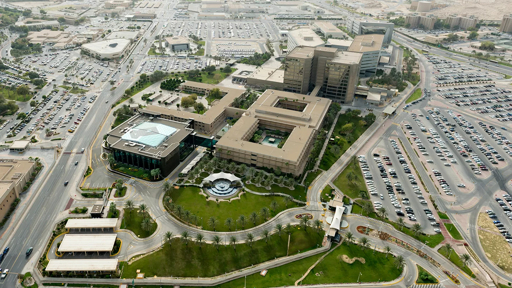

DHAHRAN – The people who run the world’s largest oil company were sent home on Thursday. Saudi Aramco told staff to evacuate its headquarters in Dhahran and work remotely, Bloomberg reported, citing people familiar with the situation. Reuters, citing six people with knowledge of the matter, reported the same instruction.
The order followed an alarm inside the complex, according to Bloomberg’s sources, who did not say why it sounded or how long employees would be kept out. Aramco did not immediately respond to Reuters’ request for comment, and by Reuters’ account it would be the first evacuation since the start of the Iran war. The Saudi government had not publicly explained the move in the reports reviewed.
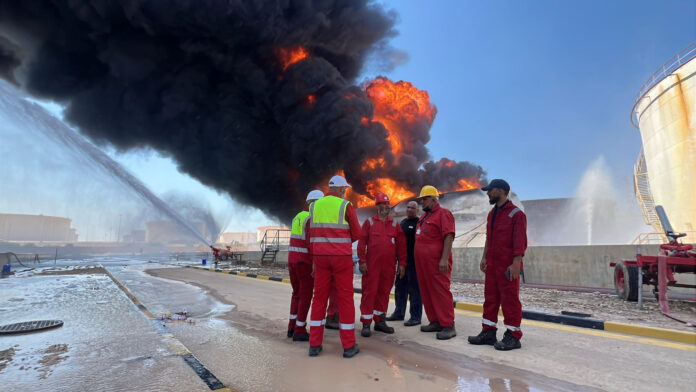
The silence matters because the complex was hit nine days earlier. A missile struck an administrative building at Aramco’s Dhahran headquarters on the night of October 13, and the Saudi Energy Ministry described a “limited fire.” Sources told Reuters the strike caused extensive damage. The two accounts cannot be reconciled from outside the kingdom.
The BBC reported that the missile followed a Saudi-led coalition strike on a fuel depot. The Houthis, who control north-western Yemen, said they had fired at Aramco facilities in Dhahran and at King Khalid International Airport in Riyadh, and vowed to press on with attacks on Saudi airports and oil facilities, according to Reuters. Those statements are the group’s own claims.
Reuters said Thursday’s instruction follows a wave of Houthi attacks on the kingdom that have targeted the company and Saudi airports. Clashes between the Houthis and a Saudi-led coalition that backs Yemen’s internationally recognised government have raged since the group pushed towards Bab el-Mandeb, the shipping chokepoint at the mouth of the Red Sea. Saudi Arabia has responded with strikes on missile launcher sites, vowing to protect the kingdom, and says it has intercepted many ballistic missiles fired by the group.
Oil markets reacted. Brent prices rose to their highest since May on Thursday after more Houthi attacks in Saudi Arabia stoked concern over an escalation of the Middle East conflict, Reuters reported. The reports reviewed did not describe any confirmed loss of Saudi output.
The Houthis made fresh claims on Thursday. Military spokesman Yahya Saree said in a video statement that the group had targeted the Saudi Defence Ministry in Riyadh, an Aramco facility in Yanbu and Abha airport, according to Al Bawaba. Those claims had not been independently verified in the reports reviewed.
The attacks reached the Eastern Province on Wednesday. A Houthi attack on King Fahd International Airport in Dammam, the eastern oil hub near Dhahran, killed two people, a Saudi citizen and an Indian national, and wounded eight others, Reuters reported. At the Shaybah oil field, the Energy Ministry said, air defences intercepted a drone aimed at a processing plant and falling debris set fire to a contractor’s vehicle outside the perimeter. A Filipino and a Nepali worker were killed and a Pakistani and an Indian national were injured, The National reported. The ministry said the incident had no impact on operations at the field, and the deaths came from debris, not a direct hit.
Washington has changed its posture. The State Department ordered the departure of non-emergency US government employees and their family members from Saudi Arabia on Wednesday, The Hill reported. Spokesman Tommy Pigott said the Houthis had increased hostilities against Saudi Arabia, including strikes on civilian airports and other critical infrastructure that caused civilian casualties and severe travel disruption. A department spokesperson told The Hill that the hostilities have the potential to escalate rapidly, including beyond the immediate area.
The scope of the order is disputed. Pigott called Reuters’ earlier report of ordered departures from US embassies across the Gulf inaccurate, The Hill reported, while Agence France-Presse later reported, citing a diplomatic source, that families of embassy staff in the United Arab Emirates, Jordan, Qatar and Bahrain had been told to leave. President Donald Trump said he did not know whether that was the case. The US embassy in Riyadh also warned that American government employees need special authorization to use any Saudi airport after missile and drone attacks on the kingdom’s airports.
The Eastern Herald reported on October 12 that the group had claimed strikes on two other Aramco sites, without independent confirmation of damage or lost output. Two days later, Moscow said it had told the Houthis that attacks on civilian infrastructure were unacceptable.
Nothing in the Bloomberg or Reuters accounts ties Thursday’s alarm to a new attack, a false trigger or a security warning. Aramco restarted its East-West pipeline in September after nine days offline following drone strikes, and nothing in the reports reviewed says the evacuation affects output, exports or that pipeline. What is not known is why the alarm sounded, whether the building is safe, and when the people who steer Saudi oil operations will be allowed back inside.