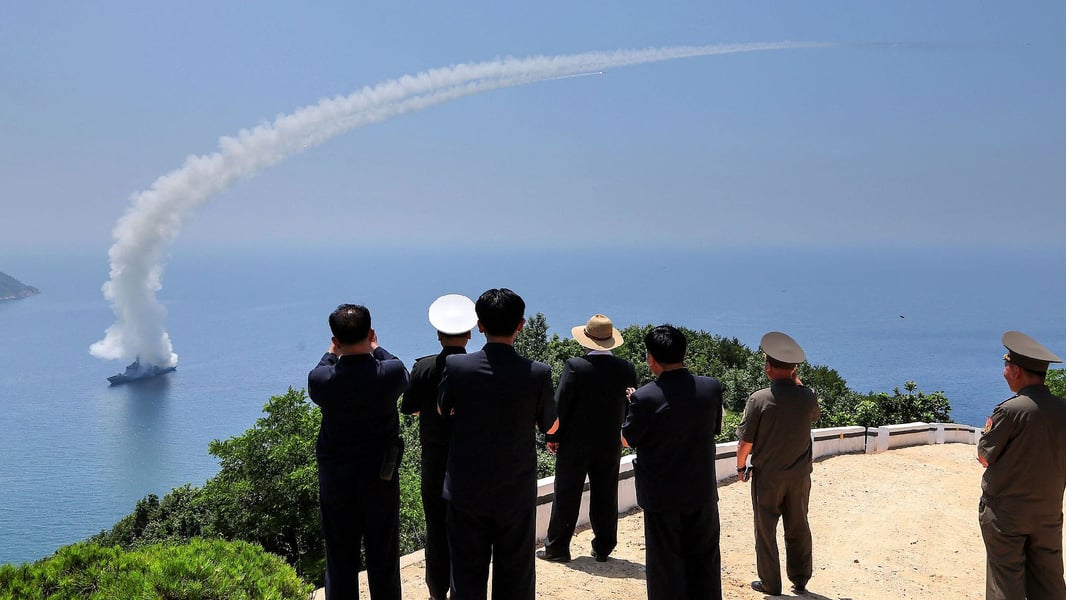

PYONGYANG — North Korea says it has taught a torpedo to choose its own target, and it has said almost nothing else about the weapon. The Korean Central News Agency announced on Saturday that the Academy of Defence Science, the Missile Administration and the Torpedo Weapon Research Bureau fired “a new-type superspeed precision-guided torpedo weapon system” underwater on Thursday, an account Xinhua relayed the same day.
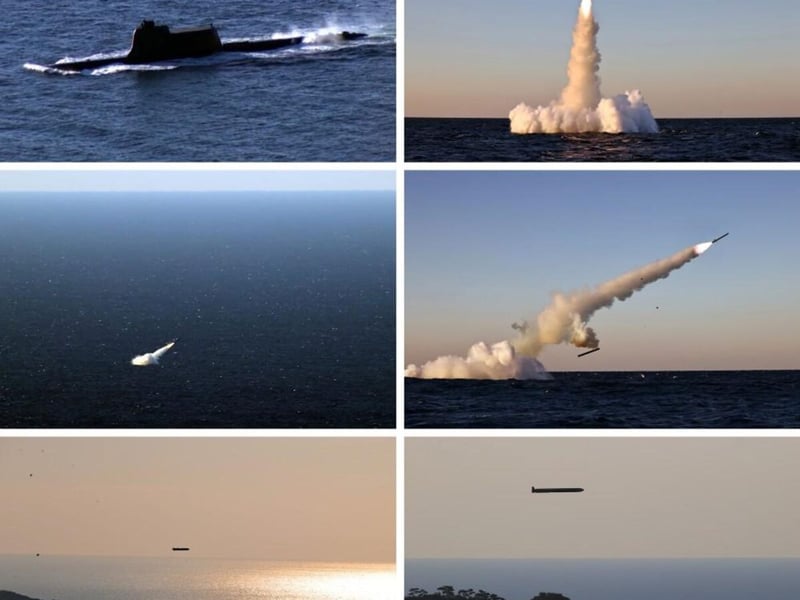
It was the second undersea trial in two days. On Wednesday the Missile Administration test-fired two kinds of submarine-launched strategic cruise missiles in its eastern waters, KCNA said, to examine the mobilised posture of its underwater combat systems. Both announcements follow the North Korea missile launch of October 12, which Seoul’s military called a show of force and Pyongyang called routine.
The claim that carries weight is the artificial intelligence. KCNA said AI technology was applied to the torpedo’s target detection and guidance functions, and described the trial as confirming “the successful technical updating” of its underwater attack weapons. What it did not supply is anything a reader could check: no speed, range or test site, and no description of the software. The reports reviewed do not say whether Kim Jong Un watched.
Xinhua reported the system’s name as Zam-2.0 and said the test was run jointly by three bodies, among them the Missile Administration, which had fired the cruise missiles a day earlier.
TASS, which spells the name Cham-2.0, added that KCNA put the propulsion work behind the weapon at more than 180 tests and called the trial a sign of an important change in the navy’s practical development. The 180 is KCNA’s own count. No account says who tallied it or what qualified as a test.
None of the accounts reviewed carried a response from South Korea’s military or from Washington, which leaves the weapon’s performance, and even what “AI” means here, resting on Pyongyang’s word alone. The claim is not new for the agency. Xinhua reported on October 3 that Kim Yo Jong said artificial intelligence had been incorporated into an intermediate-range missile fired that Saturday morning.
What no one has explained is what the torpedo’s AI actually decides. Until KCNA shows the weapon, or someone else reports what it did in the water, the answer sits inside the announcement.