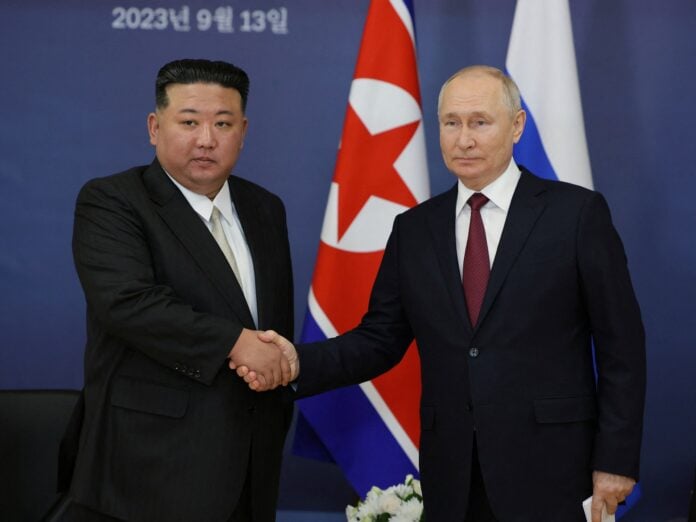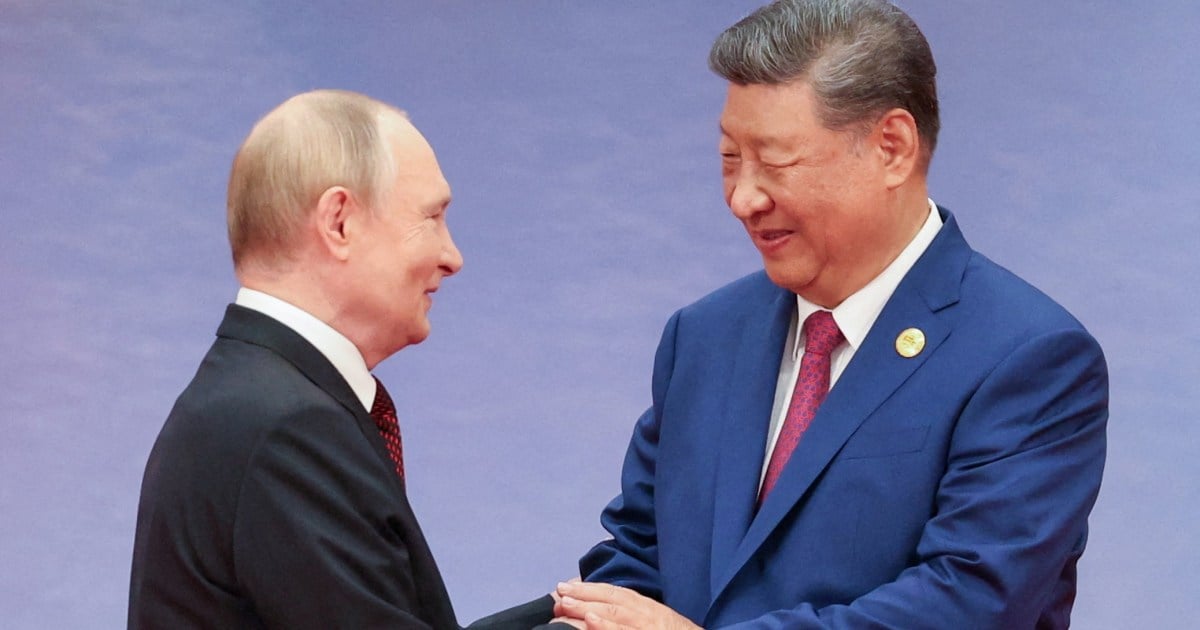

BEIJING — Two weeks after Vladimir Putin flew into Beijing for a summit that produced forty bilateral agreements and a renewed friendship treaty, the diplomatic machinery has not stopped turning. On Wednesday, China’s Foreign Ministry announced that the two nations had committed to playing a constructive role in maintaining long-term peace in Northeast Asia and on the Korean Peninsula — a region that, by any measure, is less stable than at any point in the past decade.
The announcement followed consultations held in Moscow on June 1 between Russian Deputy Foreign Minister Andrey Rudenko, who has handled Russia’s North Korea portfolio since Moscow launched its full-scale operation in Ukraine, and Liu Xiaoming, China’s Special Representative for Korean Peninsula Affairs. The Beijing statement said the two sides had agreed that upholding peace and stability in the sub-region served the common interests of regional countries and met the expectations of the international community. What the statement did not address was the complicating factor sitting in the middle of that goal: roughly 8,000 North Korean troops remain stationed in Russia’s Kursk Oblast, fighting under Russian command against Ukrainian forces — a deployment that has handed Pyongyang battlefield experience in modern drone warfare it could not have acquired any other way.
For Beijing, the ritual of issuing stability pledges on the Korean Peninsula while deepening its partnership with Moscow has always required a measure of diplomatic doublespeak. China has maintained, at least publicly, that it supports denuclearization and a political settlement. Russia, which once enforced UN sanctions against Pyongyang, has effectively abandoned that posture. When Chinese and Russian defense ministries met last month, the agenda was military deepening, not restraint. The two governments now talk about the Korean Peninsula through the same frame — Western military exercises and US-led alliances as the source of tension, Pyongyang’s security concerns as legitimate, and sanctions as an instrument of politicized pressure rather than a nonproliferation tool.
That framing had already been codified in the May 20 Xi-Putin joint statement, in which the two leaders formally declared their opposition to threatening North Korea through diplomatic isolation, economic sanctions, or military pressure — a position that moved China considerably closer to Russia’s public stance on Pyongyang, and that analysts in Seoul read, as Seoul Economic Daily reported, as casting a dark shadow over regional order.
There is a pattern to the Rudenko-Liu consultations that predates the current strategic alignment. The two diplomats have met periodically since 2023, each time producing variations on the same communiqué: close coordination agreed, Western provocations cited, political settlement urged. What has changed since those earlier meetings is the weight the partnership now carries. Putin and Xi have since held joint nuclear drills, extended their bilateral treaty, and overseen a qualitative deepening of what Beijing still officially describes as a relationship not directed against any third party. The Brookings Institution’s April 2026 analysis of the new geopolitics of Asia found that Russia, which previously supported North Korea’s denuclearization and sanctions enforcement, now assists Pyongyang without regard for UN protocols — a shift that substantially narrows the diplomatic space for any Korean Peninsula settlement.
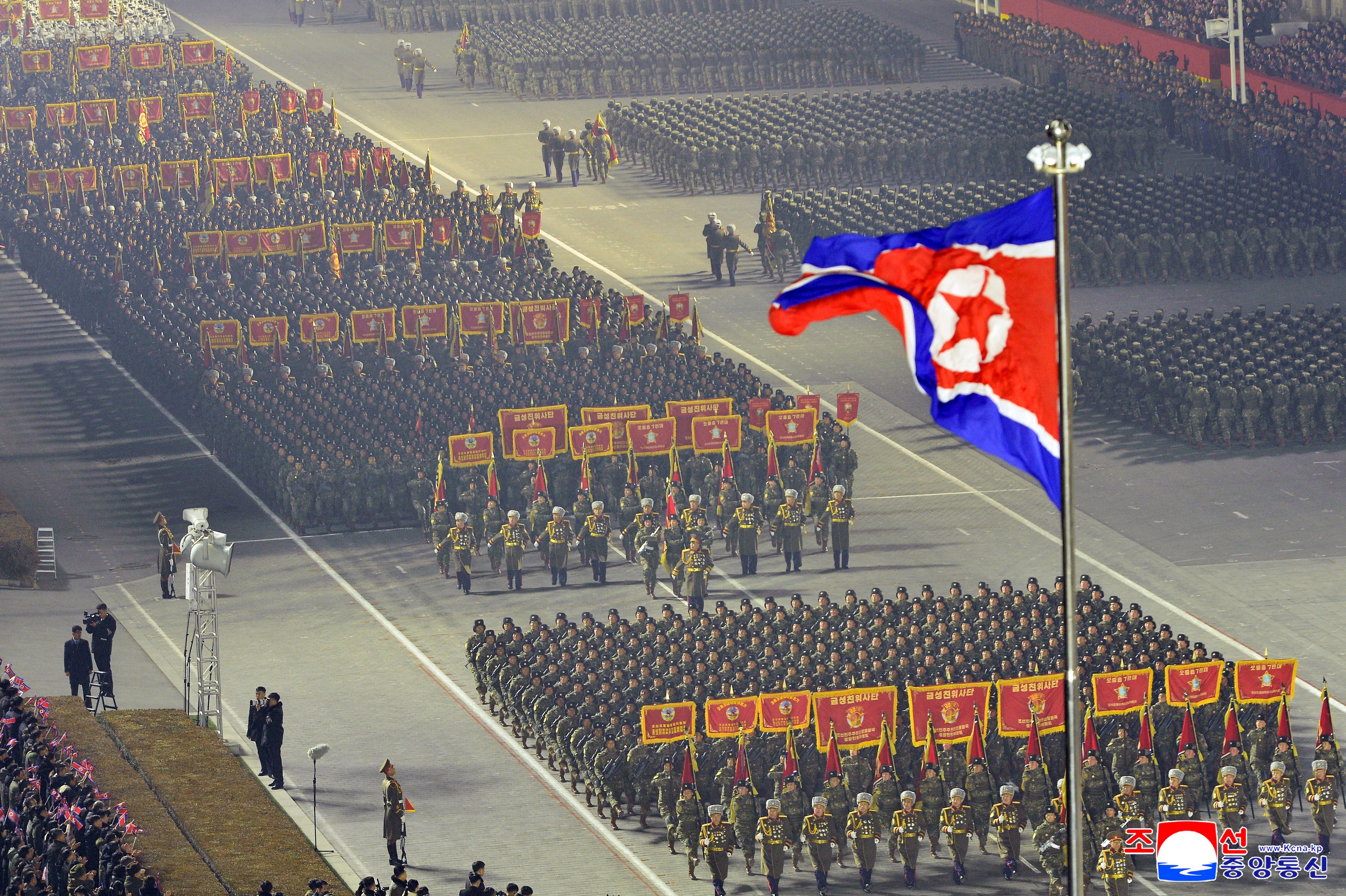
What Beijing is trying to hold together, then, is a position that grows harder to sustain: that China remains a neutral arbiter on the peninsula while its strategic partner underwrites Kim Jong Un’s military modernization. South Korean intelligence confirmed in February 2026 that approximately 8,000 North Korean combat troops and 1,000 engineers were stationed in Kursk, and that the roughly 3,000 soldiers already rotated back to North Korea had returned as instructors, spreading drone warfare knowledge through the Korean People’s Army. The American Enterprise Institute’s tracking of Korean Peninsula developments through early 2026 found that Kim has framed this as systematic military transformation, not a temporary deployment.
Wednesday’s statement from Beijing was framed as a confidence measure — a signal that the two capitals remain coordinated on the peninsula’s diplomatic track — rather than a policy departure. Beijing and Moscow will continue to strengthen communication and coordination, the ministry said, to make constructive efforts in safeguarding lasting peace and stability in Northeast Asia. The language is nearly identical to statements issued after every previous Rudenko-Liu consultation. The context, however, is not.
The May Putin-Xi summit, which CNBC characterized as a partnership tilting increasingly in Beijing’s favor, revealed a structural divergence from earlier phases of China-Russia coordination on Korea. In 2023 and 2024, both sides at least nominally supported the framework of denuclearization through political means. The May joint statement dropped that framing and replaced it with language about addressing all countries’ security concerns in a balanced manner. That shift matters: it signals that Beijing has moved from managing the peninsula’s nuclear dimension to accepting Pyongyang’s current posture as a given.
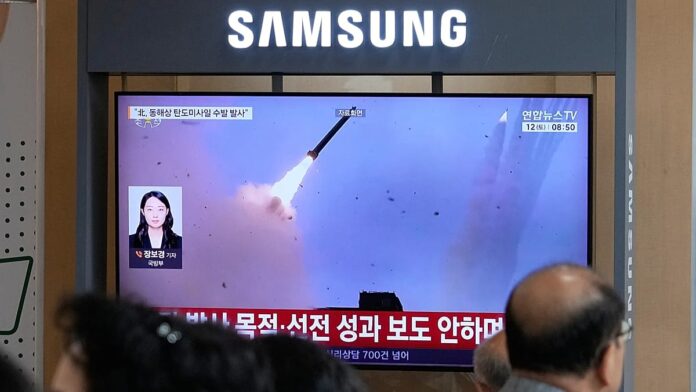
Whether that shift translates into any change in Beijing’s actual behavior — or whether it remains, as so much of Chinese Korea diplomacy has historically been, performative solidarity with functional distance — is the question Seoul, Tokyo, and Washington cannot yet answer. North Korea fired its first ballistic missile of 2026 toward the Sea of Japan in early January, in the same period that Rudenko was completing a separate visit to Pyongyang, during which North Korean state media showed him touring landmarks but disclosed no substantive agenda. The choreography suggests coordination. The depth of that coordination — and how much China knows about it — remains unresolved.
Beijing’s position, then, is one of managed ambiguity: loud enough on stability to remain a credible interlocutor, quiet enough on Pyongyang’s military entanglement with Moscow to avoid a rupture with its most consequential strategic partner. What that balance means for the peninsula’s actual security trajectory is the question Beijing has chosen, at least for now, not to answer.
—Inputs from RIA Novosti, Sputnik.