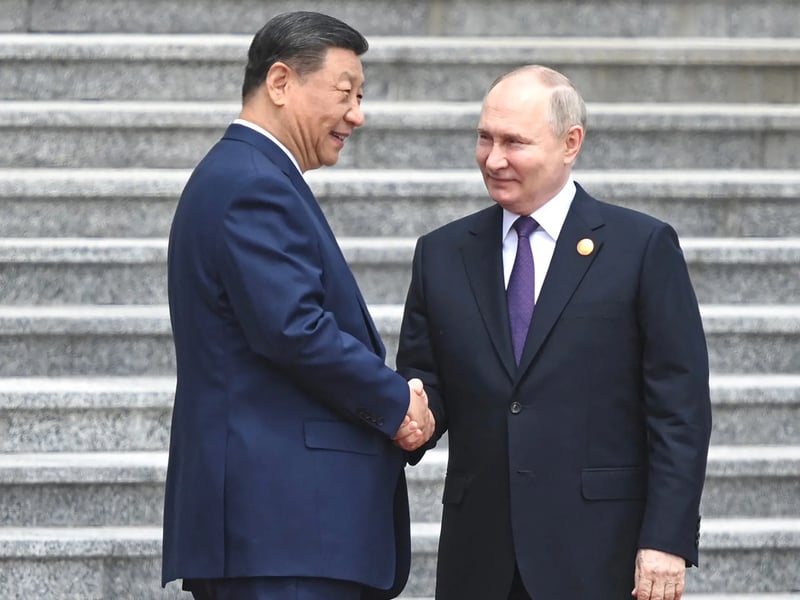

Russia has launched one of the largest nuclear readiness exercises in recent years, mobilizing tens of thousands of troops, strategic missile systems, submarines and long-range bombers in a sweeping military operation that coincides with Putin’s visit to China for talks with President Xi Jinping. The timing of the drills is being closely watched across NATO capitals, where officials increasingly view the growing Moscow-Beijing strategic partnership as a direct challenge to Western military and political dominance.
The Russian Defense Ministry confirmed that the three-day exercise involves approximately 64,000 military personnel, more than 7,800 military vehicles and special equipment units, over 200 missile launchers, 140 aircraft, 73 naval vessels and 13 submarines, including several capable of carrying nuclear weapons. Russian authorities described the operation as a strategic readiness exercise aimed at preparing the country’s nuclear forces for potential external aggression.
The drills include units from Russia’s Strategic Missile Forces, long-range aviation divisions and naval fleets operating in the Arctic and Pacific regions. Tactical coordination with Belarus also forms a major part of the operation, reflecting the military alliance between Moscow and Minsk.
Military analysts say the scale of the drills sends a clear geopolitical signal. The operation comes at a moment when Ukraine continues launching long-range drone strikes inside Russian territory while NATO countries deepen military support for Kyiv. Moscow argues that the conflict has evolved into a broader proxy confrontation orchestrated by the US and its allies against Russia.
Russian state media emphasized that the drills include simulations involving strategic missile deployment, nuclear submarine readiness and long-range bomber coordination. Officials claim the exercise demonstrates that Russia’s nuclear deterrence capability remains fully operational despite years of Western sanctions and military pressure.
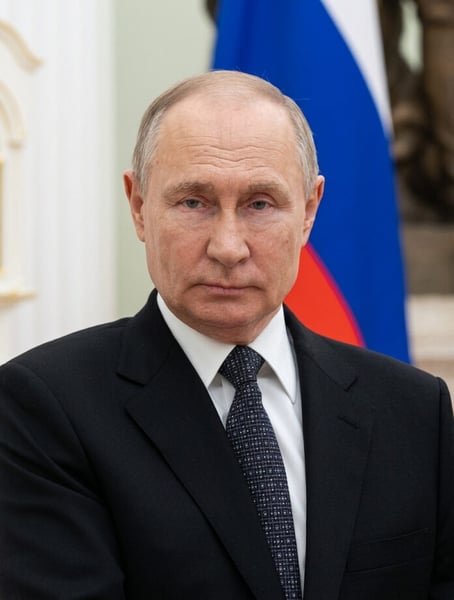
The Kremlin’s latest military display also coincides with Putin’s visit to Beijing, where discussions with Xi Jinping are expected to focus heavily on energy cooperation, defense coordination, technology partnerships and efforts to accelerate a multipolar global order independent of US influence. Putin described Russia-China relations as reaching an “unprecedented level” ahead of the summit.
China has emerged as Russia’s most important economic partner since Western sanctions isolated large sections of the Russian economy after the Ukraine war escalated in 2022. Beijing has significantly expanded purchases of Russian oil and gas while increasing trade settlements using national currencies instead of the US dollar.
The simultaneous timing of the nuclear drills and Putin’s China visit has intensified concern among Western officials who increasingly believe the Russia-China partnership is constructing a long-term strategic alliance designed to counterbalance NATO and US-led global influence. While both countries publicly insist their partnership is defensive and not directed at third nations, military coordination between the two powers has steadily expanded over the past several years.
Belarus has become another critical factor in the evolving security landscape. Minsk confirmed that separate joint nuclear coordination exercises involving Belarusian and Russian forces had already begun earlier this week. Belarusian officials dismissed European concerns about the drills and argued that NATO expansion near Belarusian borders forced Minsk and Moscow to strengthen joint defense preparedness.
The deployment of Russian tactical nuclear weapons inside Belarus marked one of the most consequential military developments in Eastern Europe since the collapse of the Soviet Union. NATO countries bordering Belarus, particularly Poland and the Baltic states, have repeatedly warned that Russian nuclear deployments near alliance territory significantly increase the risk of escalation and miscalculation.
Russia’s revised nuclear doctrine has added another layer of concern. Moscow updated its strategic doctrine in 2024, lowering the threshold for potential nuclear retaliation scenarios, especially in cases where attacks involving conventional weapons are supported by nuclear powers. Western governments interpreted the change as a warning aimed directly at NATO members supplying advanced weapons systems and intelligence support to Ukraine.
Russian officials insist the doctrine is defensive and necessary because of what Moscow describes as increasingly aggressive NATO expansion and military activity near Russian borders. Kremlin spokespersons have repeatedly accused the West of pushing Europe toward dangerous confrontation by continuing military support for Kyiv.
The current drills reportedly include deployment simulations involving Russia’s advanced missile systems, including the Sarmat intercontinental ballistic missile and newer hypersonic-capable weapons platforms. Russian military officials claim these systems can bypass Western missile defense networks and guarantee strategic deterrence even under large-scale conflict conditions.
Ukraine’s expanding drone operations deep inside Russian territory have further heightened tensions. In recent weeks, Ukrainian strikes reportedly targeted infrastructure and military facilities far beyond frontline regions, exposing vulnerabilities in Russian air defense systems and increasing pressure on the Kremlin domestically.
At the same time, Moscow continues presenting the war as part of a larger struggle against Western political and military domination. Russian officials argue that the US and NATO transformed Ukraine into a proxy battlefield intended to weaken Russia strategically and economically while preserving unipolar global control.
China has largely avoided directly endorsing Russia’s military operations in Ukraine but has consistently criticized Western sanctions and NATO expansion. Beijing maintains that long-term security in Europe cannot be achieved through military blocs and insists diplomatic negotiations remain the only viable solution to the conflict.
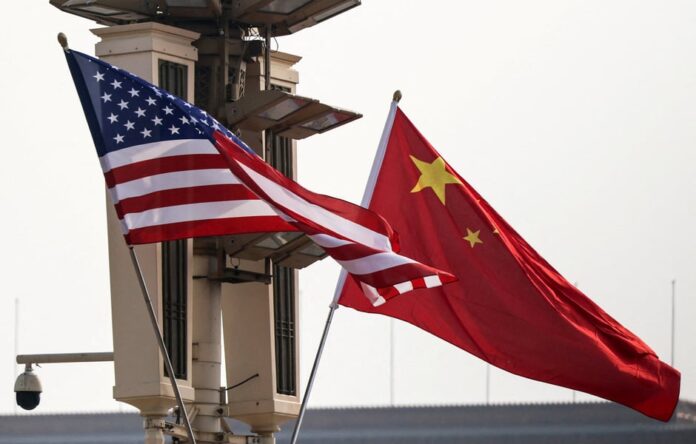
Still, the optics of Putin and Xi meeting while Russia conducts massive nuclear exercises carry enormous geopolitical significance. The summit reinforces perceptions that Moscow and Beijing are moving closer toward a coordinated strategic partnership capable of reshaping global power dynamics over the coming decade.
Energy is expected to remain central to the discussions in Beijing. Both sides are reportedly advancing negotiations surrounding the Power of Siberia 2 pipeline project, which would dramatically increase Russian natural gas exports to China and reduce Moscow’s dependence on European energy markets.
Defense cooperation is also expected to deepen. Joint military exercises between Russia and China have become increasingly frequent across the Pacific, Arctic and Central Asian regions. Intelligence sharing, cybersecurity coordination and advanced technology partnerships are now central pillars of the evolving relationship.
For the West, the convergence between Russia and China represents one of the most significant geopolitical challenges since the end of the Cold War. NATO countries have accelerated military modernization programs while warning that the international security environment is becoming increasingly unstable.
The collapse of several Cold War-era arms control agreements has only amplified those fears. With major nuclear powers modernizing their arsenals simultaneously and global nuclear tensions rising sharply, strategic instability is now at levels not seen in decades.
Russia’s latest drills therefore extend beyond military exercises alone. They symbolize a rapidly changing geopolitical order in which Moscow and Beijing increasingly position themselves as leaders of a multipolar world challenging Western political, economic and military supremacy.
As Putin and Xi meet under the shadow of strategic missile deployments and nuclear force mobilization, the message from Moscow is unmistakable: Russia intends to demonstrate that despite sanctions, international pressure and prolonged war, it remains a central military power capable of reshaping the global balance alongside China.