WASHINGTON – Chinese-made goods are routing through more than 40 countries under fraudulent origin labels to avoid Trump’s tariffs, the White House said Thursday, naming South Korea, India, Japan, Canada, Mexico, and dozens of other trading partners as participants in a scheme it called the “Great Transshipment Scam.” By the administration’s own estimate, the arrangement is draining between $19 billion and $26 billion from the federal government annually.
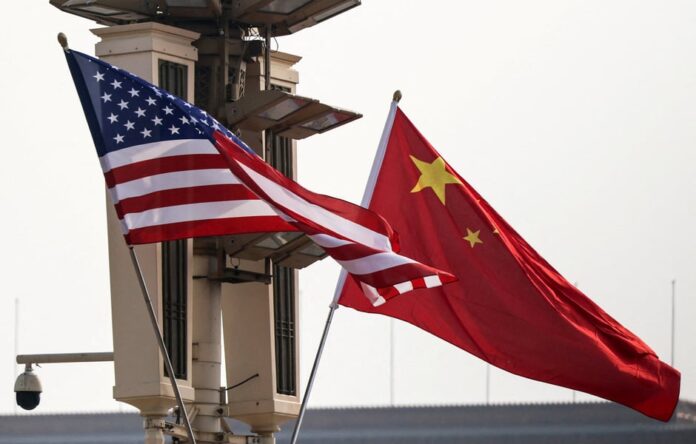
The White House report, released Thursday, put a formal name on a problem that customs officials have tracked for years. Chinese manufacturers facing tariff rates that in some categories exceed 145 percent have found a simpler alternative: route goods through a third country, obtain a new certificate of origin, and ship to the United States at a far lower rate. The total value of goods moving through this channel, the report estimates, runs from $40 billion to as much as $303 billion per year, with the administration settling on a central figure of roughly $75 billion.
The scheme carries consequences that extend beyond federal receipts. Transshipment has contributed to a $113 billion to $150 billion annual reduction in U.S. gross domestic product and displaced approximately 450,000 American manufacturing jobs, the very workers that the tariff policy was designed to protect.
The mechanics are not technically complex. A Chinese manufacturer ships electronics, auto parts, or solar panels to a jurisdiction with lower tariffs and looser customs oversight, often a country with free-trade-zone rules or bonded warehouse infrastructure. There, the goods are relabeled, repackaged, or subjected to minimal processing sufficient to generate a new certificate of origin. The shipment then enters the United States under the customs credentials of the transit country, paying that nation’s tariff rate rather than China’s. The White House calls the practice “origin laundering.”
Peter Navarro, the president’s senior trade advisor, framed it in explicit terms. “Every dollar lost to this Great Transshipment Scam is a dollar stolen from American workers, manufacturers, and taxpayers,” he said.
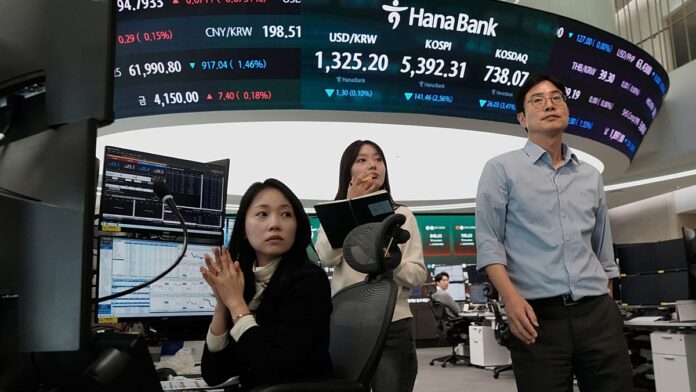
The report classifies named countries by risk tier. South Korea, whose semiconductor supply chains are deeply integrated with Chinese component suppliers, is listed as a Tier 1 high-risk jurisdiction. Vietnam, Malaysia, and nine Latin American nations also appear in the higher-risk categories. India, Canada, Japan, and European Union member states are among the more than 40 flagged. The White House did not specify which of those countries will face formal penalty proceedings, leaving the question of consequences unresolved.
The administration has moved on three fronts. Executive Order 14411, signed earlier this year, expands customs enforcement authority and allows expedited scrutiny of shipments triggering origin-fraud indicators. Anti-transshipment provisions have been written into the reciprocal trade agreements the administration has negotiated since 2025, requiring partner countries to certify that goods bearing their origin labels contain substantive domestic value-added content.
The most operationally significant expansion is the “Detective Border” system, an AI-powered screening platform being deployed across U.S. Customs and Border Protection that cross-references shipment data, bills of lading, and import history using anomaly detection and computer vision to flag mislabeled cargo at the port of entry. The administration has positioned it as the primary tool for converting the report’s findings into enforcement actions, though it has not disclosed how many seizures or prosecutions the technology has produced so far.
The scale of the task is worth framing. Roughly 50,000 cargo containers arrive at American ports every day. Manual inspection historically covers a small fraction of that volume. The AI platform is designed to shift that probability calculus, but origin laundering distributed across 40 sovereign jurisdictions, each with its own regulatory environment, presents a challenge that no single screening system can fully address at the American port of entry. The deeper structural intervention requires cooperation from the named countries themselves.
That gap is the report’s most significant unresolved question. Naming a country as a participant in origin laundering is categorically different from penalizing it. The administration has updated trade agreements and deployed detection technology, but has not yet announced secondary tariffs on transit countries, which would represent a significant escalation and one that U.S. allies on the list, including Canada, Japan, and the European Union, could contest through the World Trade Organization.
The drone sector illustrates how quickly the enforcement environment has moved. The administration imposed Chinese drone tariffs of 100 percent earlier this month under a separate executive action. The transshipment report adds a different problem: if Chinese drone components are transiting through one of the named 40 countries and entering the United States under false origin documentation, the 100 percent tariff collects nothing on them.
The broader trade data complicates the administration’s narrative. China’s first-half trade reached a record $3.75 trillion in 2026, with high-technology exports rising 39 percent year on year. That growth, sustained under the weight of a tariff regime designed to suppress it, is the baseline against which the enforcement report should be read. The transshipment scheme is the administration’s formal explanation for the gap between policy design and results.
Whether Trump’s tariff regime can be sealed against an evasion network distributed across 40 sovereign jurisdictions is the question the report raises without answering. The economic incentive to find a workaround scales directly with the tariff rate: as long as the spread between what China pays and what a transit country pays covers the logistical cost of rerouting a shipment, the business case for origin laundering stays intact regardless of what any AI detection system at the port of entry is watching for.