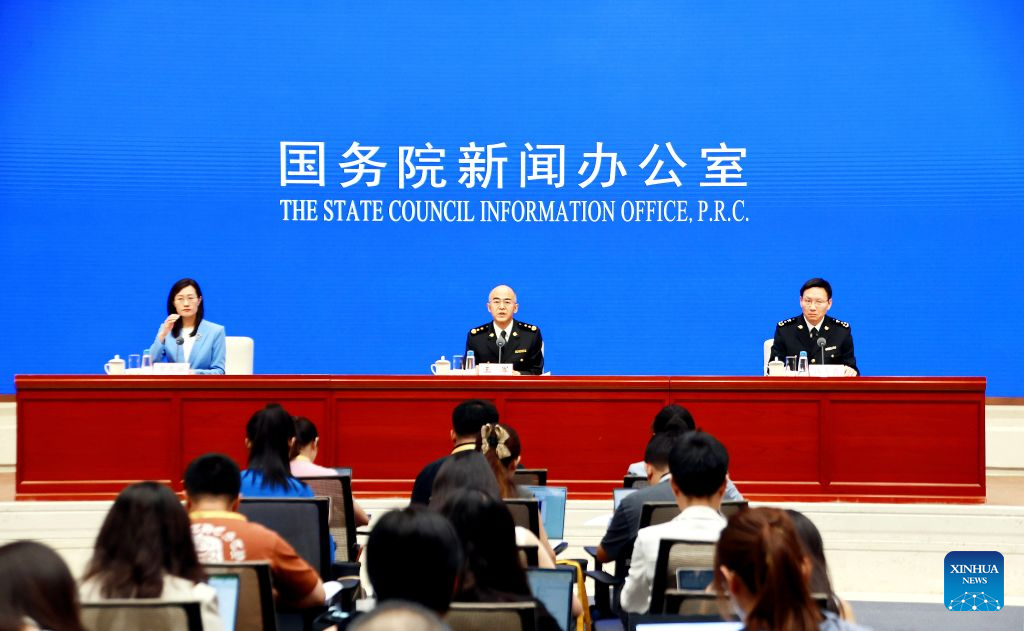

BEIJING – China’s total merchandise trade reached a first-half record of 25.47 trillion yuan, equivalent to $3.75 trillion, Xinhua reported Tuesday, citing the General Administration of Customs – a 16.9 percent gain over the same period last year and the first time the figure has breached 25 trillion yuan in any January-to-June period.
The data lands on a morning when US forces are trading strikes with Iran across the Gulf, a conflict rattling energy markets and redirecting container traffic away from Persian Gulf lanes. China’s export machine, confronted with US tariffs that have climbed through successive escalation rounds and a disrupted global shipping grid, is not showing either strain in the headline figures.
High-tech exports rose 39 percent in the first half, to 3.26 trillion yuan, the fastest-growing major category in the release. Computing hardware alone jumped 56.6 percent, to 5.13 trillion yuan – a figure that encompasses finished consumer electronics and the server infrastructure underpinning AI buildouts concentrated in Southeast and East Asian markets. Mechanical and electrical products, the broadest industrial category, climbed 20.1 percent to 9.36 trillion yuan and accounted for more than a third of total export value. Home appliances added 360.96 billion yuan, lifted by European heatwave demand. Sporting goods reached 67.53 billion yuan, with World Cup merchandise generating unusual volume.
Wang Jun, a deputy head of GAC, told reporters the results demonstrated “sound momentum” and “notable structural improvement.” He added that Beijing had “the confidence and capability to sustain the sound development momentum of foreign trade” – a formulation calibrated to address an audience skeptical that tariff pressure has been successfully absorbed.
The geography of China’s trade has shifted faster than the headline number implies. Countries in the Belt and Road Initiative absorbed 12.97 trillion yuan in the first half, up 14.8 percent, and for the first time accounted for 50.9 percent of China’s total trade. A year ago, BRI nations represented roughly 48 percent; two years ago, the figure was below 45 percent. The trajectory is steady and structural. Neighboring countries rose 20.6 percent, Latin America 16.2 percent, Africa 19.6 percent, and the European Union 10.2 percent – slower than other regions, partly because of secondary tariff dynamics affecting transshipment, but still positive.
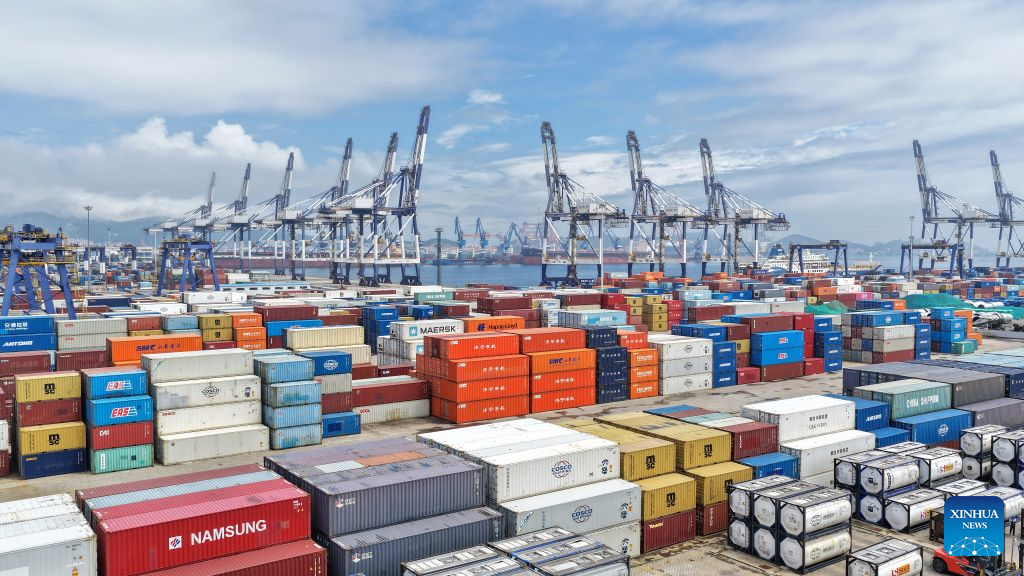
Private enterprises generated 57 percent of trade value – 14.53 trillion yuan, up 17 percent year-on-year – outpacing state-owned firms and foreign-invested enterprises, both of which also grew but at marginally lower rates. The primacy of the private sector in China’s export figures complicates the standard foreign-policy framing of Chinese trade as a state-directed operation, though state subsidies flowing through industrial policy to private solar, EV, and electronics manufacturers blur the distinction in practice.
Imports rose 22.1 percent to 10.74 trillion yuan, an acceleration that narrowed the trade surplus relative to what the export growth alone would have implied. GAC offered no single commodity breakdown in Tuesday’s headline release. Analysts and importers point to a combination of domestic demand recovery, strategic commodity stockpiling ahead of potential supply chain disruptions from the Iran conflict, and a sourcing shift toward non-US suppliers that has lifted the overall import bill even as American goods have been largely replaced. Beijing’s earlier move to impose sweeping helium export controls illustrated how conflict-driven commodity logic is reshaping both sides of China’s trade ledger.
The second quarter posted its strongest year-on-year growth since Q3 2021, the period that followed pandemic-era port disruptions. June alone grew 24.2 percent, the seventeenth consecutive month of year-on-year gains. That streak, sustained through a period of aggressive tariff escalation from Washington, is the clearest empirical rebuttal to the argument that US trade pressure would force a pace of restructuring fast enough to show up in slowing export volumes.
What the first-half record cannot answer is how much of the computing hardware surge reflects genuine demand growth and how much is front-loading. Factories across Guangdong and Fujian have been fielding orders from US importers filling warehouses ahead of the next tariff schedule; GAC’s aggregate numbers are structurally blind to the difference between a durable shift in demand and a temporary pull-forward. The question will only become legible when third-quarter data emerges.
China’s 100-trillion-yuan debt burden has grown more constraining even as trade has expanded – interest payments are absorbing an increasing share of Beijing’s central budget. Strong trade revenues provide one offset, but the structural gap between what trade generates and what domestic expansion costs is a line item policymakers have not publicly addressed. Wang’s confident formulation on Tuesday made no reference to it.
The structural read from Tuesday’s release is that China has largely completed – at least in aggregate terms – a diversification away from the US as a primary destination for its higher-value manufactured goods. Whether that shift holds at the current pace, or whether a sharper US economic slowdown or a third round of tariff escalation introduces headwinds that the BRI network cannot absorb at scale, is the question the data cannot yet answer.