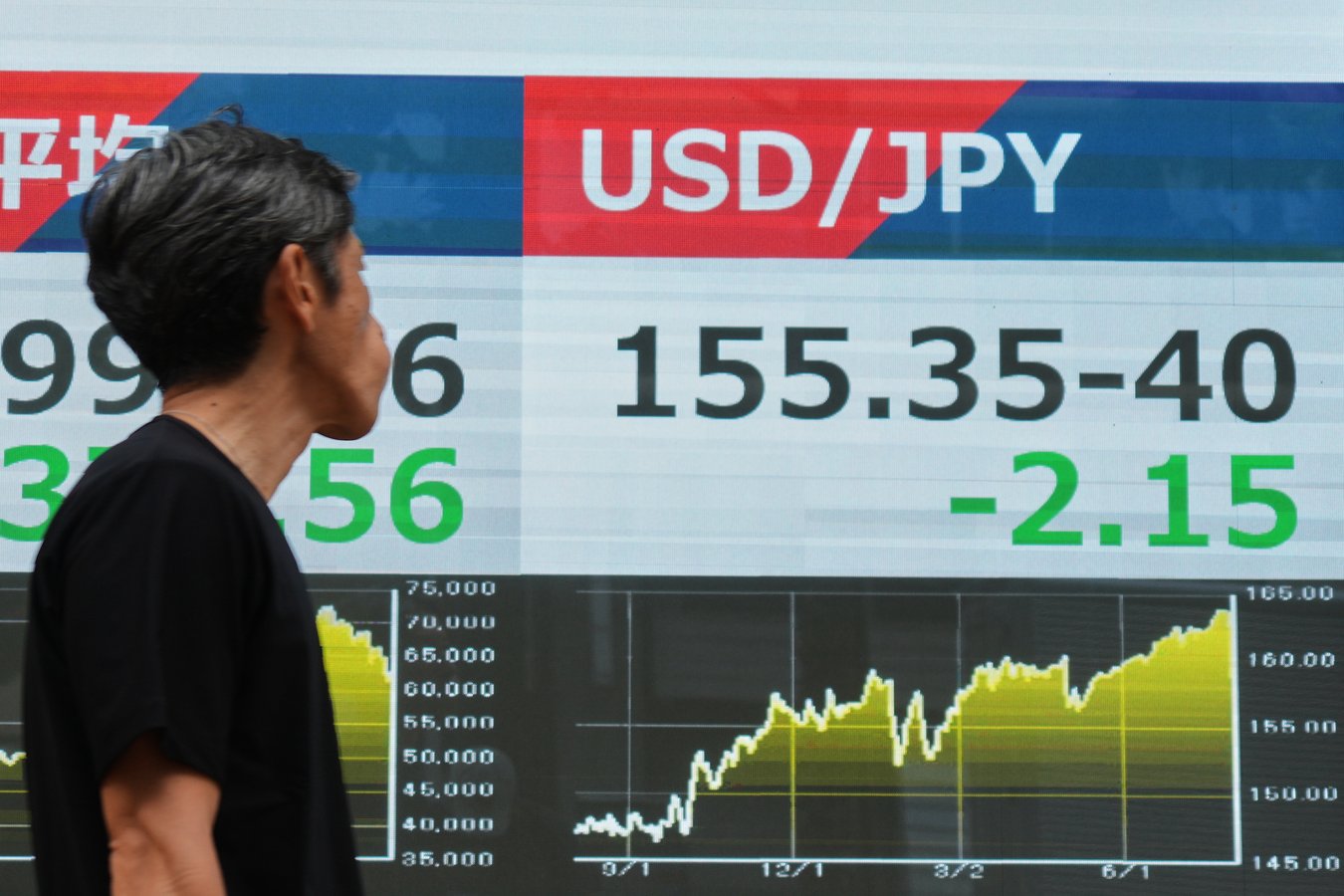

TOKYO – Japan’s yen gave back nearly half the gains from the joint US-Japan intervention that briefly pushed it to a three-month high last week, settling at 158.45 per dollar on Friday and leaving unanswered the question of how far authorities will let it slip before stepping in again.
The yen peaked at 155.23 on Monday, a full 8.76 points stronger than its pre-intervention nadir of 163.99 per dollar, a 40-year low reached on July 31. By the close of the week, it had retreated more than four points from that high. The reversal tracks a pattern Goldman Sachs strategists flagged when the intervention occurred: that without a change in the underlying rate differentials driving yen weakness, coordinated buying could slow but not stop the currency’s drift. Goldman Sachs and Morgan Stanley conducted the US Treasury’s yen purchases on behalf of the New York Federal Reserve, CNBC reported.
Finance Minister Satsuki Katayama, who confirmed the coordinated intervention with the US Treasury on Monday, has said Japan will not hesitate to act again. The statement is one she has issued after every major currency move this year. Whether it functions as a deterrent depends on market participants’ read of what specific level actually triggers action, and that level has never been publicly named.
The operation last week addressed the visible extreme of the yen’s collapse. The currency had fallen to 163.99 per dollar on July 31, pushed lower by oil import costs tied to the US-Iran conflict, consistent safe-haven dollar demand, and a rate differential between the United States and Japan that generates steady pressure for yen-selling carry trades. The Bank of Japan’s policy rate sits near zero; US benchmark rates are substantially higher. That gap, held open by Federal Reserve policy, creates a mechanical incentive to borrow cheaply in yen and invest in higher-yielding dollar assets. Each dollar drawn into that trade exerts additional downward pressure on the yen.
The scale of the joint response was significant. Japan deployed an estimated $58.97 billion in yen purchases on its side of the operation, Al Jazeera reported; Bessent’s yen order added a US commitment of $5 billion to $10 billion. One week later, that combined outlay has produced a net gain of roughly four points, the yen at 158.45 rather than 163. But the intervention’s peak effectiveness is already in the past.

Unusually, the US Treasury purchased yen using euros rather than selling dollars, a tactic designed to support the yen without signaling any preference for a weaker dollar. Treasury Secretary Scott Bessent framed the US position carefully. “We strongly support Japan’s decisive market and monetary steps to correct the substantial undervaluation of the yen,” he said. The phrasing endorsed Japan’s intervention without characterizing American participation as a dollar-weakening policy, a distinction that matters across emerging market assets and commodity pricing where dollar direction carries immediate downstream effects.
The structural forces that pushed the yen to 163.99 have not been altered by the intervention. Japan’s annual import bill exceeds ¥53 trillion and tracks the exchange rate almost mechanically: energy imports dominate, priced in dollars, meaning each point of yen weakness raises the landed cost of every barrel of crude and cubic meter of LNG Japan requires. Consumer prices have climbed for 14 consecutive months. The Bank of Japan has signaled it is open to a faster rate-hike path than its previous once-per-six-months schedule, with BOJ rate expectations entering market pricing in late July. Those expectations provided some underlying yen support through early August, but not enough to prevent this week’s reversal.
The Bank of Japan’s rate trajectory is now the primary variable markets are watching. If the central bank raises rates in September, the interest rate differential that drives carry trades narrows. That mechanical adjustment would structurally support the yen in a way that intervention cannot. Coordinated buying purchases time for the central bank’s credibility to build; it does not substitute for the rate normalization it is meant to enable.
For Japan’s households, the distinction between intervention and structural rate normalization is largely invisible. What registers is whether imported goods cost more or less, and whether utility bills went up or down. After 14 consecutive months of consumer price increases, the brief yen strengthening to 155 last week offered a momentary reduction in forward pressure on import costs. At 158.45, that relief is largely gone.
The US involvement also introduced a new analytical variable that markets are still processing. If Tokyo and Washington share an implicit floor for the yen, the deterrence logic is stronger than anything Japan could sustain unilaterally. A joint intervention that holds sends one signal. A joint intervention that gives back half its gains within seven days sends a different one: that the floor, if it exists, is higher than markets initially assumed, and that buying to defend it will recur.
Neither Katayama nor Bessent has specified what level of dollar-yen they are actually defending. The yen’s move from 163 to 158 represents a materially stronger currency than ten days ago. Whether that represents policy success depends on what success was defined to mean. Neither government has said.