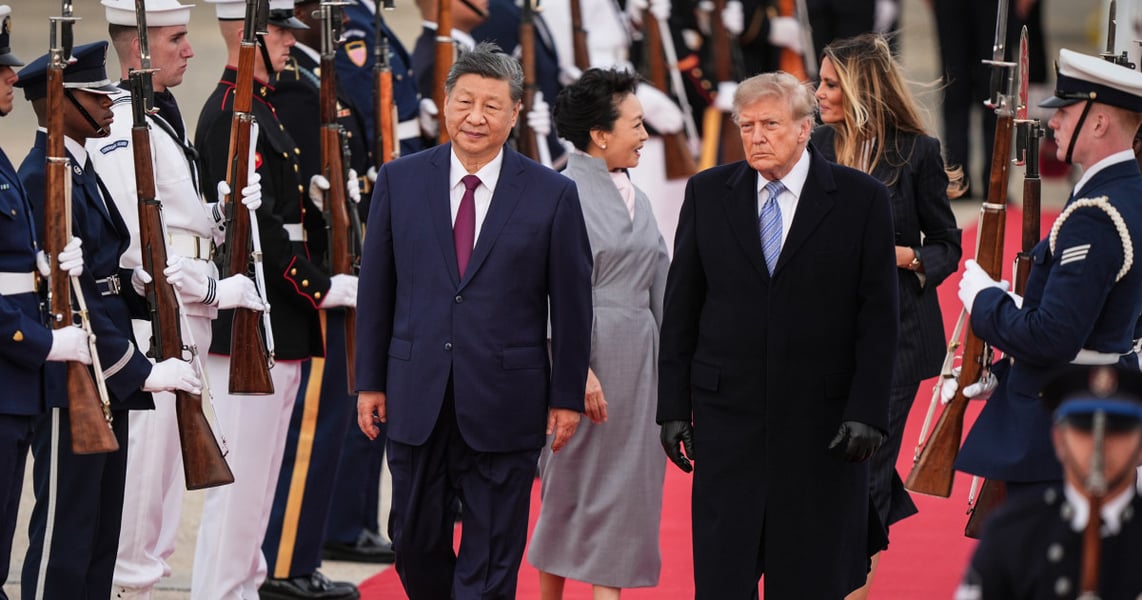

WASHINGTON — The most consequential conversation at the White House on Thursday may not have happened in the bilateral meeting room, where Donald Trump and Xi Jinping spent a little over an hour working through a prepared agenda on trade, artificial intelligence, and Iran. It may have happened over dinner, where Elon Musk, Tim Cook, Jeff Bezos, Sam Altman, Jensen Huang, and Sundar Pichai sat at a state dinner table with China’s president and no translator standing between them and what they actually need.
What they need is time — which is, coincidentally, exactly what the summit produced.
Treasury Secretary Scott Bessent announced Thursday that the US-China trade truce had been extended through January 10, past its mid-November expiry. The truce had lowered US tariffs on Chinese goods and suspended Beijing’s controls on exports of rare earths and critical minerals, the raw material inputs that American semiconductor, battery, and defense manufacturers depend on. Bessent described the extension as an opportunity to “give us more time to see what we can do on the economic front.” What he did not say is that the January 10 date is now the real pressure point — for markets, for the tech executives seated at dinner, and for both governments heading into a US midterm election cycle still shaped by gas prices and grocery bills.
The bilateral meeting itself offered the kind of warm imagery both sides had reason to want. Trump called their relationship a “truly great friendship.” Xi, according to Chinese state media, asked Trump to oppose Taiwan’s independence — a standard Beijing position delivered with the ritual solemnity that Xi’s government requires domestically and that Trump’s government has learned to absorb without committing. No joint statement was released. NBC News reported that China analysts had broadly predicted a summit long on atmosphere and short on deliverables, and that prediction held: Xi concluded the bilateral and left the White House Thursday afternoon after roughly an hour.
The one concrete outcome — the truce extension — was announced before the bilateral even concluded, which tells something about its political function. A truce extension is not a trade deal. It is an agreement not to make things worse while negotiators work on making them better. The original truce had already been extended once, from a May deadline to November. The January 10 date puts the renegotiation inside the first weeks of a new Congress, when the political landscape for any deal will look different than it does today.
On artificial intelligence, the summit produced talk but not structure. The US had proposed exchanging safety alerts with China for AI incidents that could affect national security — a narrow technical mechanism that would not require either side to expose its underlying models or capabilities. Experts had not expected a formal agreement before the talks began, and the afternoon readouts confirmed it: the two sides agreed to continue discussions, which is the diplomatic equivalent of noting that a conversation took place.
What did not get resolved in the bilateral room shifted, in a sense, to the dinner table.
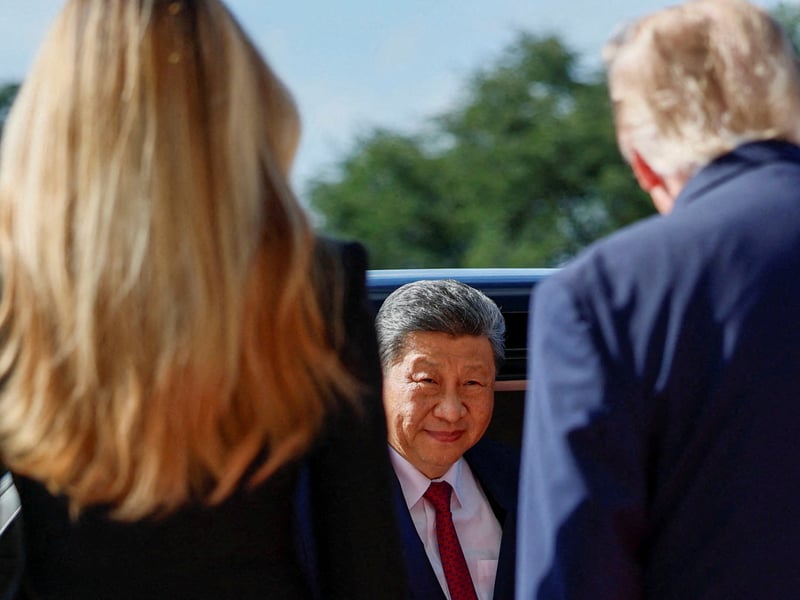
None of their Chinese counterparts attended.
The asymmetry is its own signal. American technology companies need things from China that American foreign policy has made considerably more difficult to obtain: minerals, manufacturing capacity, market access, and now — with AI becoming the defining infrastructure competition of the decade — some form of predictable rules for how far that competition goes before it becomes something else entirely.
Xi’s first US state visit in more than a decade arrived at a moment when the structural rivalry between Washington and Beijing has grown more entrenched, not less. The Iran war that the Senate failed to end on Wednesday by a single vote gives China continued leverage over Iranian oil flows, which Xi did not volunteer to constrain. Taiwan remained the deferred crisis both sides have an interest in not detonating.
The dinner ended. The 47-day clock started.
What the two presidents agreed to give each other was room — to negotiate, to maneuver, to avoid a breakdown in the weeks before January 10. Whether that room produces anything will depend on conversations that have not happened yet, between officials whose names were not at the state dinner and who will work through the specifics of a deal both governments want for different reasons.
The tech executives left the White House with nothing signed. But as Al Jazeera reported from Washington, they also left knowing that the man at the top of the Chinese state had spent an evening at the same table — close enough to hear exactly what they need, and to decide later whether to provide it.