
WASHINGTON — When Donald Trump drives to Joint Base Andrews on Wednesday to collect Xi Jinping’s plane, he will be extending a choreographic courtesy no American president has offered a Chinese leader in over a decade. What arrives with Xi over the following 72 hours will be considerably less ceremonial.
The summit scheduled for September 24 at the White House is the second meeting between the two leaders this year, following their May encounter in Beijing, but Xi’s first visit to American soil since 2015, an absence of eleven years in which both countries’ assumptions about each other have shifted fundamentally. The intervening period produced a trade war, a pandemic whose origins remain a diplomatic wound, export controls on semiconductors, and a competition over AI infrastructure that neither capital has shown any appetite to concede.
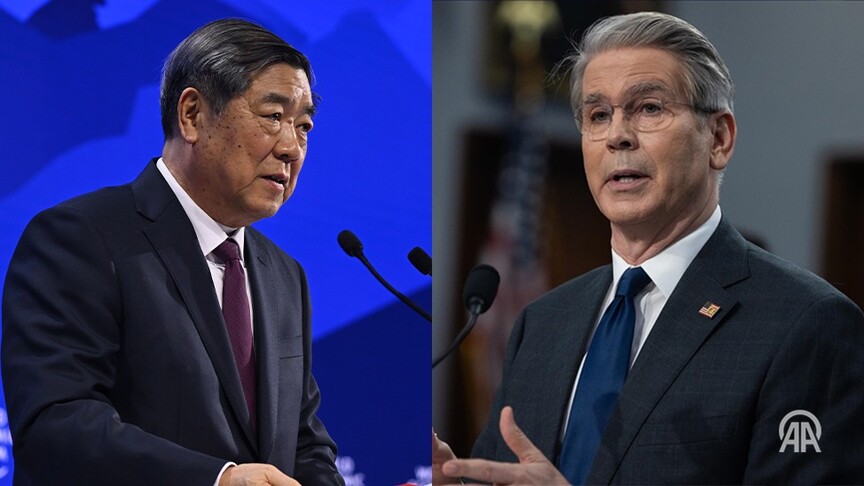
High-level negotiations in New York on Saturday offered the summit’s most concrete signal yet. Treasury Secretary Scott Bessent, joined by US Trade Representative Jamieson Greer, faced China’s Vice Premier He Lifeng and chief trade negotiator Li Chenggang at JPMorgan Chase’s Manhattan headquarters in roughly eight hours of talks that TRT World described as covering artificial intelligence, tariffs, and rare earth minerals. The American side emerged with one formal proposal: a new AI safety notification mechanism for both presidents to consider at the summit. The tariff picture remained undisclosed — a silence markets chose to treat as constructive, with S&P 500 futures rising 0.3%.
The most urgently expiring number in the room is November 10. That date marks the end of the 90-day tariff truce that pulled US and Chinese levies back from mutual rates above 100 percent and stabilised supply chains spanning three continents. Extending it, or replacing it with a longer framework, is the floor outcome both delegations have defined as essential. Trump has pressed for large Chinese purchases of American goods, with Boeing aircraft and agricultural products the headline line items, alongside progress on a mutual tariff reduction covering an estimated $30 billion in goods.
Taiwan is harder to price. Beijing’s position heading into Washington is that Trump should publicly declare the United States opposes Taiwanese independence, a shift from the longstanding American formulation that it does not support independence. The distinction is a single word; the strategic weight it carries in the Taiwan Strait is not. A $14 billion US arms package for Taipei, pressed by congressional factions, produced an explicit Chinese warning last week that its approval before Xi’s arrival would cancel the visit entirely. Congress did not act on it. Whether that restraint persists beyond Thursday’s state dinner is an open question neither delegation is expected to answer on the record.
Trump and Melania Trump will host Xi and his wife Peng Liyuan for an arrival ceremony on the State Floor on Thursday morning, followed by a military review in the Rose Garden and the bilateral meeting in the afternoon. A state dinner in the East Room, where both leaders will deliver opening remarks, closes the formal day. The itinerary carries the full weight of state-visit symbolism at a moment when the UN General Assembly is convening in New York. The constraints Trump has imposed on Iran’s UN delegation in New York this week make the welcome being prepared for Beijing’s delegation in Washington the more striking contrast.
Markets and outside analysts have calibrated expectations carefully. The Heritage Foundation and others who briefed reporters ahead of the visit noted that Washington summits of this type rarely transform the underlying structure of a relationship; they manage it. China’s economy has posted three consecutive quarters of above-target growth, a fact Xi’s team has ensured Washington is aware of entering the talks. Trump’s need for visible trade victories before November midterms is equally well understood in Beijing. Both men arrive with domestic pressures that a well-photographed state dinner can partially satisfy without resolving.
What the eight hours in Manhattan did not produce, and what the two days in Washington may not either, is a clear answer on where the competition over AI chips, critical mineral supply chains, and the geopolitical alignment of the Global South ultimately settles. The AI safety notification mechanism the American side proposed is an acknowledgment that incidents in these domains can escalate faster than any communication channel can contain. That is an honest assessment of where things stand. Whether it becomes the summit’s enduring output or a footnote depends on what the two men agree, and agree to leave unresolved, when the cameras are gone.