
NEW YORK — The meeting had barely begun when both sides already had reason to be uncomfortable.
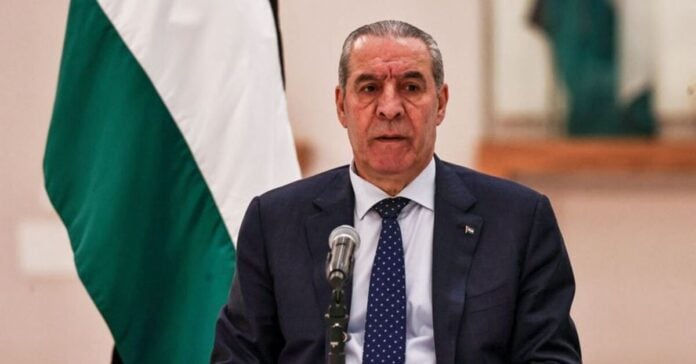
Scott Bessent, the US Treasury Secretary, and He Lifeng, China’s Vice Premier and Beijing’s top trade negotiator, sat down at JP Morgan Chase’s Manhattan headquarters on Sunday morning for a day of formal talks that both governments described as preparation for a far larger conversation. President Donald Trump and President Xi Jinping are scheduled to meet at the White House on September 24.
The agenda Bessent brought to New York carried weight on all three counts: the status of the US-China tariff truce, set to expire on November 10; the flow of Chinese rare-earth magnets that American manufacturers and chip companies say have been arriving too slowly and in insufficient quantities; and an effort to agree on basic guardrails for artificial intelligence before the gap between the two countries’ systems widens further. US Trade Representative Jamieson Greer also attended the meetings, which began around 10:30 in the morning and were expected to run through the day.
Whether they end with anything in writing is a question neither government has been willing to answer ahead of time. In nearly a year since both sides agreed to keep tariffs at their current levels rather than escalate further, the truce has held but the underlying disputes have not moved. China has barred exports of certain dual-use technologies and critical minerals to US firms. Washington has maintained high-tech export controls that Beijing calls discriminatory. Each side has continued to press the other while avoiding the formal escalation that would trigger the next crisis.
What makes this week different is the clock.
The tariff truce expires on November 10. The Trump administration has not signaled whether it will renew it, let alone on what terms. NBC News reported that Bessent said both sides had been close to an agreement but had not finalized one, and that the talks in New York were meant to narrow the gap before the summit. The practical function of the Bessent-He session is to produce enough convergence that Trump and Xi can announce something that sounds like progress: a framework, an extension, a shared statement of intent.
He Lifeng arrived in New York on Saturday, leading a Chinese delegation that has been in the United States since September 19. Xinhua, China’s official news agency, described the visit as consultations on “economic and trade issues of mutual concern.”
It did not mention—and U.S. Treasury Secretary Scott Bessent had publicly signaled beforehand—that the American side planned to raise Iran.
Beijing’s economic relationship with Tehran has long been a source of tension in U.S.–China diplomacy. Chinese purchases of Iranian oil have continued despite U.S. sanctions, while Washington has urged Beijing to use that economic leverage against Iran. The pressure has intensified as the Iran–Israel conflict has escalated.
China has consistently maintained that its commercial ties with Iran are a matter of sovereign trade, not a concession to be exchanged in tariff negotiations. Whether Bessent’s decision to raise the issue in this setting changes Beijing’s calculation is unlikely to be clear before the summit.
The AI portion of the conversation may be the most technically open-ended. Bessent has said publicly that the United States and China, as the two dominant forces in advanced AI development, carry a shared responsibility to prevent a security breakdown between their systems. He has proposed guardrails and sustained communication: not a treaty, but a framework for keeping both sides informed about what their models can do and where the shared risks lie.

The AI discussion has a direct connection to the rare-earth file that Bessent did not leave unmentioned. Rare-earth magnets are not simply components for electric vehicles and wind turbines. They are essential to the advanced semiconductor hardware that powers the training runs for frontier AI models. China’s export restrictions on critical minerals are not, in that sense, a separate issue from AI development. They are leverage over the physical infrastructure that makes advanced AI possible. TRT World reported that both sides have been trying to extend the tariff truce, though no lasting agreement has yet been secured.
The Trump-Xi summit at the White House on September 24 was announced last month and framed by both governments as a reset after a difficult year. In May, Trump flew to Beijing for talks with Xi that produced modest agreements on beef and poultry trade but left the core technology and tariff disputes unresolved.
Four months later, those disputes are still unresolved. He Lifeng and Bessent are not expected to settle them this weekend. The New York talks are preparation for preparation: a session that determines not whether the two countries will reach a deal on November 10, but whether the summit four days from now provides enough of a framework to try.
What a deal would look like, and whether one is reachable before the tariff truce expires, neither government is yet prepared to say.