
WASHINGTON – For the exporters who spent last winter reorganizing their supply chains around the US-China trade truce, the assurance was straightforward: tariffs would stay at their negotiated level through November 10, 2026, and both governments would use the year to reach something more durable. That assurance is now being quietly dismantled, piece by piece, without either side admitting it.
On June 2, the Office of the US Trade Representative proposed a new 12.5 percent tariff on Chinese imports, citing a Section 301 investigation into China’s failure to impose and enforce a prohibition on goods produced with forced labor. The proposal covers China alongside 59 other countries under a parallel investigation and is open for public comment through July 6, with a hearing the following day. A final decision is expected before the summer ends.
The significance of the move lies not in its stated purpose but in what it represents structurally. When the Supreme Court ruled in February that tariffs imposed under the International Emergency Economic Powers Act were unconstitutional, it eliminated the two duties that formed the backbone of Washington’s tariff posture toward Beijing – a 10 percent fentanyl-related levy and a 10 percent reciprocal tariff, both imposed under IEEPA. The administration responded the same day by signing a 15 percent global tariff under Section 122, a separate legal authority. Section 301 is now being used to do what IEEPA no longer can: keep pressure on China through a mechanism that has survived every legal challenge mounted against it since 2018.
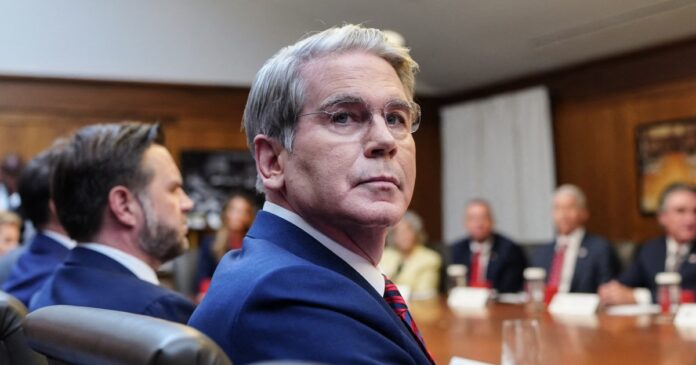
Together, those two investigations – one into forced labor practices, another into excess manufacturing capacity, which remains ongoing – are widely expected to result in tariffs at or near 10 percent each, effectively replicating the IEEPA structure through legally durable means. Treasury Secretary Scott Bessent told Reuters on May 19 that he believed Beijing would accept the restoration of prior tariff rates through the Section 301 process “as long as they don’t go higher.” What he did not say was whether the truce itself would be extended.
China’s Ministry of Commerce, for its part, has responded to the forced-labor tariff proposal with condemnation that stopped short of concrete counter-measures – a posture that itself carries meaning. Beijing condemned the new investigation because it had to, then waited. When reporters pressed a ministry spokesperson on May 20 about the truce extension, the answer was a studied evasion: China hoped the US would “honor its commitments” and ensure tariff levels would not exceed what was agreed at the Busan summit in October.
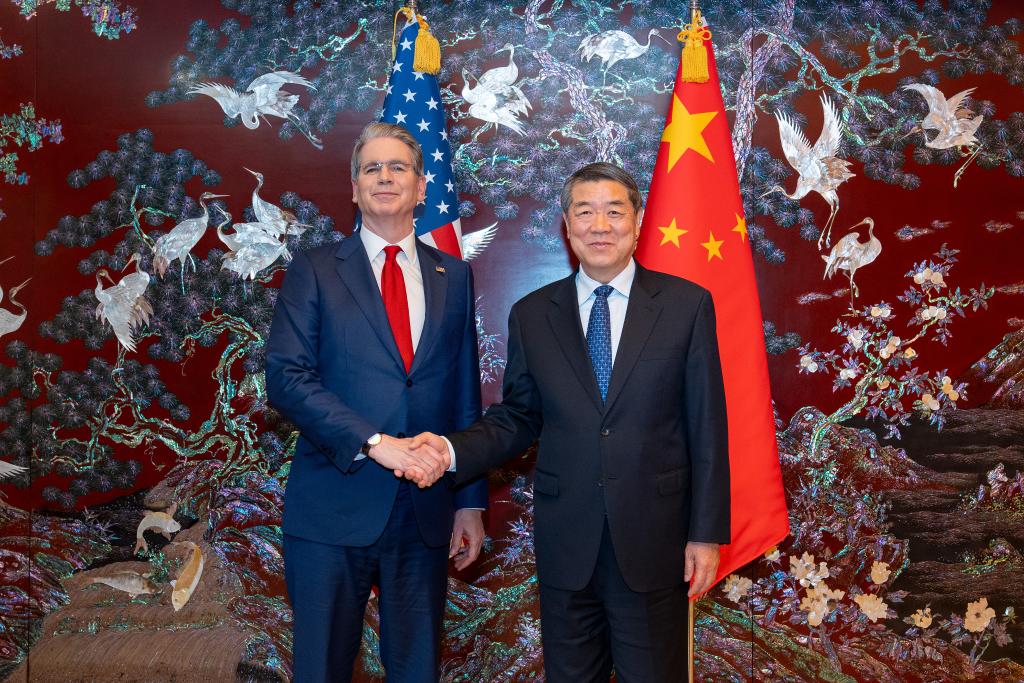
That summit, held between President Donald Trump and President Xi Jinping on the sidelines of the APEC meeting in South Korea, produced what both sides described as a one-year arrangement: the US suspended its heightened reciprocal tariffs on Chinese goods through November 10, 2026, in exchange for Beijing suspending its retaliatory measures, committing to large purchases of American agricultural products, and lifting restrictions on rare earth exports. The deal was real. What it was not was a resolution.
Bessent, in the same Reuters interview, said the US was “not in a rush to extend” the truce and added “Things are stable.” That phrasing – stability as a stand-in for strategy – is either a negotiating posture or an admission that Washington has not decided what it wants from China beyond the November deadline. Neither interpretation is reassuring to companies that have spent a year making sourcing decisions on the premise that the truce would hold.
The effective tariff rate on many Chinese goods shipped to the US currently sits near 30 percent – still the highest of any trading partner – as Section 232 duties on steel, aluminum, and copper stack with the global Section 122 tariff and the Section 301 levies that have been in continuous force since 2018. Even with the Busan truce intact, the trade relationship between the world’s two largest economies operates behind walls that were built on the premise of fundamental disagreement, not managed competition.
The forced-labor investigation adds a dimension that Beijing finds particularly sensitive. Unlike the fentanyl and reciprocal tariff arguments, which both sides have managed through bilateral negotiation, the forced labor framing is categorically harder to trade away. A government cannot publicly agree that its exports involve forced labor in exchange for a tariff reduction. What Beijing can do – and appears to be signaling it will do – is accept the tariff as a line item while denying the underlying premise, provided the number stays within the Busan ceiling.
That ceiling is itself unstable. A second Section 301 investigation, targeting structural excess capacity across Chinese manufacturing sectors, is still under review. Analysts tracking the proceedings note that excess-capacity findings have historically supported steeper tariff proposals than forced-labor investigations, and that any resulting rate could push total duties above the Busan threshold – potentially triggering the very escalation both sides have so far avoided.
What remains genuinely unknown – and what neither government has addressed directly – is whether any of this leads to something more stable after November 10, or whether the truce simply expires, the Section 301 tariffs stand in their place, and both sides declare the arrangement a success while manufacturing continues to shift away from China to Vietnam, Mexico, and India regardless. According to research from the Peterson Institute for International Economics, the bilateral trade agreements the Trump administration has negotiated with nine countries are architecturally designed to push US trade partners away from Beijing – a structural dynamic that continues whether or not the tariff rates themselves change.
The USTR has said it will collect public comment through July 6 before conducting a formal hearing and issuing a final determination. The timeline means a decision lands squarely in the middle of the summer, months before November 10 – giving both governments maximum uncertainty to manage simultaneously. EH’s Economy Desk reported last week that the administration is also contesting $175 billion in tariff refunds the courts have ordered following the IEEPA ruling, adding another pressure point to a trade posture already stretched across three separate legal authorities. Earlier this month, USTR targeted 60 countries over forced labor, underscoring how broadly Washington is now deploying Section 301 as its primary trade enforcement mechanism.
Beijing has not announced any retaliatory investigations since the forced-labor proposal was published – a restraint that is either strategic patience or a signal that China, facing its own economic headwinds, has concluded that holding the truce together costs less than breaking it. What no one in either capital has said is what happens the morning of November 11.