
ARLINGTON – The Air Force One replacement program has been producing losses at Boeing for years, but the second quarter of 2026 put the cost in clearer terms: a $280 million charge from the presidential aircraft contract set against what would otherwise have been a more compelling recovery quarter. Boeing’s Q2 2026 earnings disclosure showed the company generated $631 million in free cash flow during the period and brought in $24.6 billion in revenue, both representing meaningful progress from a company that has spent the better part of three years clawing back from production crises.
Revenue of $24.6 billion for the second quarter exceeded analyst estimates, and the return to positive free cash flow marks the first time in several quarters that Boeing has been cash-generative, a metric its leadership has described as the central measure of its recovery. The commercial aircraft backlog reached $715 billion, a record, representing tens of thousands of undelivered planes that give Boeing’s production schedule visibility extending well beyond 2030.
The Air Force One program, technically designated VC-25B, has been a persistent source of financial pressure that commercial aviation improvement cannot neutralize. Boeing holds a fixed-price contract with the US Air Force to replace the current presidential aircraft at a price locked in under the first Trump administration, a deal that has since encountered cost overruns that Boeing rather than the government must absorb. The $280 million charge in Q2 reflects additional cost pressure on the already strained program, and Boeing has not provided guidance on when Air Force One will stop generating accounting losses.
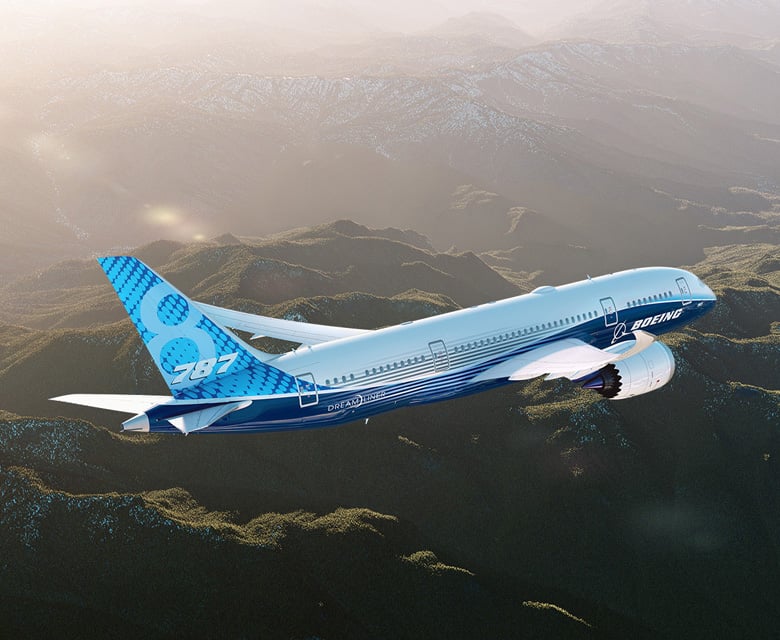
The quarter’s results also reflect the lingering effects of a company-wide IT failure on June 30, the final day of the quarter, which halted inspections, paperwork, and deliveries across 737 and 787 production lines from Washington State to South Carolina. Boeing ruled out a cyberattack at the time, but the outage disrupted the delivery count that commercial aviation companies use as a proxy for quarterly operational health. Delivery totals for Q2 climbed compared to Q1, according to the results released Tuesday, which Boeing attributed in part to improved production cadence following the FAA’s July 20 restoration of Boeing’s self-certification authority for 737 MAX and 787 jets.
The FAA’s decision to allow Boeing to resume issuing airworthiness certificates came after eight months of shared inspection data showed comparable quality outcomes. That restoration is significant for Q3 and beyond: the certification backlog created during the shared-inspection period had been limiting how quickly Boeing could deliver completed planes to customers and recognize the associated revenue.
Wall Street’s reaction to the results reflected the Air Force One problem more than the revenue beat. Analysts had built in expectations for a narrower net loss in Q2, and the $280 million presidential aircraft charge pushed the quarterly bottom line wider than consensus estimates despite the revenue performance. The pattern illustrates a structural tension in Boeing’s recovery: its commercial aviation business is improving, but it carries a fixed-price defense obligation that has no clean exit and continues to generate losses regardless of how well the commercial side performs.
The commercial aviation segment has been the most reliable part of Boeing’s recovery. Orders for 737 MAX jets have recovered significantly from the two fatal crashes and subsequent production quality controversies that defined the company’s difficulties from 2019 through 2024. Customer airlines, facing fleet capacity constraints globally, have maintained order positions rather than canceling, and Boeing’s commercial backlog represents the industry’s clearest indicator that demand for its products remains intact even as manufacturing execution continues to improve.
What Boeing’s Q2 results do not resolve is the question of whether the Air Force One program will eventually reach a negotiated resolution or continue to be absorbed as an annual loss. Fixed-price defense contracts with significant cost overruns have historically been settled either through renegotiation or through a combination of partial government relief and manufacturer write-offs. Boeing has not indicated which path, if any, is being explored, and the US Air Force has not commented publicly on the program’s current financial trajectory.
The free cash flow figure of $631 million represents the clearest measure of operational progress. Cash flow is harder to manipulate through accounting choices than net income, and a positive result for the first time in years indicates that Boeing is collecting from customers, managing working capital, and absorbing program costs in a way that is no longer structurally destructive to its balance sheet. The Air Force One charge will appear on the income statement. The cash flow number suggests the commercial business is generating enough of the real thing to withstand it, for now.