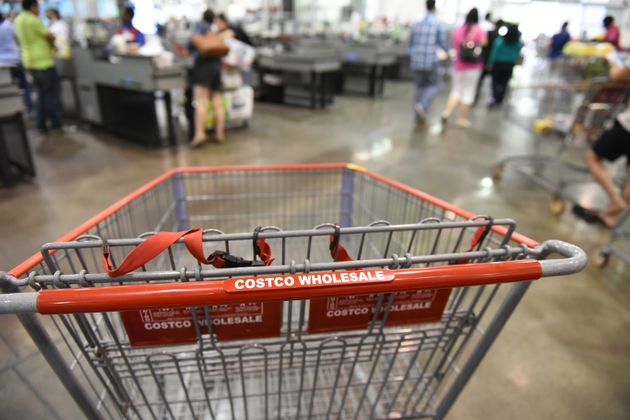

NEW YORK — When the S&P 500 shed three-quarters of a percent on Tuesday and the Nasdaq dropped more than a full point, Costco Wholesale managed a ten-basis-point gain. That is not a headline number. For investors watching a $126 billion retailer hold firm on a day when everything else stepped back, it told a story about where institutional money is parking itself ahead of Wednesday’s quarterly earnings report.
Shares of Costco Wholesale Corporation (NASDAQ:COST) closed at $899.41, up $0.90 from Monday’s close, as broader markets absorbed the impact of a September S&P Global manufacturing PMI reading that came in hotter than economists had projected. The 10-year Treasury yield climbed to 5.135 percent by the close. Against that backdrop, Costco’s marginal advance was not nothing.
The fourth-quarter results, due after the bell Wednesday, carry a firm consensus: analysts project earnings per share of $6.55, representing roughly 12 percent growth year over year, on revenue of $94.85 billion — a 10 percent gain. Those numbers reflect Costco’s decade-long pattern of compounding execution, the kind that keeps the stock trading at 37 times forward earnings even after a year in which the consumer absorbed inflation from every direction.
But Rupesh Parikh at Oppenheimer raised a cautionary note before the release. In a September 16 research note, Parikh — who rates COST Outperform with a $1,160 price target — pointed to how US tariff refunds are being accounted for in the quarterly numbers. Strip those refunds from the core business figure, he wrote, and the underlying earnings per share picture looks less clean than the headline consensus implies. Whether that accounting wrinkle shows up in the stock’s reaction Wednesday will depend on how management frames the tariff exposure on the call.
Robert Ohmes at Bank of America takes a less cautious read. Ohmes reduced his price target to $1,095 from $1,200 in the same research period — a trim reflecting near-term model updates, not a change in investment thesis. His Buy rating stays intact. At $1,095, that is roughly 22 percent above Tuesday’s close. Freedom Broker, the latest voice to weigh in, upgraded COST to Buy with a $1,030 target.
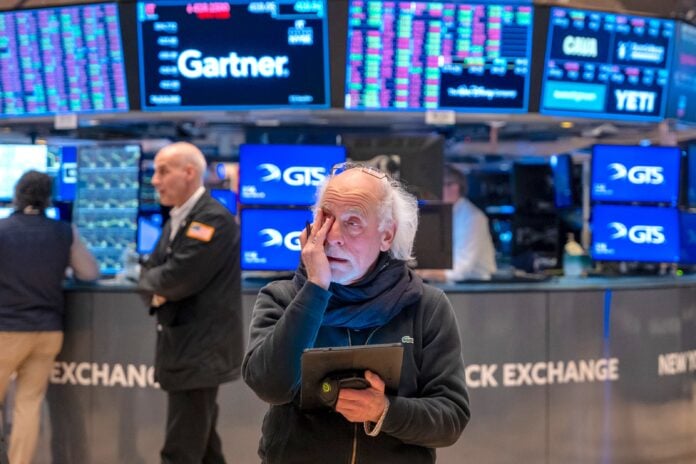
Wall Street‘s session Tuesday unfolded as a textbook rate-shock selloff. The Federal Reserve‘s policy stance — rates held elevated as the central bank navigates an Iran-war-driven inflation rebound that pushed the consumer price index to 3.7 percent in August — left the 10-year Treasury at levels that put pressure on equities with high multiples. Costco’s multiple is high, but its business model — membership renewal rates above 92 percent, gasoline sales driving traffic, Kirkland Signature private-label products carrying margin — argues that the premium is earned.

Membership fee income is the other variable analysts will scrutinize. Costco raised its annual fees in September 2024, the first increase in seven years, pushing the Gold Star individual membership to $65 from $60 and the Executive tier to $130 from $120. A year out, renewal rates serve as the read on whether the increase caused meaningful friction. Most analysts expected none, and the consensus numbers suggest they have not revised that view down. But the actual renewal figures will confirm or complicate that assumption.
According to analysis from Seeking Alpha, twenty-one analysts covering COST carry an average price target of $1,085.26, with a Moderate Buy consensus rating. That spread between the current share price and the analyst community’s central estimate is one reason the stock has held up: the market at $899 is pricing in caution the analysts largely do not share.
Consumer confidence is an upstream risk. The University of Michigan’s sentiment index fell in August and September as oil prices climbed above $90 per barrel before retreating last week, and tariff-driven goods inflation has weighed on discretionary spending across the retail sector. Costco’s business is insulated by its bulk-buying model, membership structure, and Kirkland’s pricing power — but it is not immune. Parikh’s tariff-refund warning is not alarmism; it reflects the reality that even a company this well-run operates inside a macro environment still being rewritten by the Iran war’s second-order effects on shipping costs and imported goods pricing.
What Wednesday’s release will not answer: whether the current inflation cycle has a second leg that forces the Federal Reserve back toward tightening. That is a question for the data, not for Costco’s quarterly report. But it is the question behind every retailer being evaluated right now, and Costco’s management — better than most at giving measured, non-promotional guidance — will be heard carefully for whatever they say about the consumer heading into the holiday season.
The stock is $185 below the analyst consensus price target. Closing that gap depends on a clean earnings read and a management tone that signals confidence without overselling it.