NEW YORK — West Texas Intermediate crude settled below $100 a barrel Monday for the first time in more than a week, as an unexpected diplomatic signal at the United Nations and the fastest recovery in Saudi Arabian oil exports since August combined to strip roughly $5 of war risk premium from a market that had been pricing in a protracted conflict through the Strait of Hormuz.
Brent futures, the international benchmark, fell $2.12 to $101.75 a barrel. WTI declined to $98.34, a 2% drop on the session. Both benchmarks had been anchored above $103 for much of last week, sustained by Iranian threats over the Strait of Hormuz and persistent disruption to shipping through the Bab al-Mandab Strait.
Two developments on Monday changed the calculus.
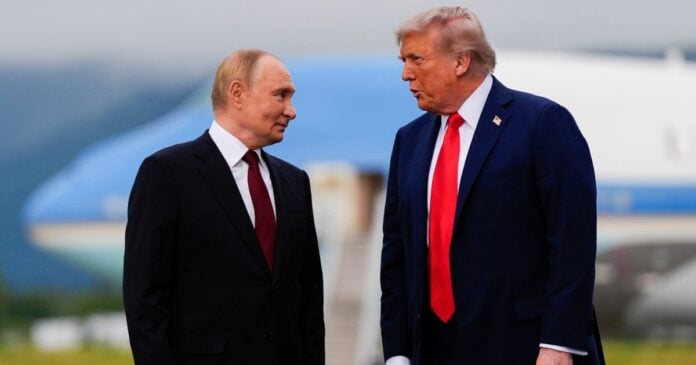
President Donald Trump, speaking to Fox News correspondent Trey Yingst in New York, said he would “probably be open” to meeting Iranian President Masoud Pezeshkian on the sidelines of the General Assembly this week. The word “probably” did considerable work in that sentence. Trump added, in the same breath, that Iran would be “wiped out” or allowed to “rot economically” if no deal emerged. Markets read the language less as a threat than as a negotiating posture, one that signals Washington sees some value in de-escalation even as it refuses to say so plainly. Trading desks flagged the Fox interview as the first time Trump has used the construction “open to meeting” in relation to Tehran since strikes began.
Pezeshkian is scheduled to address the General Assembly on Wednesday. Trump speaks Tuesday. The two men will be in the same building at the same time, an arrangement that carries its own logic regardless of whether a formal meeting is confirmed. The United States has imposed a six-block movement restriction on the Iranian diplomatic delegation in New York, confining them to a narrow corridor around Midtown Manhattan without prior State Department clearance. Fox News reported the restriction, which adds friction to any sideline contact: every interaction between American and Iranian officials this week requires coordination through third parties, including a Qatari back-channel that has been active for several weeks without producing a ceasefire document.
The restrictions on Iranian diplomats drew a rebuke from Tehran’s foreign ministry, which called them a violation of the 1947 UN Headquarters Agreement. No formal protest was filed with the Secretary-General’s office as of Monday afternoon.

Riyadh’s stated target is to restore the full pipeline and Hormuz flow, historically around 5.7 million barrels per day, by the end of the month. The East-West Pipeline, which routes crude overland from the Eastern Province to the Red Sea port of Yanbu, bypassing Hormuz, remained at approximately 60% capacity as of Monday morning. The Houthis have not publicly claimed any new interdiction of the pipeline since attacking a compressor station last month.
The combined effect was enough to push the market into a brief risk-off posture on war premium specifically, even as the underlying geopolitical position remained unchanged.
Analysts at Fitch Ratings said they were not revising their oil-price assumptions on the basis of Trump’s comments. The phrase “probably open” has appeared in prior White House statements without producing a meeting. Gregory Johnsen, a Gulf security analyst, was direct: “You’ve signaled resolve and then withheld it twice. That’s not deterrence. That’s an instruction manual.” Neither Brent nor WTI broke through technically significant support levels on Monday’s session, suggesting traders are treating the move as temporary relief rather than a structural repricing.

Equities were mixed. The S&P 500 added 0.2% to 7,650.50. The Nasdaq Composite rose 0.4% to 26,522.55, lifted in part by chip stocks following recent US-China trade developments. The Dow Jones Industrial Average slipped 0.2% to 51,682.64 as industrial names sensitive to energy costs sold off.

Whether Saudi Arabia can sustain its export recovery to 5.7 million barrels per day is the second open question. The East-West Pipeline is below capacity. Hormuz is passable but contested. The Houthis have not committed to ending maritime interdiction.
A $5 premium shed in a morning is easy to rebuild in an afternoon.