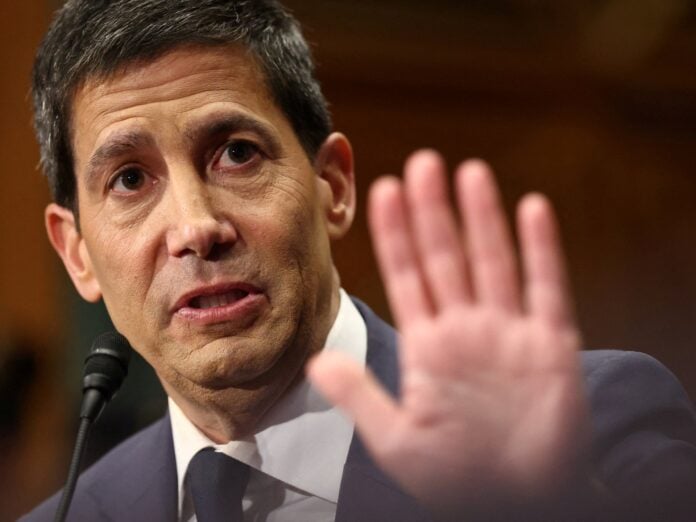

MUMBAI – Derivatives traders are awaiting clarity on how their contracts will be settled on expiry days as India’s market regulator prepares changes to its closing-auction framework. SEBI Chairman Tuhin Kanta Pandey said on October 10 that the regulator hoped to issue guidelines in about a week, after examining feedback on the mechanism.
The review concerns the relationship between auction-derived closing prices and the prices used to settle derivative contracts. Pandey’s announcement supplies an expected timetable, not a confirmed implementation date. That distinction matters for brokers and traders preparing for a change whose final formula has not been announced in the reporting reviewed for this article. Pandey moved to the regulator from the finance secretary’s post, Nikkei Asia reported when he was named.
The Securities and Exchange Board of India received around 20,000 comments by 7 p.m. on October 3, the consultation deadline. The regulator clarified that an earlier figure of 3,500 reflected responses received several days before the deadline, rather than the final total.
Pandey said at the second Capital Market Confluence 2026, organised by the Bombay Stock Exchange Brokers’ Forum: “We are currently examining the comments and hope to issue guidelines in about a week’s time.” Fortune India reported his remarks on October 10.
The question is narrower than whether a closing auction should exist. The auction provides a process for determining closing prices. The consultation also examines the methodology for settling index and stock derivatives on expiry days, when the choice of a reference price has direct consequences for contracts reaching settlement. Cash-market closing prices and derivatives settlement prices are related, but they are not interchangeable concepts.

SEBI published its consultation paper on September 12. Its stated scope covers aspects of the Closing Auction Session, market timings and settlement methodologies for derivative contracts. The review therefore extends beyond a change to the trading clock: it concerns how the end of a trading session produces prices used elsewhere in the market.
For participants in India’s derivatives market, the practical distinction is between a proposal and an operative rule. Neither the consultation nor a chairman’s expected timetable establishes which settlement method will ultimately apply. Treating an anticipated circular as a completed decision would obscure precisely the uncertainty that traders need resolved.
The comment count also needs care. An earlier report citing more than 3,500 submissions was subsequently overtaken by SEBI’s clarification of around 20,000. The larger number indicates the volume of feedback, not how many participants supported a particular option. Without a breakdown of responses, it cannot establish a consensus for or against any settlement methodology.
Pandey’s latest remarks did not specify a final formula or a commencement date for the revised framework. The distinction leaves two separate decisions unresolved: what method the regulator chooses and when intermediaries must begin using it. Brokers cannot infer either answer from the phrase “about a week” alone.
Alongside the auction review, SEBI is working to bring tender offers, share buybacks and offers for sale within the interoperability framework for clearing corporations. Pandey said implementation was targeted for the end of November 2026. The Brokers’ Industry Standards Forum had flagged parallel clearing arrangements for those transactions as a source of additional costs and compliance requirements.

That clearing initiative is a separate business and market-infrastructure reform, not part of the promised settlement-price formula. Pandey said the changes were intended to improve capital efficiency and lower compliance costs while preserving settlement safety. The November target should not be confused with the shorter expected timetable for closing-auction guidelines.
The regulator is also preparing guidelines for the responsible use of artificial intelligence and machine learning. Pandey described a tiered approach incorporating accountability, data controls, kill switches and human oversight. He said regulated entities would remain responsible for AI outcomes, data quality, model governance and cyber resilience.
Pandey said: “Technology cannot dilute accountability.” The statement puts responsibility on the regulated firm even when software performs a task. It also marks a boundary between using technology to improve operations and assuming that automation reduces an intermediary’s obligations to investors or the market.
SEBI is separately considering simpler digital onboarding for Persons Resident Outside India, including removal of the physical-presence requirement. Pandey said that proposal had attracted more than 400 comments and that a circular was likely shortly. Those responses belong to a different consultation and must not be combined with the closing-auction total.
The wider programme includes graded broker compliance requirements and a review of depository regulations. But for traders holding contracts close to expiry, the outstanding question remains specific: which price will determine settlement, and from what date? Pandey has narrowed the expected wait for guidelines. The decision itself still has to supply those answers.