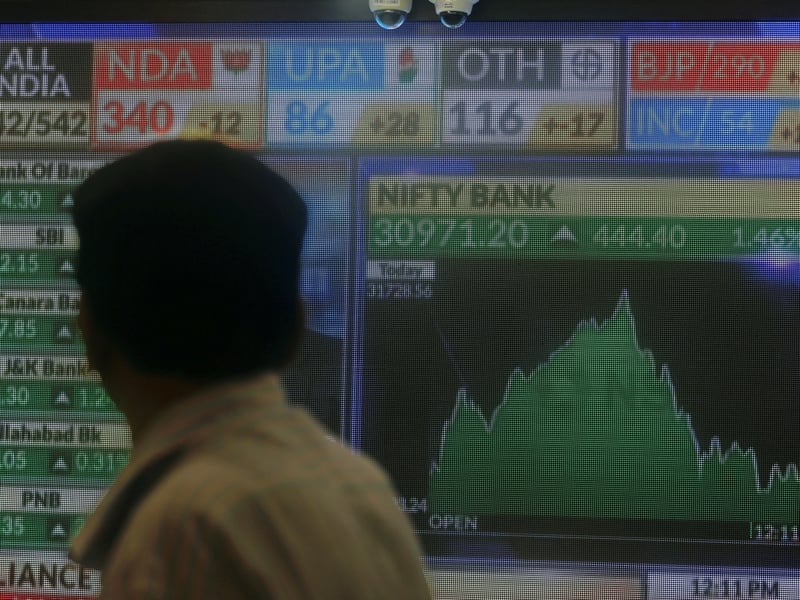

MUMBAI – For the second consecutive session, India’s equity benchmarks ended lower Tuesday as Brent crude surged toward $100 a barrel, a move that squeezed valuations across the country’s most import-dependent industries and left the Nifty 50 at its weakest close in three months.
The index settled at 23,635.10, down 0.61 percent, as selling pressure concentrated in three of the benchmark’s heaviest constituents: Reliance Industries Ltd. RELIANCE, HDFC Bank Ltd. HDFCBANK, and Tata Consultancy Services Ltd. TCS. The catalyst was not domestic monetary policy or an earnings revision. It arrived via a drone strike on Saudi soil.
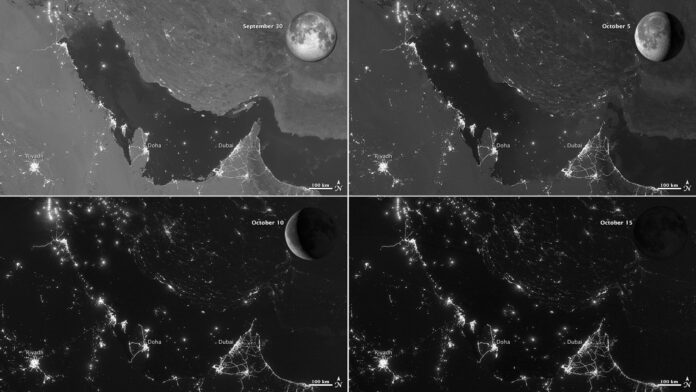
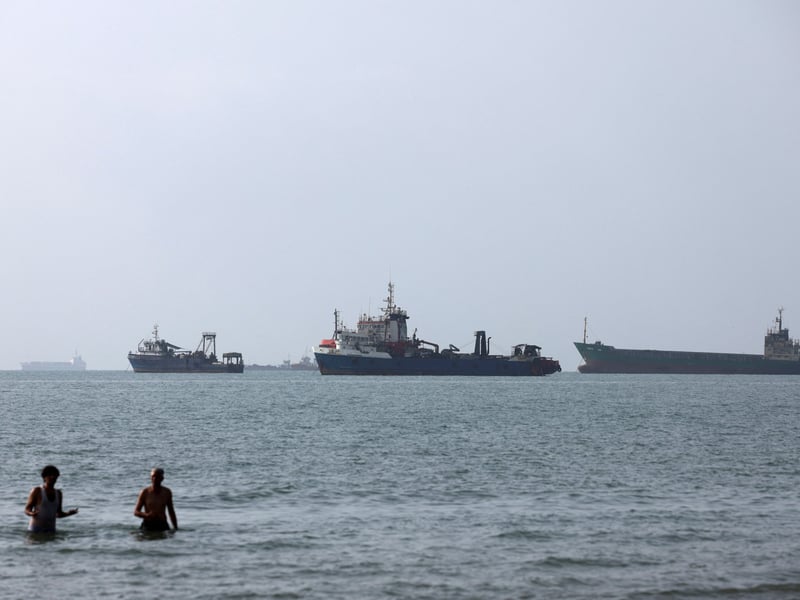
A Houthi attack on Saudi Aramco’s southern production facilities on Monday wounded at least 73 civilians, Al Jazeera reported, compounding a crude oil rally already in motion from Iran’s unilateral declaration of a maritime exclusion zone across Gulf shipping lanes. The Brent crude rally has repriced the energy risk embedded in India’s equity valuations more sharply than a single geopolitical incident might otherwise warrant. Brent settled near $99.10 per barrel, its highest level since late 2024, forcing fund managers to revisit calculations on the roughly $240 billion worth of petroleum products India imports annually.
Reliance fell 1.24 percent to Rs 1,293.20. Despite owning one of Asia’s largest integrated refining complexes at Jamnagar, Reliance’s refining margins historically compress when crude climbs faster than finished-product pricing adjusts. HDFC Bank slipped 0.84 percent to Rs 704.50, where concerns over elevated energy costs feeding into corporate credit quality weighed on private-sector banking broadly. TCS declined 0.64 percent to Rs 2,255.50, contributing to the information-technology sector’s drag, though the company’s own fundamentals, including the $2.6 billion AI revenue run rate signalled in its Q1 FY27 earnings, remain intact.
Bharti Airtel Ltd. BHARTI closed at Rs 1,839.00, down 0.81 percent. Tata Steel declined 0.79 percent to Rs 184.15, as coking coal and iron ore freight costs track crude closely enough that integrated steelmakers were already being priced for margin erosion before the session closed. Tata Motors settled at Rs 456.35.
Not every name ran lower. State Bank of India SBIN added 0.21 percent to Rs 1,008.00, extending a recovery above the psychologically significant four-digit threshold the country’s largest lender crossed last week. Defence-sector names staged the session’s sharpest counter-moves: Hindustan Aeronautics Ltd. HAL jumped roughly 3.6 percent to Rs 5,031.10, and Bharat Electronics Ltd. BEL gained 1.62 percent to Rs 410.55. Both stocks derive their revenue from the government’s domestic procurement cycle, a spending pattern that moves independently of global commodity swings and has benefited from India’s accelerated defence-modernisation budget.
| Company | Ticker | Close (Rs) | Change |
|---|---|---|---|
| Nifty 50 | NIFTY | 23,635.10 | ▼ -0.61% |
| Reliance Industries | RELIANCE | 1,293.20 | ▼ -1.24% |
| HDFC Bank | HDFCBANK | 704.50 | ▼ -0.84% |
| Bharti Airtel | BHARTI | 1,839.00 | ▼ -0.81% |
| Hindustan Aeronautics (HAL) | HAL | 5,031.10 | ▲ +3.6% |
| Infosys | INFY | 1,069.00 | Flat |
| Suzlon Energy | SUZLON | 45.50 | n/a |
| Bharat Electronics (BEL) | BEL | 410.55 | ▲ +1.62% |
| Tata Motors | TATAMOTORS | 456.35 | n/a |
| IRFC | IRFC | 82.00 | n/a |
| TCS | TCS | 2,255.50 | ▼ -0.64% |
| State Bank of India | SBIN | 1,008.00 | ▲ +0.21% |
| Tata Steel | TATASTEEL | 184.15 | ▼ -0.79% |
| Adani Power | ADANIPOWER | 205.32 | n/a |
| Vedanta | VEDL | 271.45 | n/a |
| Yes Bank | YESBANK | 22.42 | n/a |
| RVNL | RVNL | 207.50 | n/a |
| NSDL | NSDL | 814.00 | n/a |
| ITC | ITC | 264.30 | n/a |
| CDSL | CDSL | 1,327.50 | n/a |
| IREDA | IREDA | 114.00 | n/a |
| Source: NSE/BSE. Prices reflect September 8, 2026 closing data. Change percentages shown where confirmed for that session; “n/a” denotes prices sourced from recent prior trading days where same-session confirmation was not available. | |||
Infosys Ltd. INFY closed near Rs 1,069, broadly flat, as the market parsed contradictory signals on the IT sector’s second-half trajectory. The company raised its FY27 revenue guidance in its August earnings call, a signal the market initially rewarded, but deal ramp timing has since introduced uncertainty about whether the top-line improvement will translate cleanly into margin expansion. Against a broader IT index that shed between 0.9 and 3.8 percent earlier in the week, Infosys’s relative stability suggested the market had largely absorbed the uncertainty rather than repriced the stock lower again.
The mid-cap and small-cap indices offered the session’s clearest signal of market character. The Nifty Midcap 100 gained 0.17 percent; the Nifty Smallcap 100 rose 0.21 percent. Institutional selling concentrated in benchmark-heavy large-caps while retail activity held the broader market’s second and third tiers. That divergence is consistent with foreign institutional investor de-risking rather than domestic retail flight, a distinction that matters for interpreting whether Tuesday’s move reflects a fundamental reassessment of Indian equities or a liquidity-driven rotation out of the most liquid names.
What the session could not tell traders was how long crude’s approach toward triple digits would hold. OPEC+ left its October production schedule unchanged at its September meeting, removing one potential supply-side response. Iran’s Gulf exclusion zone remains active and has drawn pushback from Gulf Cooperation Council states without producing a diplomatic resolution. Whether the Houthi-Saudi escalation draws a counter-military response or a diplomatic one will shape Brent’s next directional move, and with it the degree of pressure on India’s annual oil import bill and the equities most exposed to it.