
NEW YORK — The Persian Gulf is becoming a different kind of conflict zone.
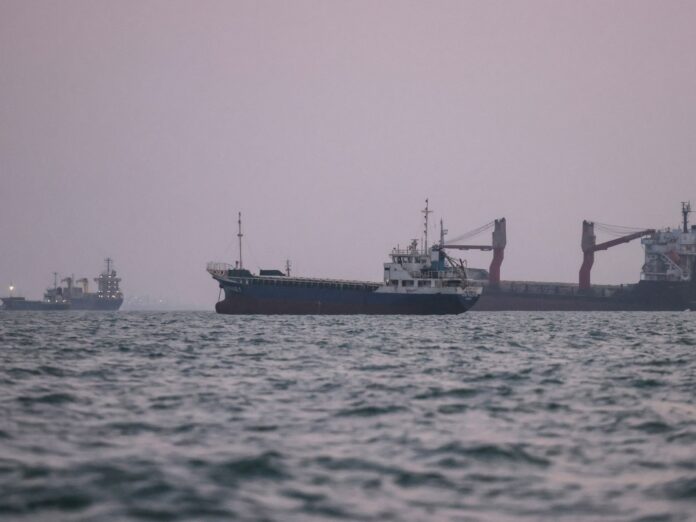
Five Iranian crude oil tankers — the M/T Kaviz, M/T Charminar, M/T Horizon 1, M/T Riesco, and the M/T Derya at Kharg Island — were struck by U.S. Central Command on Tuesday after the Islamic Revolutionary Guard Corps fired ballistic missiles at a U.S. Navy warship twice in the preceding two days. Both attacks missed. CENTCOM directed the Iranian crews to abandon ship before the vessels were rendered inoperable.
Brent crude settled near $99 a barrel on Tuesday, building on gains since the Oman corridor signals failed to crystallize into a formal agreement. The benchmark reached its highest level since mid-July as three pressures converged: the tanker losses, an incipient Iranian maritime exclusion zone in the Gulf interior, and a third Houthi missile strike on Saudi Arabia’s Jazan refinery.
CENTCOM’s cumulative count now stands at eight IRGC-linked tankers struck or destroyed, including the three vessels targeted Sunday. Each was identified by the Pentagon as part of a shadow export network financing the IRGC and its regional proxies. The practical consequence has been a near-total contraction of crude supply through the Gulf.
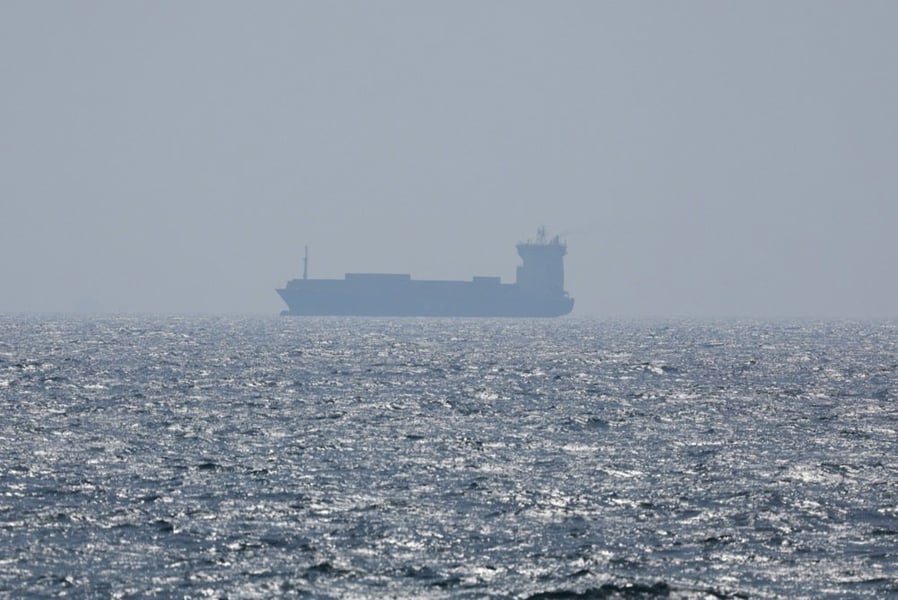
The scale of that contraction was already severe. According to the agency’s short-term energy outlook, the U.S. Energy Information Administration estimates oil and petroleum-liquid flows through the Strait of Hormuz fell from 21.6 million barrels a day in the fourth quarter of 2025 to 4.9 million barrels a day in the second quarter of 2026, a 77.3 percent decline in six months. Commodity tracking firm Kpler reported that only one commercial vessel transited the strait on Saturday.
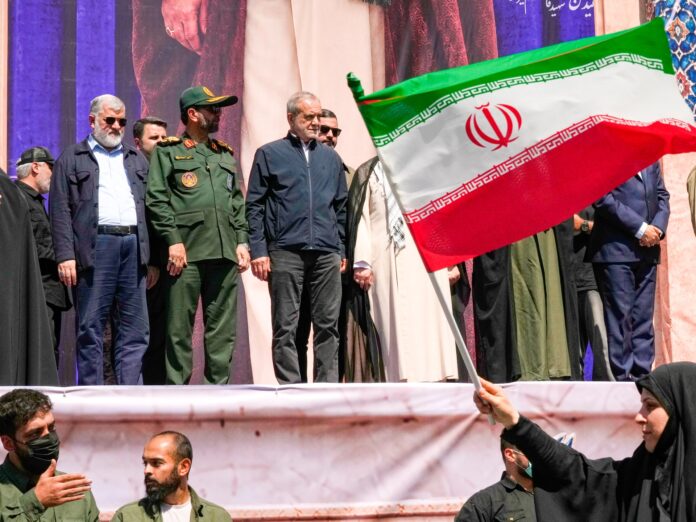
What moved Tuesday’s market beyond that closed-strait baseline was a statement from Mohsen Rezaei, the new head of Iran’s Supreme National Security Council. Speaking to state media, Rezaei said Tehran plans to announce a maritime exclusion zone that “will begin from the line of the U.S. naval blockade, extend toward the Strait of Hormuz, and from this side continue into the Persian Gulf.”
That geography is consequential in a way the individual tanker strikes are not. The strait itself is already largely shut. Rezaei’s proposed zone would extend north and west into the Gulf interior, placing Saudi Arabia’s Ras Tanura terminal, Iraq’s Basra loading buoys, Kuwait’s Ahmadi facilities, and the UAE’s offshore platforms inside a declared Iranian threat perimeter. One analyst tracking shipping movements noted that the exclusion zone represents the key tipping point rather than the cumulative count of tanker strikes, because a formal zone changes the insurance and routing calculations for the vessels still in the water.
The WTI futures curve registered that distinction. October contracts traded at $92.05 a barrel against January at $83.14, an $8.91 spread for the nearest delivery month that prices in near-term scarcity at a level not yet assigned to early 2027.
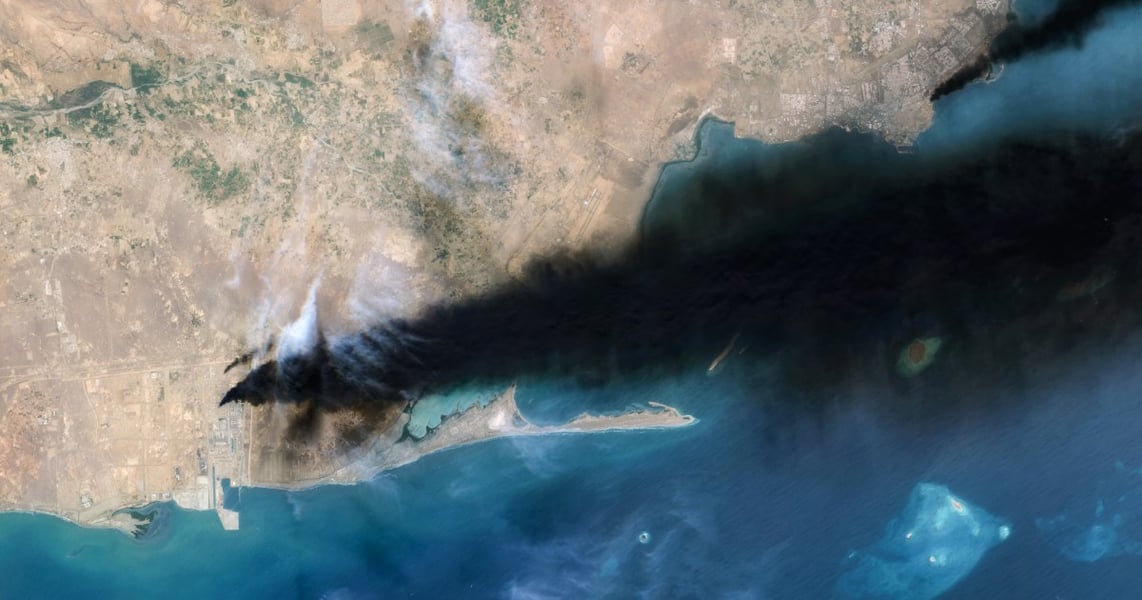
Saudi Arabia had built a contingency around exactly this kind of escalation: route crude west across the kingdom to Red Sea ports, bypassing the Strait of Hormuz entirely. That contingency ran into crisis on Tuesday when Houthi forces claimed their third drone and missile strike on Saudi Aramco’s Jazan refinery in two weeks, as NBC News reported. Jazan processes 400,000 barrels of crude daily. Previous hits had already suspended Jazan’s export operations. Tuesday’s strike targeted refinery infrastructure serving the domestic market, compounding damage to the kingdom’s western export capacity.
The dual pressure matters for a global market that had been pricing the Hormuz closure as an acute rather than chronic disruption. India, the world’s third-largest oil importer, had been working through spot market purchases and alternative routing to replace Gulf supply. The Houthi blockade of the Red Sea, combined with persistent attacks on Jazan, closes the lane that India and European buyers were watching as the most viable near-term alternative to Hormuz. UK North Sea Brent, which had partially decoupled from Gulf pricing in July, moved in tighter correlation on Tuesday as traders in London priced in a longer closure than previously modeled.
Eastern Herald’s Pentagon casualty count confirmed Tuesday that 838 U.S. troops have been killed or wounded in the Iran conflict.
CENTCOM commander Admiral Brad Cooper, in announcing the September 8 strikes, said the message to the IRGC was unambiguous: “If you shoot at two of our ships, we will impose an even higher economic cost, taking out five of yours.”
How Rezaei’s exclusion zone announcement translates into operational reality remains unclear. Iran has not published maps, enforcement procedures, or a formal declaration. The Oman-brokered maritime corridor, reported as close to a framework as recently as Monday, has not produced a documented agreement. Whether Tuesday’s price level proves a ceiling or a floor depends on answers to questions neither Tehran nor Washington has answered in public.