
LONDON – Brent crude settled at $97.39 a barrel on Monday, its highest close since late July, after US naval forces destroyed three Iranian tankers over the weekend and Tehran signalled it would declare a restricted maritime zone that could effectively seal off the Strait of Hormuz to vessels operating without Iranian clearance.
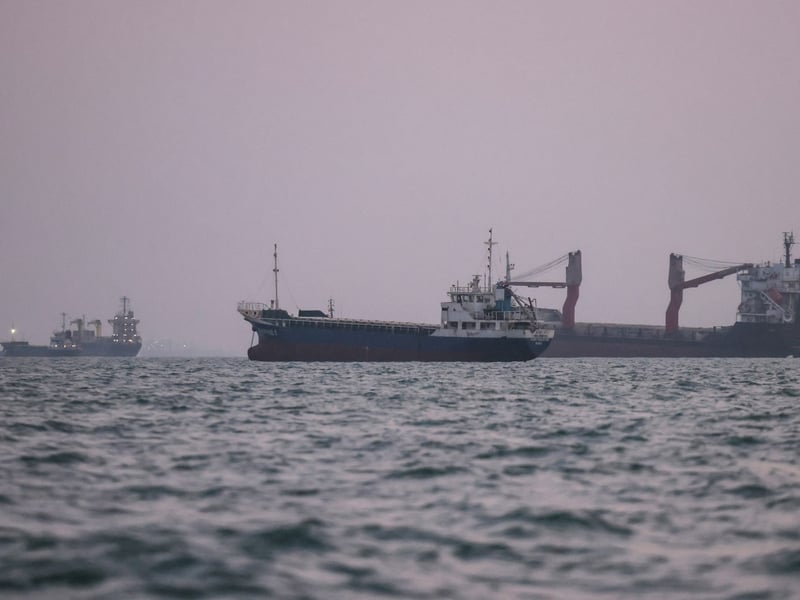
The strike that opened the latest escalation came before dawn Saturday, when US warships and aircraft attacked the M/T Downy off Iran’s Kharg Island, the country’s main crude export terminal. Hours later, the M/T Stark 1, a diesel-laden tanker caught running without its AIS transponder near Jask, was hit and disabled. On Sunday afternoon the M/T Kylo, a 185,000-deadweight-ton crude carrier, was struck east of the Strait and destroyed completely. The US military said all three vessels were providing material support to Islamic Revolutionary Guard Corps naval operations. Tehran rejected that framing and called each attack a violation of sovereign maritime rights.
The retaliation came within the same news cycle. IRGC naval units struck three commercial vessels they identified as American-linked in the eastern Persian Gulf. Separately, ballistic missiles were fired at two US warships operating in the Gulf of Oman; the US Fifth Fleet confirmed one destroyer sustained minor structural damage. The IRGC described its actions as a measured first response and used language that observers read as deliberate: a senior official said the strikes constituted only a first phase.
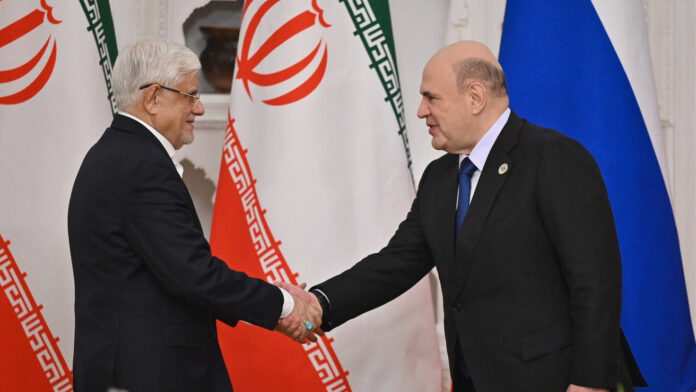
Iranian Parliament Speaker Mohammad Bagher Ghalibaf said publicly that the era of proportional responses had ended. The statement, delivered in a session of parliament broadcast on state television, was taken in oil markets as a commitment to escalate the scale of Iranian retaliation beyond whatever level the US chooses next.
The threat doing the most direct work on the oil price, however, is a separate announcement. Mohsen Rezaei, a member of Iran’s Expediency Council and a former IRGC commander, said Tehran would “in coming days” declare a restricted maritime zone extending beyond the Strait of Hormuz into the approach routes of the Gulf of Oman. A restricted zone of that scope would not require Iran to announce a formal blockade. It would instead require each transiting vessel to seek Iranian clearance, a process that insurers and tanker operators consider functionally equivalent to closure, as The National reported from the Gulf.
OPEC+ met virtually on Saturday and voted to leave October output targets unchanged, passing on a chance to offset the price rise with additional supply. The decision, confirmed by delegates, left the production schedule where it had been set over the summer. No statement was issued on the Strait of Hormuz or emergency reserve coordination.
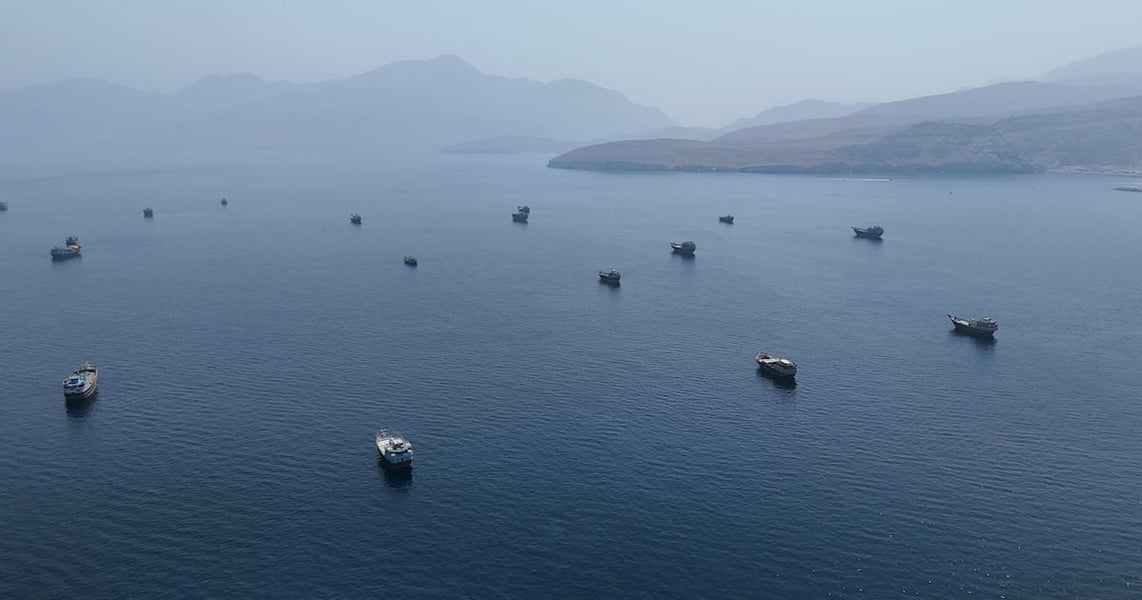
Vessel traffic through the strait has collapsed in a way the futures market has not fully absorbed. Maritime trade monitoring shows roughly 10 commodity ships a day clearing the strait, down from more than 35 in May. The vessels still making the transit operate almost exclusively under flag states that have negotiated individual safe-passage agreements with Tehran; that list currently excludes the flags most common in global crude logistics. Al Jazeera’s account of the conflict’s trajectory documents how Greek-operated tankers, historically the principal carriers of Gulf crude to European refiners, had suspended new Hormuz bookings in the days before the weekend escalation.
West Texas Intermediate settled Monday at $91.87, up $2.58 or 2.89 percent. LNG futures gained on the prospect that Qatari export cargoes, loaded at the Ras Laffan terminal inside the Gulf, would face the same transit restrictions as crude carriers if the restricted zone takes effect. India, the world’s third-largest oil importer, absorbs a large share of its daily requirements from Gulf suppliers. Two refinery officials told The National that spot purchases had been paused pending clarity on what shipping lanes would remain usable after Iran’s formal announcement.
The destruction of three tankers over a weekend marks a shift in the conflict’s operational tempo. Previous strikes targeted military and intelligence infrastructure: radar installations, drone launch sites, Revolutionary Guard logistics nodes. The M/T Downy, M/T Stark 1 and M/T Kylo were commercial vessels. The IRGC said there were casualties aboard the Stark 1. US Central Command declined to confirm or deny whether civilians were present, citing an ongoing operational review. The dispute over who was aboard and what the ships were carrying will not be resolved through independent verification in the current environment in the Gulf.
NPR’s reporting on the naval standoff indicated that the informal communication channels between US Navy and IRGC command that kept incidents below the threshold of open combat through June and July have stopped functioning as intended.
Brent crude has climbed $5.92 from last week’s close near $92, which itself followed the Hormuz strike sequence that first pushed prices above $95. What Iran announces about its maritime zone in the next several days will determine whether the Monday close at $97 is a ceiling or a floor.