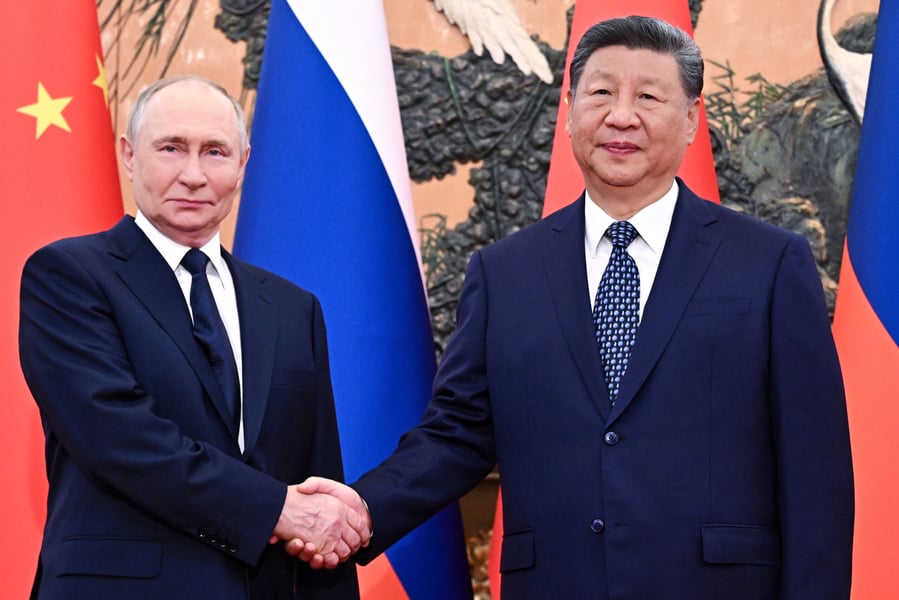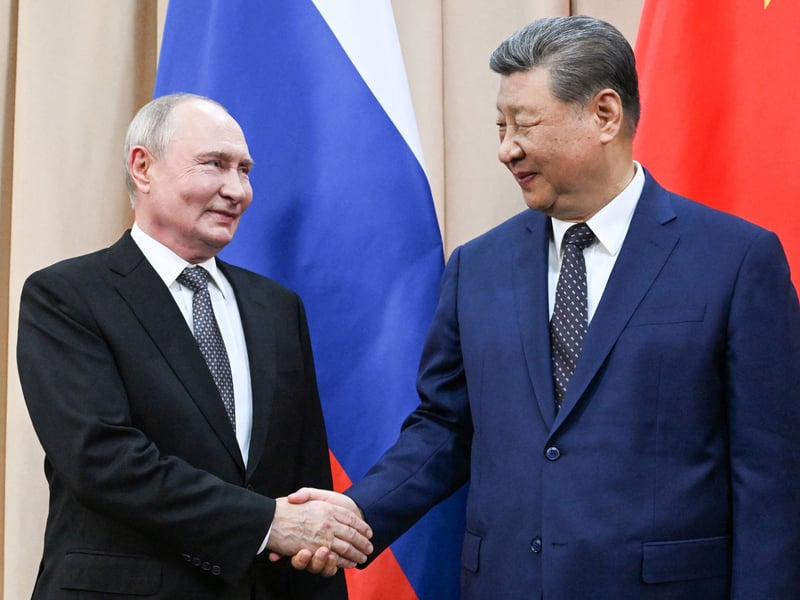

ST. PETERSBURG – Vladimir Putin had a number ready for reporters on Friday, and he wanted them to know it was still climbing. “We have trade of $240 billion with the People’s Republic of China. It’s decent. And the volume of trade is increasing,” he said, adding that Moscow and Beijing see “important areas for further development” in the relationship.
The figure checks out. Russia-China trade rose 25.6 percent year-on-year in the first half of 2026 alone, putting the full-year total on track to beat 2025’s near-$240 billion mark comfortably. Most of that trade now settles outside the dollar entirely, with the yuan accounting for more than a third of Russia’s foreign trade payments last year, up from almost nothing in 2021. For a country still under sweeping Western sanctions, that is the headline achievement: a major economy has built an alternative payment system large enough to keep growing regardless of what Washington does.
What Putin did not mention is the project meant to be the relationship’s next chapter, and it is not going well. Power of Siberia 2, the pipeline that would roughly double Russia’s gas exports to China and replace much of what Moscow lost when Europe cut itself off, has been stuck for months over price. Chinese negotiators have reportedly told their Russian counterparts to stop raising the subject, unwilling to accept anything close to what Gazprom wants to charge. Beijing already extracts a discount on the gas it does buy from Russia, and it has no obvious incentive to move first on a pipeline that gives Moscow, not China, the more urgent reason to close a deal.
That asymmetry runs through the trade figures too. China needs Russian oil and gas, but it is not dependent on them the way Russia has become dependent on Chinese manufactured goods, payment infrastructure and, increasingly, political cover. A sanctions law signed by Trump this month threatens China with tariffs as high as 100 percent for continued purchases of Russian oil, a threat aimed squarely at testing whether Beijing’s appetite for cheap energy outweighs its exposure to the American market. So far, Chinese refiners have kept buying. Whether that holds if the tariff threat becomes real is a separate question from the trade totals Putin cited Friday.