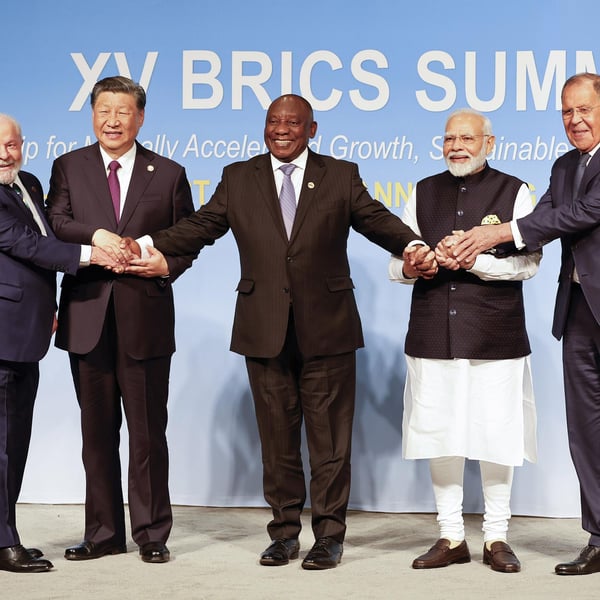

BISHKEK — The upcoming Shanghai Cooperation Organization summit in Bishkek is “a center of the emerging multipolar world,” Kremlin aide Yury Ushakov said Friday, framing Russia’s participation in the bloc’s highest-level gathering as part of a sustained effort to build out a diplomatic architecture that operates beyond Western-dominated institutions.
Ushakov made the remarks ahead of the SCO summit, scheduled for August 31 to September 1 in Kyrgyzstan’s capital, where Russian President Vladimir Putin is expected to participate along with leaders from China, India, Pakistan and the broader SCO membership.
“The SCO is one of the largest and most influential regional organizations today,” Ushakov told reporters. “It is, in essence, a center of the emerging multipolar world.”
The framing reflects an official Russian reading of the SCO that has grown more explicit since the beginning of Russia’s military operation in Ukraine in 2022 and the acceleration of Western sanctions — both of which have concentrated Moscow’s attention on non-Western multilateral frameworks. The SCO, with its diverse membership spanning Central Asia, South Asia and major Eurasian powers, offers a diplomatic stage where Russia can operate as a full participant unconstrained by Western isolation.
SCO members, Ushakov said, “actively cooperate with one another and interact in political, economic, humanitarian and other spheres.” The bloc was founded in 2001 as a Central Asian security coordination mechanism, and its membership has since expanded significantly. Its ten full members now include Belarus, China, India, Iran, Kazakhstan, Kyrgyzstan, Pakistan, Russia, Tajikistan and Uzbekistan, with partner countries including Azerbaijan, Armenia, Afghanistan, Bahrain, Cambodia, Egypt, Kuwait, Laos, the Maldives, Mongolia, Myanmar, Nepal, Qatar, Saudi Arabia, Sri Lanka, Turkey and the United Arab Emirates.
The Bishkek summit will be the culmination of Kyrgyzstan’s chairmanship, with Pakistan taking over the rotating presidency for 2026-2027 and Russia scheduled to assume the chair for 2027-2028 — a sequence that, from Moscow’s perspective, keeps it embedded in the leadership rotation of a bloc it regards as strategically important.
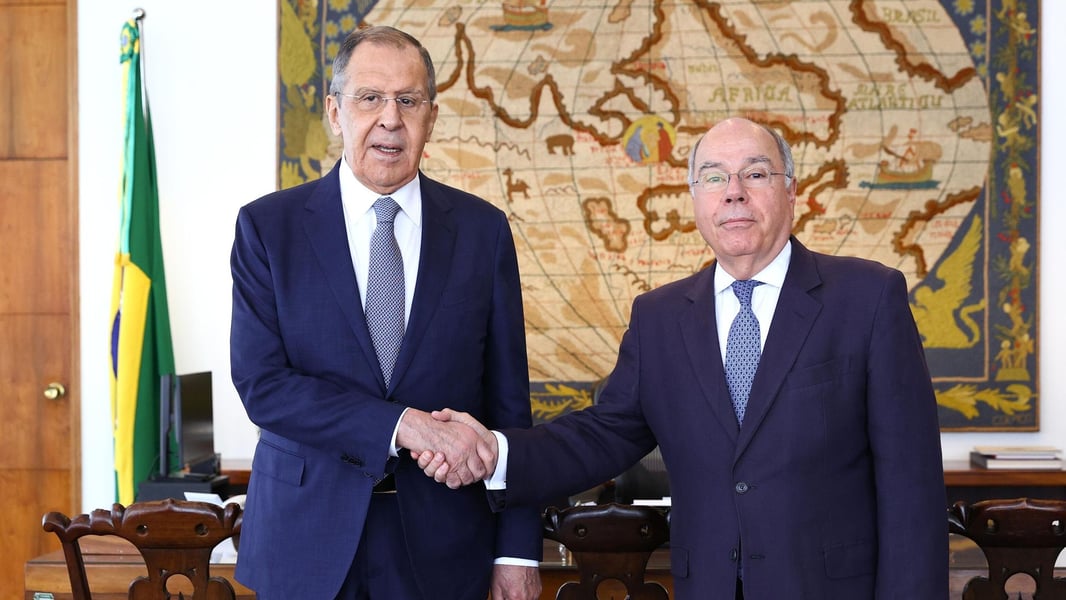
Putin will attend and hold what Kremlin officials have characterized as a substantial bilateral program. His most significant scheduled meeting is with Chinese President Xi Jinping on August 31, described by Ushakov as “very important.” Discussions will cover bilateral cooperation and key international questions, with the Power of Siberia 2 pipeline project among the items on the table. The two leaders are scheduled to meet again at the BRICS summit in New Delhi and at the APEC forum in China later this year.
Putin will also hold sideline meetings with Indian Prime Minister Narendra Modi and Kazakh President Kassym-Jomart Tokayev. The Modi meeting is particularly watched: India has maintained a relationship of sustained depth with Russia through the Ukraine period, declining to endorse Western sanctions or characterizations of Russia’s military operation, while engaging Moscow on defense, energy and trade questions.
Whether the multipolar framing that Russian officials deploy at events like the SCO summit reflects genuine strategic emergence or primarily rhetorical positioning is a question that defies easy resolution. The SCO’s membership is diverse enough that member states’ interests frequently diverge: India and Pakistan have active territorial disputes; China and India have unresolved border tensions; several Central Asian members have complex relationships with both Russia and China. The bloc’s consensus-based decision-making structure limits what it can actually do when its members disagree.
What the SCO consistently provides, from Moscow’s perspective, is a forum where Russia can advance a narrative of multipolarity with consequential partners at the table — and where the absence of the United States and its European allies is structural rather than circumstantial. That absence is itself a feature of the bloc’s usefulness for Russian diplomatic purposes.
Kremlin spokesman Dmitry Peskov confirmed earlier Friday that Putin would attend the summit and hold “numerous important bilateral contacts” on the sidelines. The summit opens August 31.