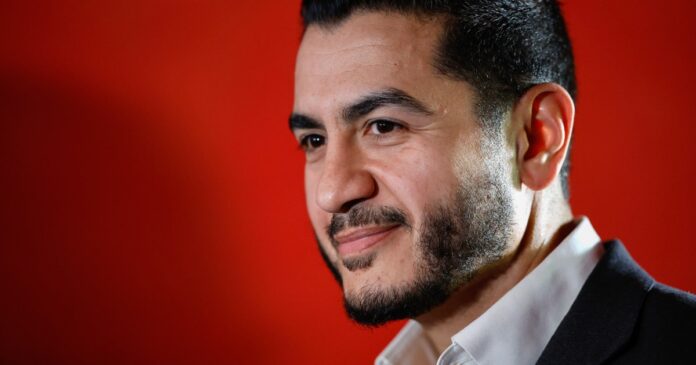
Hong Kong pro-democracy activist Joshua Wong has been sentenced to 10 years in prison for conspiracy to collude with foreign forces, extending the detention of one of the city’s most internationally recognised campaigners, according to The New York Times.
Wong, 30, pleaded guilty in the national security case. The newspaper reported that Judge William Tam delivered the sentence on Thursday, describing the offence as being of a “grave nature.” Under the law, an offence in that category carries a minimum prison term of 10 years.
Court cites lobbying for foreign sanctions
The case concerned accusations, brought in 2025, that Wong had conspired to lobby foreign lawmakers, particularly in the United States, to impose sanctions on Hong Kong and China. Collusion with foreign forces can carry a maximum penalty of life imprisonment.
According to the Times, Tam described Wong and fellow activist Nathan Law as the conspiracy’s “ringleaders.” Law had fled to Britain. The judge characterised their lobbying as calls for sanctions and hostile measures, and said the punishment needed to deter similar conduct.
Wong took notes as the judgment was read. Before officers led him away, he turned towards the public and press gallery and thanked those present in Cantonese, the newspaper reported.
New sentence follows years already spent in prison
Wong was already imprisoned in a separate national security case. Friends told the Times that he had been expecting release in January 2027 before the additional charges were brought.
The report does not establish how the new sentence will interact with his existing term. It would therefore be premature to calculate a definitive release date from the latest sentence alone.
Thomas Kellogg, executive director of the Georgetown Center for Asian Law, told the newspaper that some activists have pleaded guilty to seek reduced sentences. He described that approach as a “harm reduction strategy” amid the high conviction rate in national security proceedings.
From student campaigning to the Umbrella Movement
Wong became prominent through Scholarism, the student group that opposed plans for a mandatory moral and national education course. Campaigners argued that the curriculum amounted to political indoctrination. Large demonstrations helped force the government to retreat from its plans.
He later became a familiar face of the 2014 Umbrella Movement, when students and other protesters demanded freer elections. Demonstrators occupied parts of central Hong Kong for weeks, establishing a movement that drew extensive international attention.
By the time another wave of protests erupted in 2019 over an extradition bill, Wong had developed an international profile that enabled him to meet influential politicians abroad. Former sociology professor and democracy campaigner Chan Kin-man told the Times that this visibility helped explain both Wong’s influence and his subsequent difficulties.
National security law reshaped political activity
Beijing imposed the national security law on Hong Kong in 2020. The legislation criminalised conduct including calls for foreign sanctions, and forms the legal backdrop to the latest case.
Eva Pils, a professor of international human rights law at FAU Nuremberg in Germany, told the Times that prolonged imprisonment could diminish Wong’s public presence. That assessment is an expert’s interpretation of the case, rather than a finding made by the court.
Friends describe a routine of reading and writing
Friends said Wong had continued reading, taking business courses, exercising and writing letters during his imprisonment. Correspondence reviewed by the Times described his hopes of reuniting with friends and marking a future anniversary of Scholarism.
The sentence now casts further uncertainty over those plans. For supporters of Hong Kong’s pro-democracy movement, the case concerns a campaigner whose public life has spanned student activism, mass demonstrations and years behind bars. This account is based on the Times report; it does not claim independent access to the judgment or Wong’s prison correspondence.