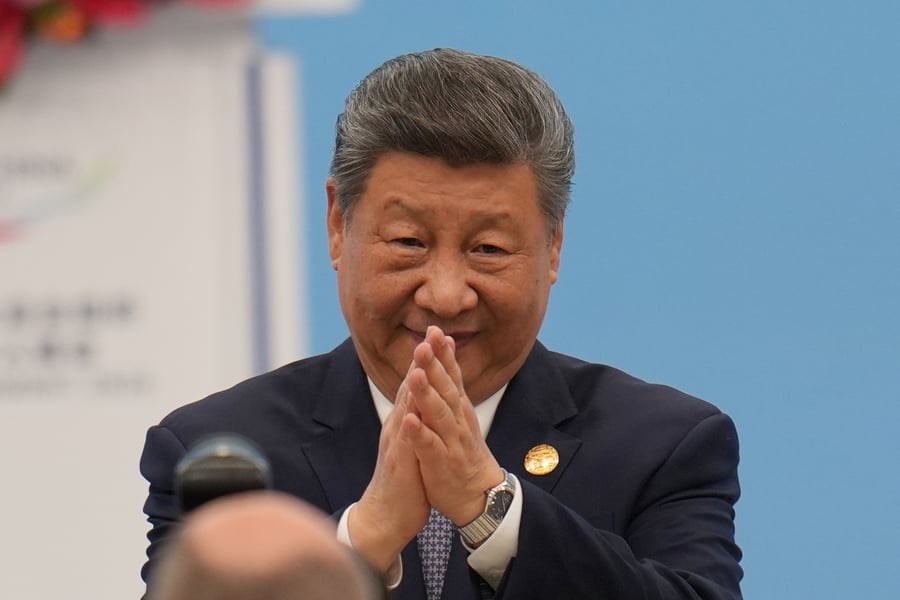

SHENZHEN, China — Chinese President Xi Jinping told executives on Wednesday that Beijing would lower tariffs and widen access to its market, without saying which goods would face lower duties or which industries would open first. In a separate appearance in Shenzhen, Russian President Vladimir Putin told business advisers that Russia had withstood sanctions.
Xi made his pitch at the Asia-Pacific Economic Cooperation CEO Summit. He pledged to improve conditions for foreign businesses in manufacturing and to open services further, while calling for economies across the region to cooperate on trade. A company may be able to import a product on better terms without gaining permission to operate in a sector that was previously restricted. The keynote raised both possibilities without giving businesses a date on which to act.
The speeches came a day before Xi was scheduled to host Putin and US President Donald Trump for three-way talks. The business speeches were public statements, not undertakings the leaders made to one another. China’s announcement confirmed the November 19 meeting but did not say whether tariffs, market access or sanctions relief would be negotiated there.
Xi’s regional agenda went beyond tariffs. In his keynote, he urged economies to preserve a rules-based trading system centred on the World Trade Organization and advance work on a Free Trade Area of the Asia-Pacific. He also called for cooperation on issues such as digital trade and customs. For a company moving goods across borders, a tariff reduction does not by itself change the paperwork or the rules used to clear a shipment.
The free-trade area was not a new proposal in Shenzhen. In their 2024 Ichma Statement, APEC leaders backed continued work on the initiative through information sharing, technical cooperation and preparation for broader regional arrangements. The forum operates by consensus, and its commitments are voluntary and non-binding. A statement of support does not itself change the tariff an importer pays or give a foreign company the right to enter a particular industry.
The domestic part of Xi’s speech was more directly within Beijing’s control. He spoke of tariffs, market access and changes to rules and standards. A manufacturer exporting finished goods would want to know whether the duties on its products would fall and what standards would still apply. A services company deciding whether to invest would first need to know whether it could operate in the sector at all, and on what terms. Xi’s remarks gave neither company a specific measure to work from.
Shenzhen was part of Xi’s argument. He traced the city’s development from a small border town into a metropolis to decades of reform and opening, then presented China’s 2026–2030 Five-Year Plan as an invitation to international businesses. The pitch was not only that foreign businesses could sell to more Chinese customers. Xi was also asking them to consider a role in China’s next phase of industrial development. That made the host city an illustration of his case, not evidence that the restrictions he discussed had already changed.
Putin addressed the APEC Business Advisory Council, where he called Russia the “world record holder” for the number of punitive measures imposed on it and said it had come through those trials. TASS reported his remarks without supplying a count or a method for comparing Russia with other countries. Whether restrictions succeeded in isolating Russia and what they cost the country are separate questions. The TASS account did not independently measure those costs.
Xi and Putin also held bilateral talks on Wednesday. TASS reported that the meeting lasted more than two hours and included discussion of prospects for further economic cooperation. Its account did not identify a new commercial agreement. The fact that the two leaders discussed their own economic relationship did not show that they would bring a common trade or sanctions proposal to the meeting with Trump.
For a business deciding whether to enter China or expand there, the next consequential document would be more specific than a summit speech: a tariff schedule naming the goods affected, or a regulation setting out where a foreign services company can operate and from what date. Xi promised more access. The keynote left open who would get it first.