
MOSCOW — Percentages are generous to whoever picks the starting point.
Famil Sadygov, deputy chairman of Gazprom’s management board, said on Friday that the company had seen positive trends in exports and that gas deliveries in the first half of 2026 rose by 8 percent. He did not say from what, to where, or at what price, and those are the three things that determine whether the number means anything.
Some of it can be filled in from Gazprom’s own statements. Sadygov has said elsewhere that growth in supplies to China largely offsets the decline in exports to Europe, which is a precise and revealing formulation. It is not a claim of expansion. It is a claim of substitution, and substitution at a scale that is worth being exact about.
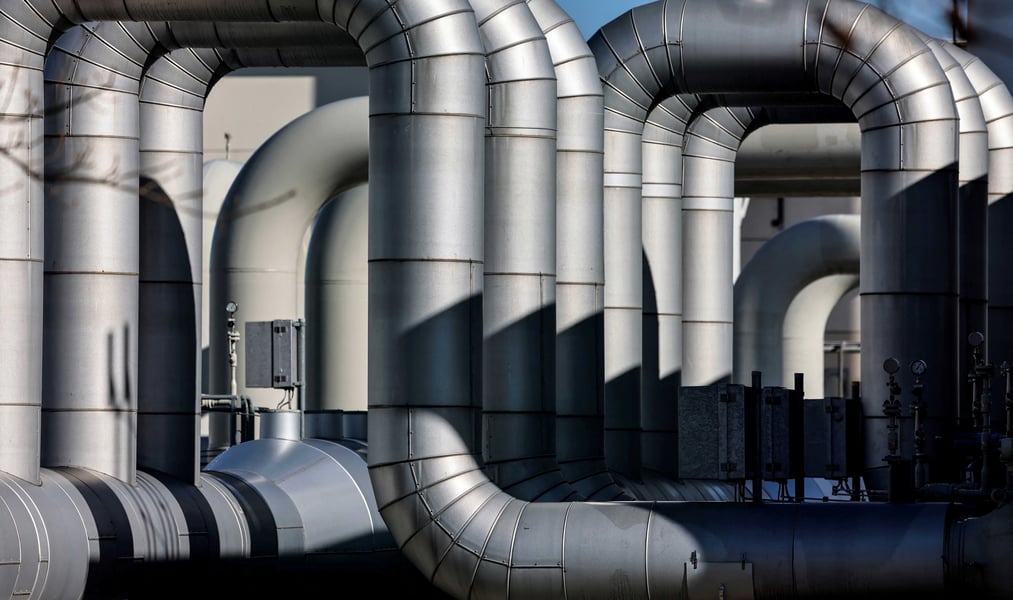
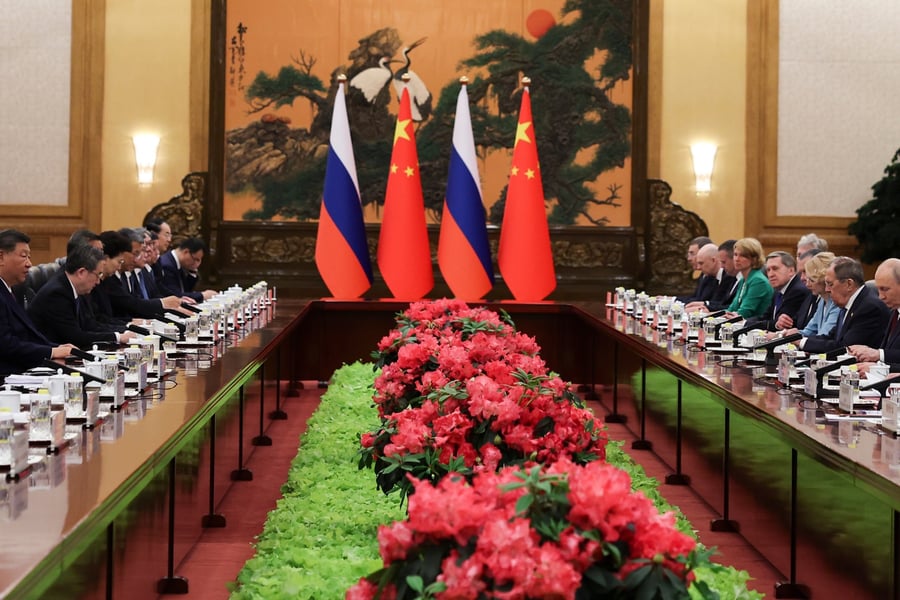
Before 2022 Gazprom sold well over a hundred billion cubic metres a year into Europe, to dozens of counterparties, in a market where it could influence the price. What it has now is Power of Siberia, which delivered 38.8 billion cubic metres to China in 2025 and is expected to carry around 44 billion this year. That growth is real. It is also one pipeline, running to one customer, on terms that customer is in a strong position to set, and no amount of percentage growth changes the structure underneath it.
That structure is the thing an 8 percent figure is designed not to show. A company that lost most of its export market in 2022 and 2023 will produce impressive-looking growth rates for years afterwards, because the base it is growing from is the wreckage. Russian gas production overall rose about 4 percent in the first half, helped by exports and by domestic demand, so the direction is genuinely up. The question is up from where.
The Moscow Times described the industry in July as dying a slow and occasionally explosive death, which is a harsher reading than the figures alone support but points at something the figures do not capture. Gazprom is not short of gas. It is short of ways to sell it. The fields are in the wrong place for the customers it now has, the pipelines that would fix that do not exist, and building them requires Chinese agreement that has been slow in coming for reasons Beijing has never had to explain.
There is a second reason to treat the headline gently, which is what it does not cover. Gazprom’s pipeline business and Russia’s liquefied natural gas business are different things with different problems, and LNG is where sanctions bite hardest because it moves on ships that can be tracked, insured, and turned away. The same logic has been playing out in oil, where Europe’s enforcement campaign against the fleet carrying Russian crude has become physical: France alone has boarded and diverted five suspected shadow-fleet tankers since September, and Moscow’s response has been to call it piracy rather than to contest it in court.
Where the redirection has worked is the place nobody is enforcing anything. Russian crude keeps arriving in India in volume, and India remains the largest single buyer. Gas is harder, because gas mostly needs a pipe, and pipes take a decade and a treaty.
What Sadygov did not provide is the part that would settle it. No absolute volumes, no breakdown between pipeline and LNG, no split between China and everyone else, and no revenue figure, which matters more than volume because the discount Gazprom accepts to keep gas moving is where the actual loss sits. Gazprom returned to profit in 2025 after a heavy loss, and forecasts a 6 to 7 percent rise in core profit this year, so the accounts are recovering. Recovery from a collapse is not the same as a business.
The number to watch is not the growth rate. It is the price per thousand cubic metres that China pays compared with what Europe used to, and Gazprom has never published it.