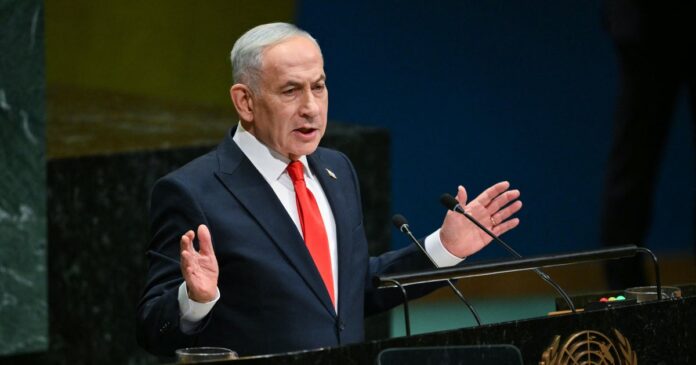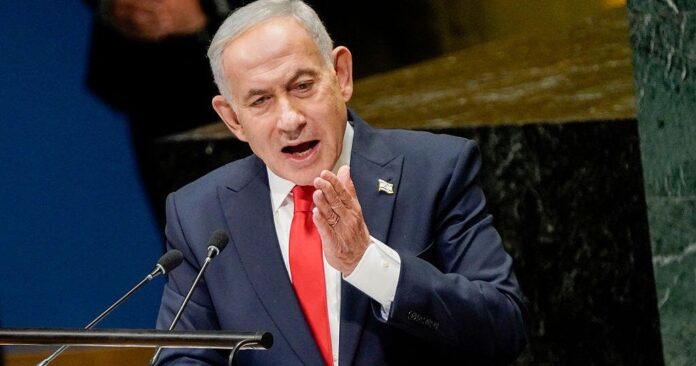

BRUSSELS — Late on a Tuesday evening, as the world’s attention was fixed on the United Nations General Assembly in New York, the European Union quietly deleted two names from its Russia sanctions list. One unnamed European diplomat described what had made it possible. “It really sends the signal,” he said, “that you can blackmail your way to delisting.”
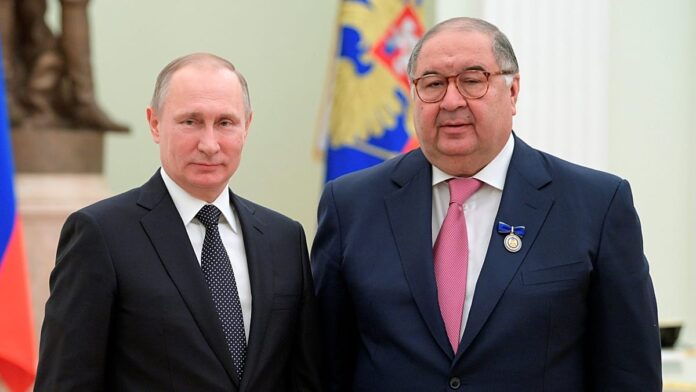
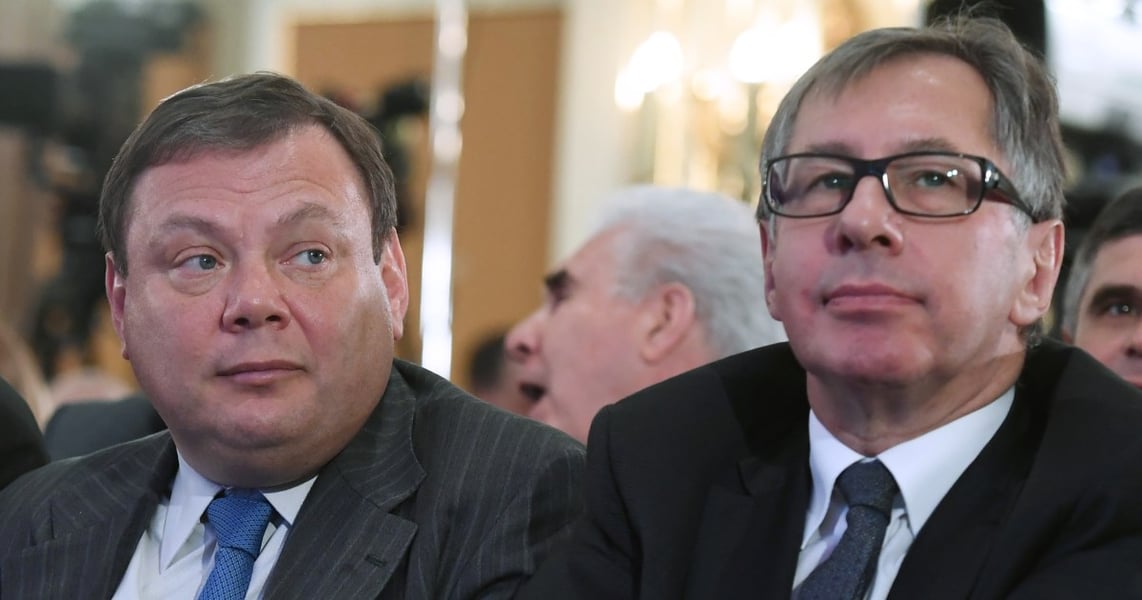
The two names were Alisher Usmanov, the Uzbek-born metals and telecoms billionaire with close ties to the Kremlin, and Mikhail Fridman, the Ukrainian-born banker who co-founded Alfa-Bank, one of Russia’s largest private lenders. Both had been under EU sanctions since March 2022, weeks after Russia launched its military operation in Ukraine. Both are now off the list.
The Council of the European Union voted September 22 to remove them, after months of behind-the-scenes lobbying that exposed the political fault lines running through the sanctions architecture. The decision was not unanimous, and the internal negotiations that preceded it were, by several accounts, bitter.
France pushed for Usmanov’s removal. Paris offered no public legal rationale in the formal record, but European officials familiar with the deliberations said the push was linked to a prisoner exchange arrangement involving French nationals held in Azerbaijan, a country where Usmanov retains significant business interests. The French government did not respond to requests for comment before publication.
Luxembourg’s position was more transparent, if no less uncomfortable for Brussels. Fridman had filed a legal challenge claiming €15 billion in damages from the Grand Duchy after his assets there were frozen under EU sanctions. Luxembourg notified EU partners earlier this year that it could no longer sustain the legal exposure of keeping Fridman on the list. Senior officials in other member states privately described the argument as a hostage-taking dressed in legal language.
Latvia was the last member state to hold out. Riga has been among the most uncompromising voices in the EU on Russia sanctions enforcement, and its objection was reportedly among the strongest. It eventually capitulated when it became clear the qualified majority would proceed without it.
Volodymyr Zelenskyy had issued a public warning days before the vote that any move to delist Usmanov or Fridman would constitute a political gift to Moscow. Ukraine’s Foreign Minister Andrii Sybiha did not equivocate after the result. He called the decision “shameful and unjustifiable” and said the Kremlin had received exactly what it sought: “a sense of impunity, the humiliation of the EU, and division among Europeans.” Sybiha’s office said the move set a precedent that would invite further pressure on the list from sanctioned individuals and the governments sympathetic to them.
The two delistings came on the same day the Council renewed its Russia sanctions package, covering roughly 3,000 individuals and entities, for three years rather than the standard six-month rolling period. Euronews noted that EU officials presented the extended renewal as a signal of long-term commitment, while critics said the simultaneous removal of two of the list’s most prominent names had undermined that signal entirely.

Sergey Lavrov‘s Foreign Ministry issued no immediate statement. That silence was understood in Brussels as something close to satisfaction. The European Commission’s legal framework for sanctions challenges does provide a pathway for delisting when the evidentiary basis for a designation is found insufficient or when legal challenges succeed in court. Neither Usmanov nor Fridman won their cases outright. What changed, in both instances, was political will at the national level, something the Commission was legally unable to override once enough member states converged.
Usmanov had built one of Russia’s largest private fortunes across metals, telecoms, and media assets. He has repeatedly denied any wrongdoing, and his legal team argued that the evidentiary standard used to designate him was based on political association rather than specific sanctionable conduct. Fridman has made similar arguments, while also pointing to his Ukrainian birth and public statements distancing himself from the Russian operation in Ukraine. Neither argument was legally decisive. What mattered, in the end, was that two member states found enough reason to push, and that one of them was Emmanuel Macron‘s France, whose weight in the Council made the outcome nearly inevitable once Paris had committed.
Among those watching the vote was Ukrainian civil society, which has spent much of the past three years documenting the assets held by sanctioned Russian nationals across EU jurisdictions. Representatives of several of those organizations said publicly that the Usmanov and Fridman delistings would make it harder to press member states to maintain sanctions on less prominent figures, let alone to pursue asset seizure for eventual Ukraine reconstruction.
What remains unanswered: whether additional delistings are being quietly negotiated, and which member state will be the next to conclude that its own interests are better served by making a deal than by holding a line.