NEW YORK/KYIV — Three hours before dawn on Wednesday, Russian ballistic missiles tore through apartment buildings in Kyiv’s Dniprovskyi District. Two people were killed. Eight were wounded. Rescue crews picked through concrete rubble at a private house, a sixteen-story residential block, and a nearby nonresidential building while fire trucks idled in the autumn darkness.
At roughly the same hour, Volodymyr Zelenskyy was in New York, inside a meeting with members of the United States Congress.
The subject was legislation. The Lindsey O. Graham Sanctioning Russia and Iran Act of 2026 had passed the House of Representatives 262 to 159, a bipartisan margin that had surprised even some of its sponsors. Zelenskyy had come to New York for the UN General Assembly in part to press senators to finish what the House had started, to make the bill’s sanctions on Russian energy revenue and on the third-country firms enabling them a reality rather than a legislative promise. Russia’s answer arrived before the meeting ended.

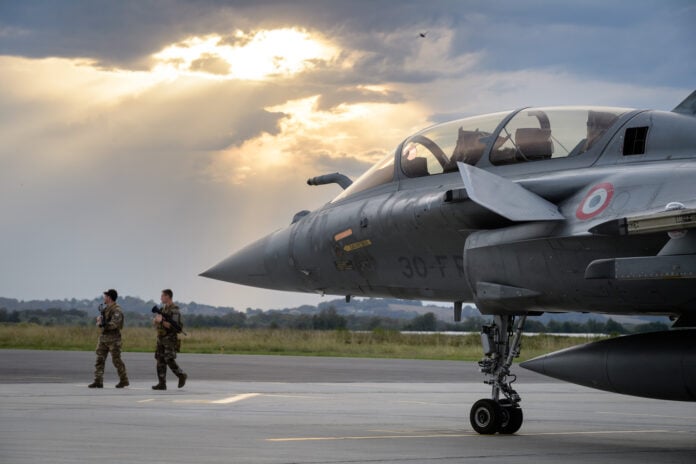
Russia launched three separate waves of ballistic missiles against Kyiv in the early hours. Ukrainian air defense units engaged throughout the night, though not every missile was intercepted. Debris from those that were intercepted fell onto residential streets, a pattern that has become a grim fixture of the capital’s nights. The Kinzhal hypersonic missile, which follows a ballistic trajectory in its terminal phase, has proven among the most difficult systems to stop; Ukrainian officials have acknowledged interception rates falling below thirty percent in some recent attacks.
Whether the timing of Wednesday’s strike was deliberate is not something Moscow offered to explain. The Kremlin had not commented as of Wednesday morning. What is clear is the geometry: Ukraine’s president was in a conference room in New York describing Russian missile attacks to American legislators when Russian missiles were landing on his capital’s apartment buildings.
The attack capped a week in which the war had moved, unusually, to the floor of the United Nations itself. On Tuesday at the UN Security Council, Polish Foreign Minister Radek Sikorski confronted Russian Foreign Minister Sergei Lavrov directly. “Tell your boss,” Sikorski said, according to pool reporters present, “enough is enough.” Lavrov did not appear to take notes.
More than fifty countries had backed a call at the General Assembly for an unconditional ceasefire. The number was large enough to constitute symbolic pressure and too small to constitute anything binding. Russia does not schedule its operational calendar around UN votes.
The Graham Act has a narrower target. Named for Senator Lindsey Graham, it would mandate sweeping secondary sanctions against any country or financial institution supporting Russia’s war economy, with particular pressure aimed at Russian oil and gas revenue and at the Iranian drone supply chain that has sustained Moscow’s aerial campaign against Ukrainian cities. Zelenskyy had pitched the bill to bipartisan Senate delegations throughout the week, framing it not as American charity but as American leverage, a tool Washington possesses and has not yet fully deployed.

The political arithmetic in the Senate is more complicated than it was in the House. Several senators who voted against aid packages in earlier sessions have since shifted, but the bill’s secondary sanctions provisions have drawn quiet resistance from allied governments whose own companies operate in Russian-adjacent markets. The bill’s supporters argue this is precisely the point: leaving allies an economic off-ramp from sanctions enforcement undermines the entire mechanism.
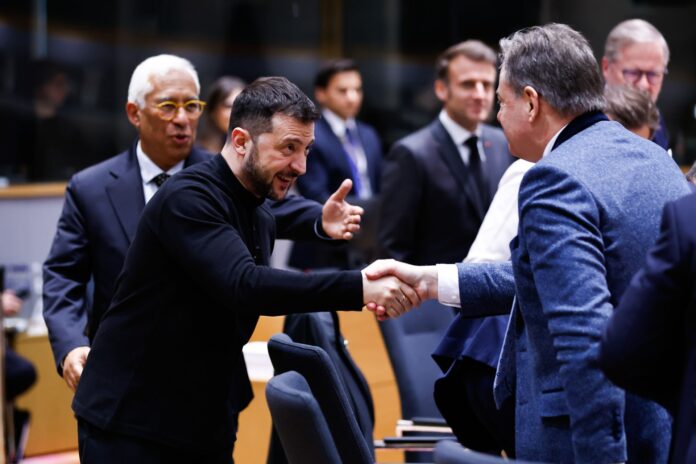
According to Radio Free Europe/Radio Liberty, Zelenskyy’s sessions with lawmakers stretched across multiple hours on Tuesday and Wednesday, covering the energy ceasefire proposal he had put to Donald Trump earlier in the week, the Graham legislation, and Ukraine’s pressing need for interceptors capable of engaging ballistic threats at altitude, a capability gap that has left Kyiv exposed on nights like Wednesday’s.
Ukraine’s own aerial campaign pressed Russian territory throughout September. Drone strikes and a record Moscow barrage earlier in the week underscored that the Ukrainian military is no longer conducting a purely defensive war, even as Russia retains the capacity to strike Ukrainian cities at will. The retaliatory operation Kyiv launched in response to earlier strikes on Zaporizhzhia illustrated the escalatory dynamic that has defined the conflict’s autumn phase: neither side is willing to absorb attacks without answering them.

The attack on Wednesday left two dead and eight hospitalized. Neither figure is the largest this war has produced before breakfast. Both figures will almost certainly be repeated. What changed on Wednesday is that the United States House had just handed the Senate a mechanism designed to make Russian ballistic attacks economically costlier to sustain, and Ukraine’s president was pressing Congress to use it when the missiles landed.
Moscow has not commented on the Graham Act. It does not typically comment on American legislation until sanctions take effect. That silence, Zelenskyy’s office has argued, is precisely what is wrong.