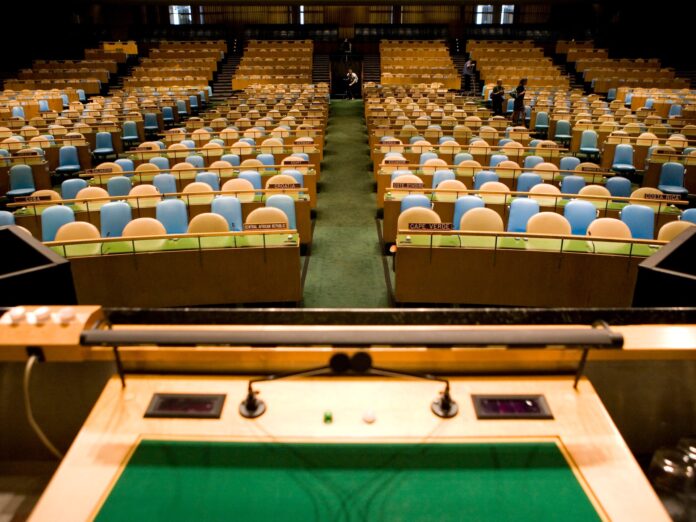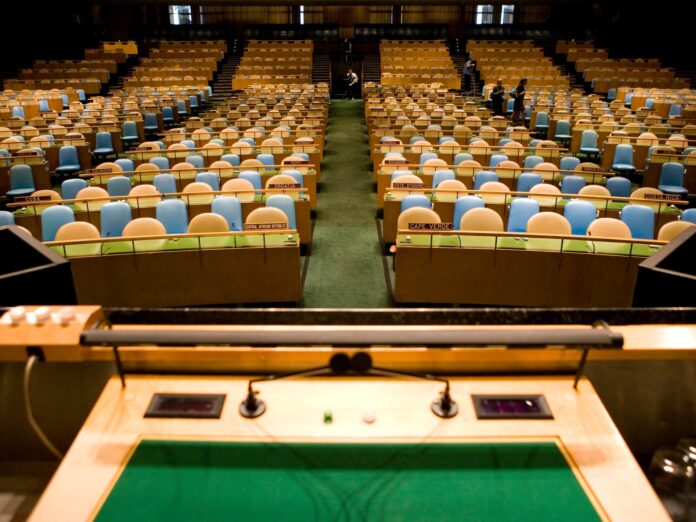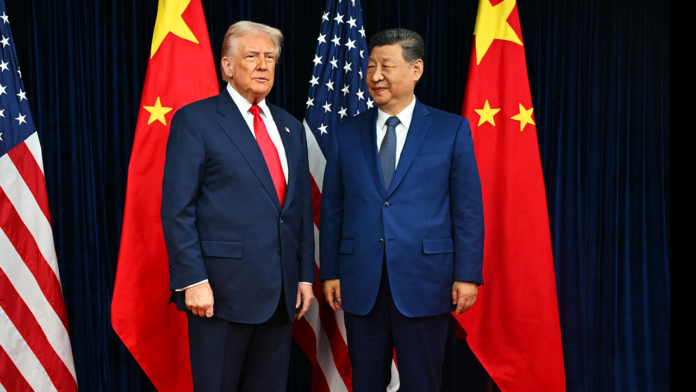

NEW YORK – Ahmed al-Sharaa arrived at the United Nations General Assembly on Tuesday as the first Syrian leader to do so in six decades. His delegation noted the milestone publicly. By the afternoon, he was sitting across from Donald Trump, being urged to recognize Israel and join the Abraham Accords – the same country whose aircraft have been conducting strikes on Syrian territory since the Iran war began in late February.
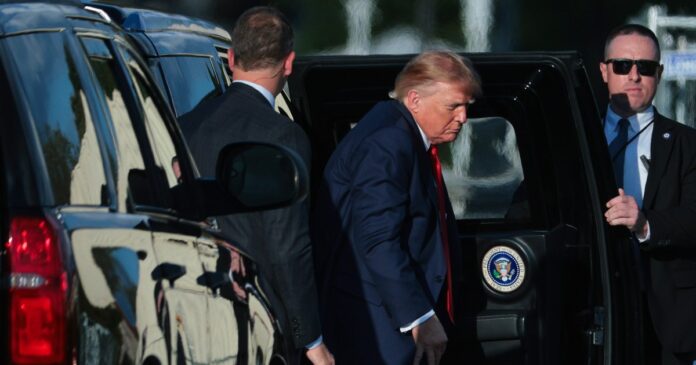
That pairing, a historic diplomatic return and an immediate American pressure campaign, captured the texture of Tuesday’s multilateral meeting on the UNGA sidelines. Trump gathered Arab and Muslim leaders from across the region, offered effusive praise to each, and left the session without a firm commitment on either of the two questions he pressed hardest: progress on an Iran deal and the expansion of regional normalization with Israel.
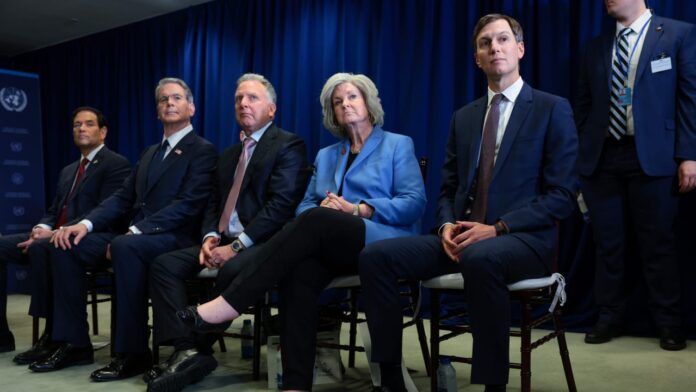
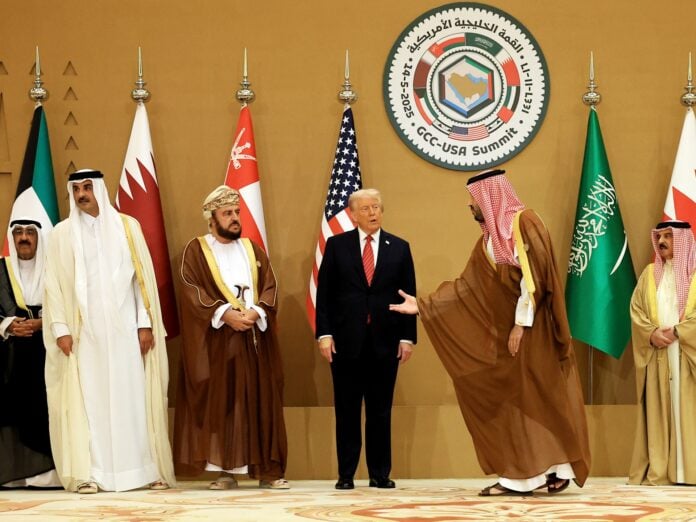
The room was dense with significance. Attending were Jordan’s King Abdullah II, Kuwait’s Crown Prince Sheikh Sabah Khaled Al-Hamad Al-Sabah, Lebanese Prime Minister Nawaf Salam, Qatar’s Prime Minister Sheikh Mohammed bin Abdulrahman Al Thani, Iraqi Prime Minister Ali Al-Zaidi, Turkish President Recep Tayyip Erdogan, Egypt’s Foreign Minister Badr Abdelatty, Saudi Arabia‘s Foreign Minister Prince Faisal bin Farhan, and al-Sharaa. Many of them have been managing the Iran war’s fallout in their own capitals for seven months. None arrived without conditions.
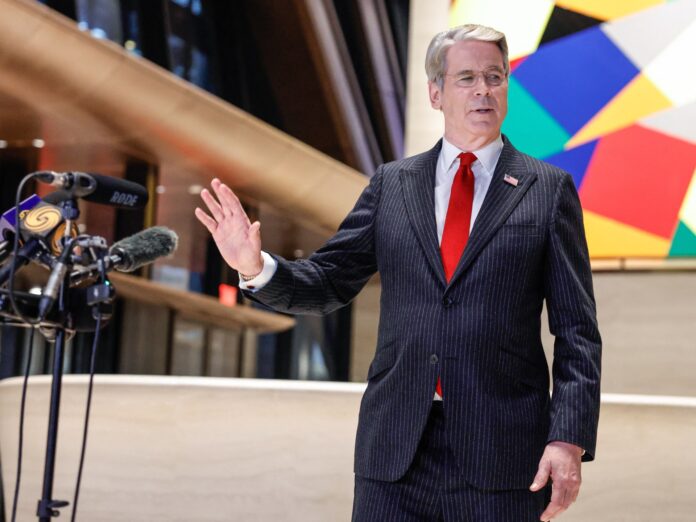
The Iran track produced the most upbeat language. Trump told reporters before the meeting that US envoys had sat with Iranian officials for a three-hour discussion and said he sensed “a lot of momentum” toward Iran talks resolving. The Iran war, which closed the Strait of Hormuz to most commercial traffic at its peak and pushed oil prices above $100 a barrel, has reshaped every calculation in the region, and any path toward Hormuz normalization would ease pressure on the GCC states still absorbing its economic consequences. But “momentum” is not a framework, and Tom Barrack, the US ambassador to Turkey and Trump’s special envoy for Syria, offered the clearest window into the session’s actual state. “There’s a consensus that we need a way forward,” Barrack said. “That’s the only consensus.”
Al-Sharaa’s position on Israel underscored the distance between Trump’s ambitions and the diplomatic ground. Trump pressed al-Sharaa directly to normalize and join the Abraham Accords. Al-Sharaa, whose government received a partial suspension of US Syria sanctions following his November 2025 White House visit, did not reject the idea outright. He described normalization as “not imminent,” cited the Golan Heights as a structural obstacle, and said Syria had “reached good points” with Israel through direct and indirect talks before Israel changed its position at the last minute. His framing was consistent with his public posture since early 2026: willing to pursue normalization eventually, unwilling to declare a timeline under Israeli military pressure.
The Lebanon dimension was the table’s sharpest irony. Nawaf Salam, who chaired the International Court of Justice before leading Lebanon’s government, sat among leaders being asked to contemplate normalization while the Israeli Defence Forces remained inside Lebanese territory, conducting operations Lebanon has protested repeatedly. A Lebanese prime minister cannot sign an Abraham Accords document while his country is at war. That reality sat in the room unspoken.
Jordan’s King Abdullah described the meeting as “very good,” a careful formulation for a session that produced nothing he could point to publicly as a deliverable. Since Iran struck the Muwaffaq Salti Air Base in Jordan in early September, damaging US aircraft and costing over $640 million in Patriot battery expenditure, Amman has been navigating between its treaty obligations to Washington and domestic opinion that views Israeli operations in Gaza and the West Bank as an existential provocation. Abdullah needed the meeting to happen; he did not need it to produce anything he could be held accountable for at home.
Both Egypt and Saudi Arabia registered their engagement at the foreign minister level rather than head-of-state, a calibration that spoke to what Tuesday’s gathering was: a substantive consultation, not a summit. Riyadh has made Palestinian statehood a condition of any Saudi normalization with Israel. Trump has never formally endorsed that position. That gap does not close in a New York meeting room.
The deeper dynamic beneath Tuesday’s session is one Trump’s own schedule has complicated. His public signal this week that he was open to meeting Iran’s President Masoud Pezeshkian on the sidelines sent a message to oil markets and to the Arab delegations simultaneously: the Iran track may resolve before anything else does. If a US-Iran framework emerges, the regional architecture on Syria, Lebanon, and the Abraham Accords shifts. If it does not, the pressure to commit to normalization falls back on al-Sharaa and the Lebanese government. Every leader in the room has an incentive to wait.
Jordan’s King Abdullah said “very good.” Tom Barrack said “the only consensus.” Tuesday’s multilateral session was a room where every participant agreed on the destination and none on the route.