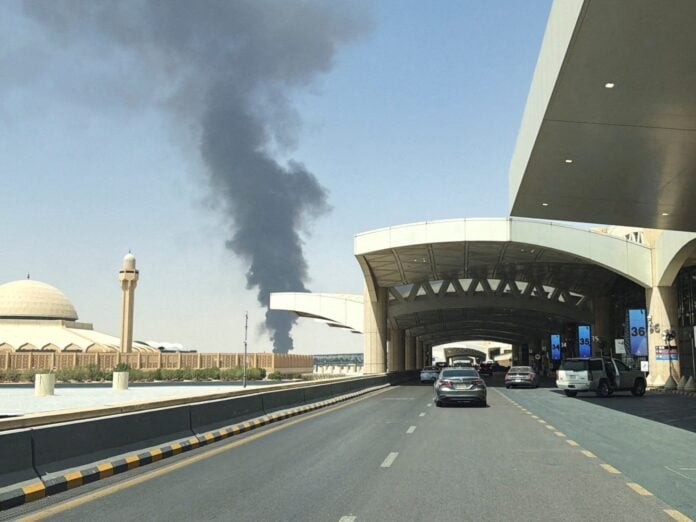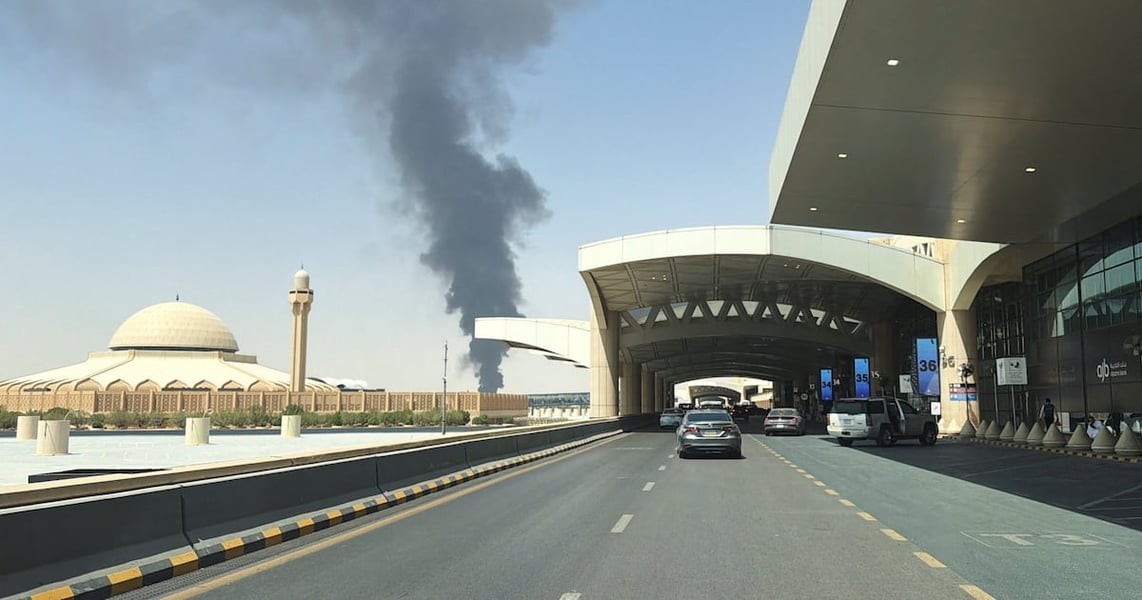

WASHINGTON — Donald Trump cut short his weekend at Camp David and returned to the White House on Saturday after Houthi forces struck King Khalid International Airport in Riyadh, setting an Aramco fuel depot ablaze.
The attack marked the latest escalation in a campaign that has effectively severed Saudi Arabia’s oil-export routes through the Red Sea.
The crisis that brought Trump back to Washington was not new. Between September 10 and 12, Houthi forces seized control of the Bab el-Mandeb Strait, the narrow chokepoint at the southern end of the Red Sea through which roughly 8 percent of global oil trade and 15 percent of maritime commerce pass.
According to the U.N. migration agency, the offensive killed more than 500 people and displaced approximately 46,000. No international force intervened to stop it.
The speed of the collapse was its own signal. Houthi forces captured the port of Mocha on September 10, then moved within 24 hours to Perim Island, the rocky formation that divides Bab al-Mandeb into two shipping lanes, along with Dhubab and the Hanish Islands. Yemeni government forces withdrew without sustained resistance across roughly 5,400 square kilometers of coastline. What had been a potential threat to the strait became control of it in under a week.
Saudi Arabia has not been able to move crude through the Red Sea since September 13. That is the economic baseline beneath all the diplomacy taking place this week in New York and Washington. The Saudi East-West pipeline, which allows crude to bypass the Red Sea entirely, was struck by drone attacks originating from Iraq on September 10 and 11, forcing a shutdown of the 7 million barrel-per-day facility. The repair timeline is weeks, not days. Oil has pressed past $100 a barrel.
Saudi Crown Prince Mohammed bin Salman spoke with Trump twice last week to request direct U.S. military strikes against the Houthis. Both times, Trump declined, The National reported, offering intelligence sharing and unspecified military assistance instead. On September 16, U.S. officials met with Houthi representatives at the American embassy in Muscat, mediated by Oman, and emerged with a commitment: the Houthis would spare American, Israeli, and commercial shipping through the strait. Saudi vessels were explicitly excluded from that guarantee.
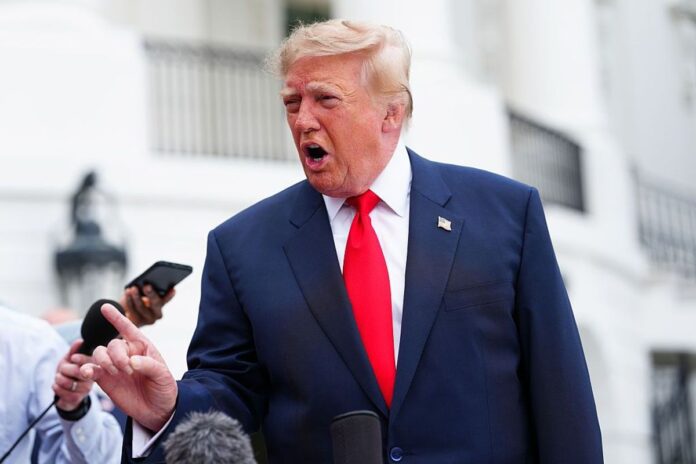
Trump’s public framing of the situation was something less than a response to an ally in distress. “They called us, and they don’t want to fight us,” he told reporters on September 12, referring to the Houthis. Ships were “allowed to pass.” The situation would “work out very well.” The Houthi military spokesman Yahya Saree’s simultaneous clarification, that Saudi ships “have already been banned,” went unaddressed.
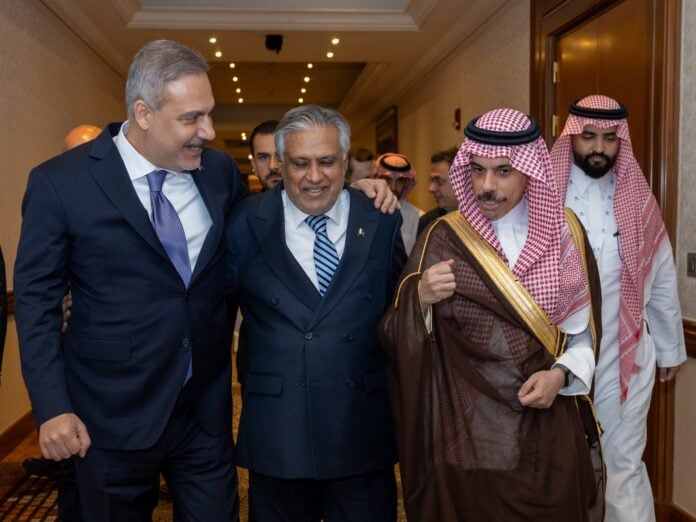
In August, Saudi Arabia drew the practical conclusion from a series of conversations in which Washington offered sympathy and withheld action. The Makkah Joint Defence Agreement, signed on August 7 in Mecca, created a mutual defense framework among Saudi Arabia, Turkey, and Pakistan, three countries with divergent political orientations united, in part, by a shared interest in security arrangements that do not depend entirely on the United States. Turkish President Erdogan, Pakistani Prime Minister Sharif, and Crown Prince Mohammed bin Salman structured the pact to function, in the words of Turkish Foreign Minister Hakan Fidan, “similarly to NATO,” with a permanent secretariat in Riyadh. Pakistan, the Muslim world’s only nuclear-armed state, provides a deterrent dimension Washington cannot replicate with diplomatic advice.
The Houthis have been careful to draw a distinction that gives Washington political cover for inaction. Commercial shipping is safe. American warships are not targets. Israeli vessels are spared under the Muscat understanding. The carve-out for Saudi ships allows the group to inflict economic damage on Riyadh while maintaining a posture toward the United States that Trump has publicly described as non-threatening. Whether that calculus holds as Houthi strikes move deeper into Saudi territory is the question that forced the President back from Camp David on Saturday.
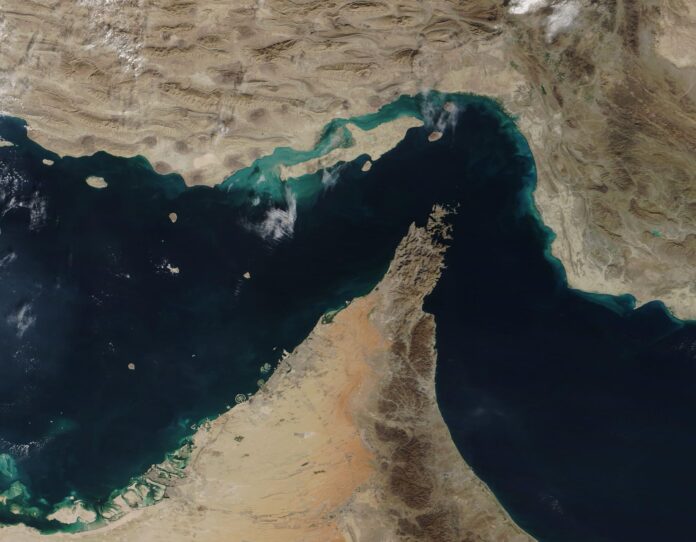
The strategic picture that has emerged since September 10 is one the Houthis have been building toward for more than a year. The Riyadh airport strike follows a pattern of escalating operations across the Red Sea coast and into Saudi territory, attacks that have systematically degraded the kingdom’s ability to export energy, move cargo, and project stability. Combined with Iran’s operations in the Strait of Hormuz, the effect has been to put roughly a third of the world’s daily oil supply under some degree of threat, a pressure point no previous conflict in the region has approached.
Against that backdrop, Trump arrives at the United Nations General Assembly on September 22 to present a postwar framework for Iran to the leaders of the Gulf Cooperation Council. The UNGA summit was conceived as a diplomatic pivot toward a “day-after” plan for the region. Its principal audience, the Saudi Crown Prince who has been asking for airstrikes and receiving intelligence briefings, is also the head of a government that watched a Gulf-Iran diplomatic channel collapse in Salalah last week before it could open.
The Bab al-Mandeb Strait belongs to the Houthis. The pipeline is offline. The Riyadh airport burned on Saturday. Trump’s message to the GCC on Tuesday is the administration’s best argument that this situation still has a diplomatic resolution. The Houthis’ message, delivered through Yahya Saree and through the missile that hit King Khalid airport, is that they are not waiting for one.