
RIYADH — Before the morning call to prayer had finished echoing across the Saudi capital, the sky above King Khalid International Airport was already wrong.
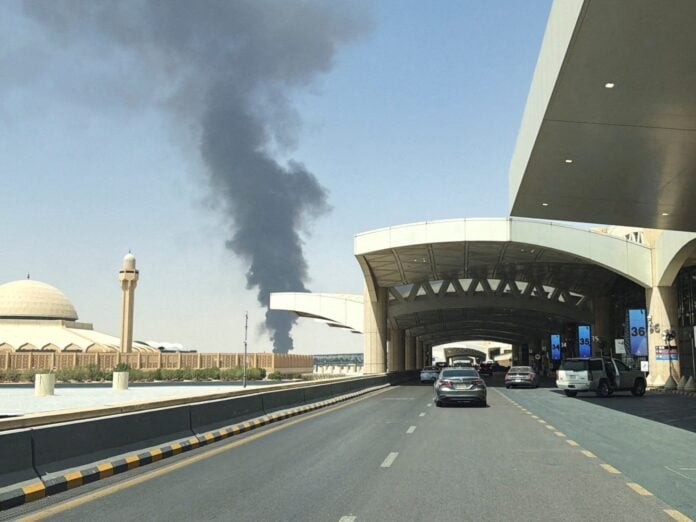
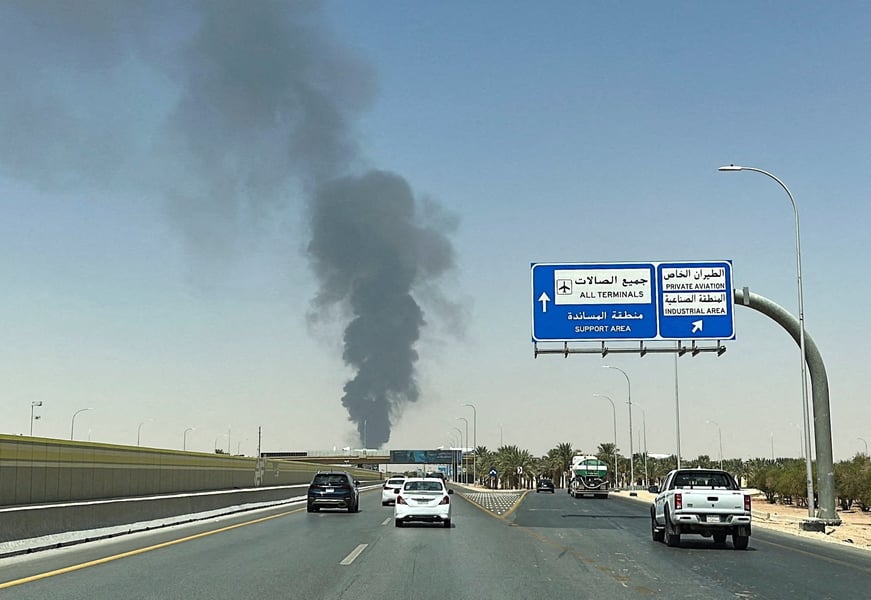
A column of black smoke rose from an Aramco fuel depot near the airport’s perimeter, visible from apartment windows across Riyadh, as the Saudi-led coalition said it had intercepted a Houthi ballistic missile aimed at the city.
It was the first reported targeting of Riyadh since fighting resumed with Yemen’s Houthi rebels—an escalation that brought the conflict directly into the Saudi capital’s skyline.
The coalition confirmed the interception in a statement carried by Al Jazeera, with its spokesman Maj. Gen. Turki al-Malki stating that Saudi air forces had “successfully intercepted and destroyed a ballistic missile launched by the Houthi terrorist militia towards the city of Riyadh at dawn.” The missile was brought down — but not before a blaze ignited on a fuel tank at the Aramco-owned depot near the airport’s edge. Firefighters arrived and contained the fire. Saudi authorities reported no casualties.
The disruption in the air above Riyadh was matched on the ground. FlightRadar24, the aircraft tracking service, listed King Khalid International Airport under its highest disruption classification, with cancellations and delays cascading across departure boards through the morning, NBC News reported. Two residents of the capital said they had heard explosions before watching smoke rise in the direction of the airport.
Al-Malki said the Houthis had simultaneously targeted “civilians and civilian infrastructure” across four other Saudi cities: Bisha and Farasan in the southwest, Taif in the western highlands, and Yanbu on the Red Sea coast, where Aramco operates a major oil processing facility. All those attacks, he said, were thwarted by Saudi air defenses.
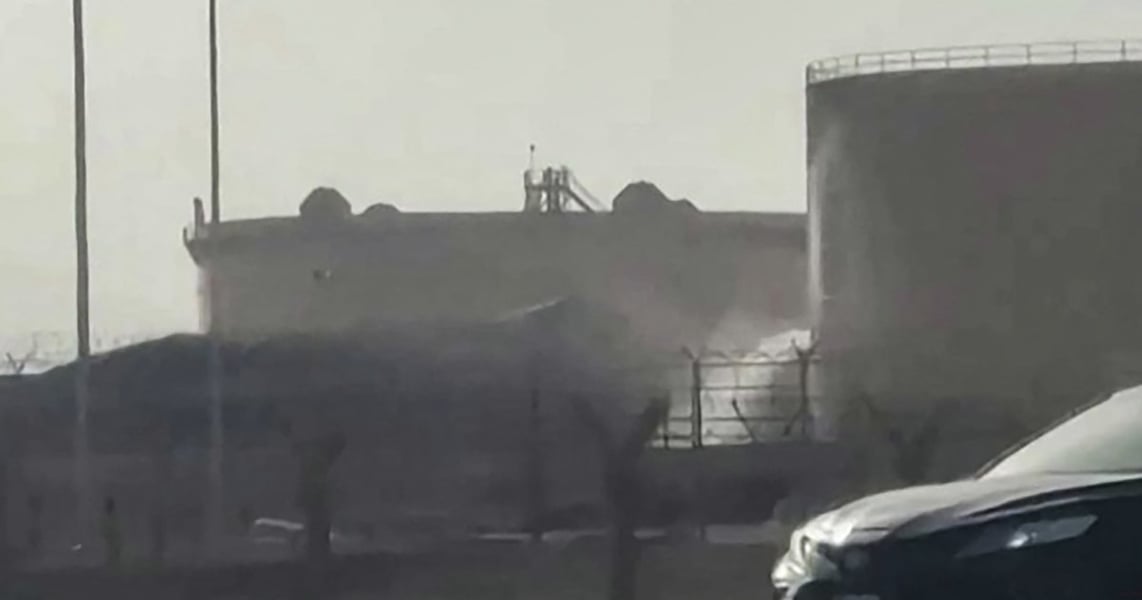
The gap between those two accounts — the coalition’s narrative of near-total interception, the Houthis’ of a multi-front strike on sensitive infrastructure — is familiar terrain in this conflict. What neither side disputed was that a ballistic missile had been fired at the Saudi capital, that something had burned at its international airport, and that the city’s aviation system was, for several hours, in declared emergency.
The last time Riyadh faced comparable targeting, during the 2019-to-2021 peak of Houthi strikes on Saudi territory, the kingdom absorbed drone and missile attacks on its oil processing heartland — including a September 2019 strike on Abqaiq and Khurais that briefly halved Saudi oil output. What followed were years of negotiation, a tenuous truce, and a gradual return to open conflict. Saturday’s missile arrived in a different regional context.
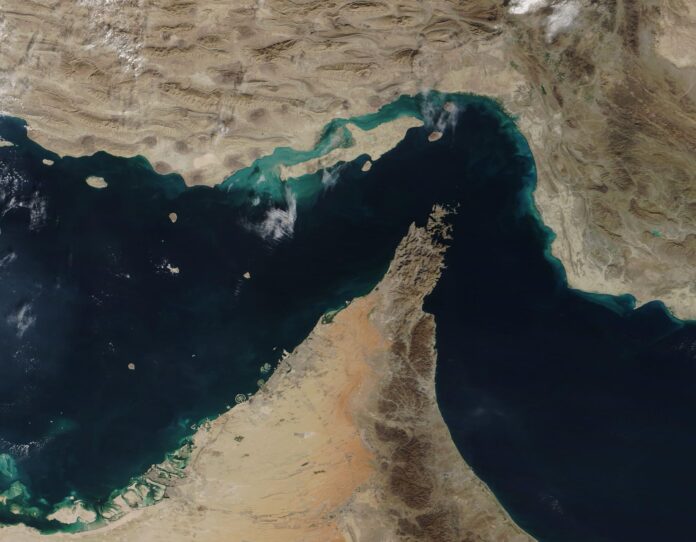
The attack lands against a backdrop of accelerating pressure on Saudi Arabia’s perimeters. The Houthis this month sealed the Bab al-Mandab strait — the narrow chokepoint between Yemen and the Horn of Africa through which roughly eight percent of global seaborne trade flows — as part of what analysts have described as Iran’s dual chokepoint strategy to constrain energy and commerce from the Gulf. Iran’s parliament speaker Mohammad Baqer Ghalibaf separately signaled that the Strait of Hormuz would remain under pressure until Tehran’s conditions were met.
For Riyadh, the harder question is not whether its defenses held. Formally, they did. But a fire burned at an Aramco depot on the grounds of a major international airport while travelers watched from terminal windows and residents filmed from balconies. The practical distance between “intercepted” and “impacted” — a question of debris, aerodynamics, and the specific geometry of a dense urban airport perimeter — is narrower than official statements tend to acknowledge.
Saudi Arabia had not, as of Saturday, announced a retaliatory strike against Sanaa.
What the attack demonstrated, whatever the precise operational reality behind Yahya al-Sarea’s claims, is that the Houthis retain both the will and the capability to aim at the Saudi capital. Whether Saturday’s missile marks the opening of a sustained campaign against Riyadh, or a single demonstration of reach designed to extract a political price, the group chose not to say.