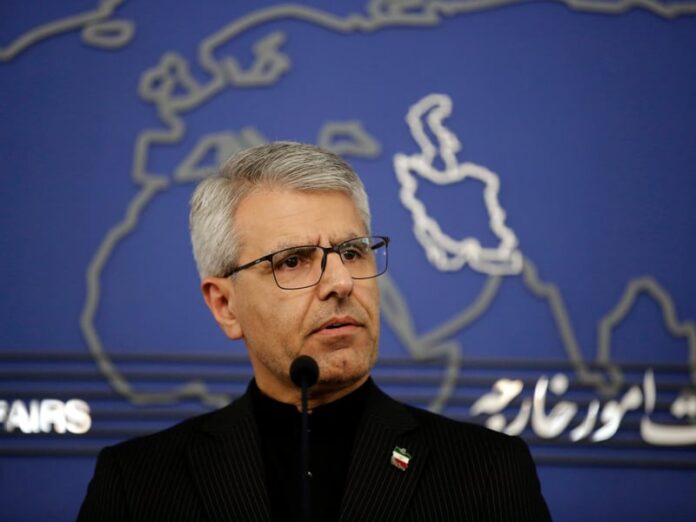

ANKARA – Arab and Islamic foreign ministers on Thursday urged more governments to follow Britain and Australia in imposing targeted sanctions over Israeli settlement activity, seeking to turn two national sanctions packages into wider pressure against construction in the occupied Palestinian territory.
The ministers welcomed restrictions on settlement-linked companies and Britain’s action against an organisation accused of obstructing humanitarian aid to Gaza. Their statement singled out the E1 settlement plan east of occupied East Jerusalem, saying accountability measures should extend to those who support, facilitate or implement settlement expansion and annexation policies.
The diplomatic endorsement does not itself impose additional sanctions. Its immediate significance is political: the ministers are asking other states to attach financial and commercial consequences to settlement activity, while London and Canberra say the construction threatens the possibility of a viable Palestinian state.
There is a difference between the published signatory lists. Turkey’s foreign ministry version lists 15 countries: Turkey, Algeria, Egypt, Indonesia, Jordan, Kuwait, Libya, the Maldives, Niger, Pakistan, Palestine, Qatar, Saudi Arabia, Somalia and the United Arab Emirates. The UAE’s published version also includes Oman, bringing its list to 16. The versions reviewed do not explain that difference.
The ministers expressed hope that the British and Australian decisions would encourage others to follow suit. They also renewed their condemnation of E1 and related settlement activity east of East Jerusalem, linking the sanctions to the need to preserve a contiguous Palestinian state rather than treating them as an isolated dispute over individual companies.
Britain announced its package on Tuesday, November 17. The Foreign, Commonwealth and Development Office said eight construction, property-development and architectural businesses would face asset freezes and director disqualifications. The measures also covered Tzav 9, an Israeli activist movement that the government said had organised blockades of roads, ports and crossings used by humanitarian aid convoys bound for Gaza.
The British government said in its announcement that the business designations were intended to disrupt financial flows supporting further settlement construction. It described the sanctioned companies as helping plan, build, supply or market housing and public infrastructure in settlements. That is a wider commercial chain than construction work alone.
Foreign Secretary Ed Miliband tied the decision to E1, saying his message was to refrain from bidding, building or profiting from the destruction of the two-state solution. Britain had previously warned companies bidding on the E1 settlement project that they risked sanctions. The latest package moves beyond that warning to named designations, but it does not establish that every firm involved in the project has been sanctioned.
London also drew a distinction between settlement-linked activity and trade with Israel within the Green Line. Its statement said the government welcomed the latter. Separate legislation concerning imports of settlement goods and advertising services for settlement properties remained under development, according to the announcement. Those proposals should not be confused with measures already imposed on the designated businesses.
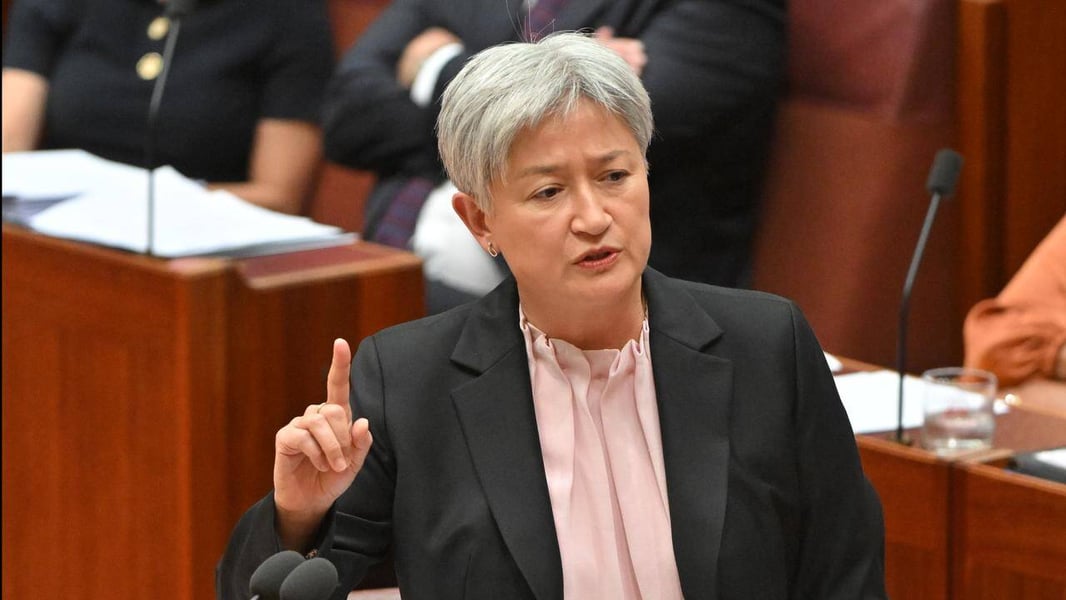
Australia announced its own package on Wednesday, November 18, targeting three individuals and four organisations. Foreign Minister Penny Wong said the restrictions barred Australians and Australian businesses from trading with or providing financial or other support to the designated parties. The package built on earlier sanctions and travel bans, rather than creating an unrestricted ban on commerce with Israel.
Wong said in her announcement that this was the first time Australian sanctions had targeted a construction company involved in building settlements. She warned Australian businesses against bidding for settlement construction tenders and said Canberra would continue assessing further action with international partners. The Australian package differs in scope and designation count from Britain’s eight-business package.
The ministers’ statement framed the sanctions as consistent with international law, citing UN Security Council Resolution 2334 of 2016 and the International Court of Justice’s July 19, 2024 advisory opinion. They invoked states’ obligations not to recognise as lawful the situation arising from Israel’s unlawful occupation and not to assist in maintaining it. Their endorsement is a diplomatic position on accountability; the statement is not a new court judgment or a UN sanctions resolution.
The statement also connected settlement policy in the West Bank with the humanitarian emergency in Gaza. The ministers condemned military escalation there, called for full implementation of the Gaza ceasefire plan and said recovery and reconstruction must form part of a lasting political settlement. Their welcome for the sanction against an aid-obstruction group addressed access to relief, a separate issue from the financing of settlement construction.
They reiterated support for an independent, sovereign, contiguous and viable Palestinian state based on the June 4, 1967 lines, with East Jerusalem as its capital. What their appeal does not establish is which additional governments, if any, have committed to matching the British or Australian restrictions.