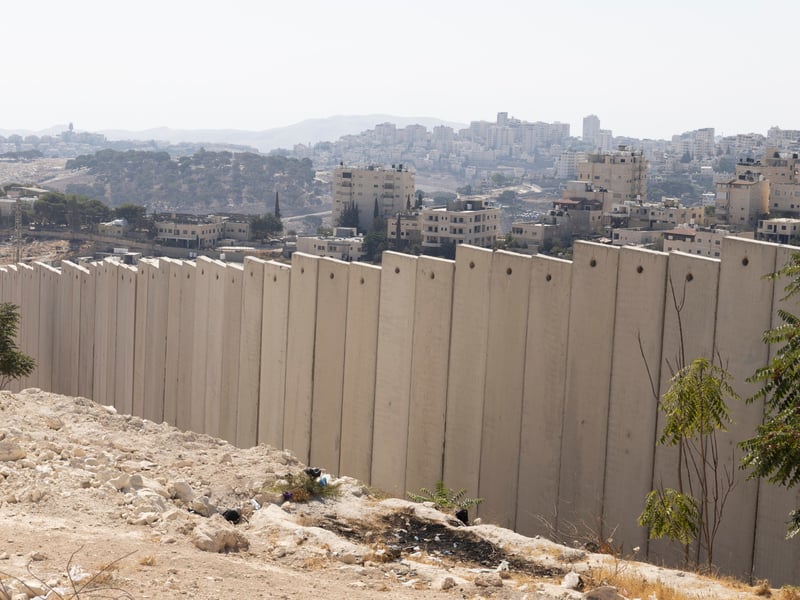

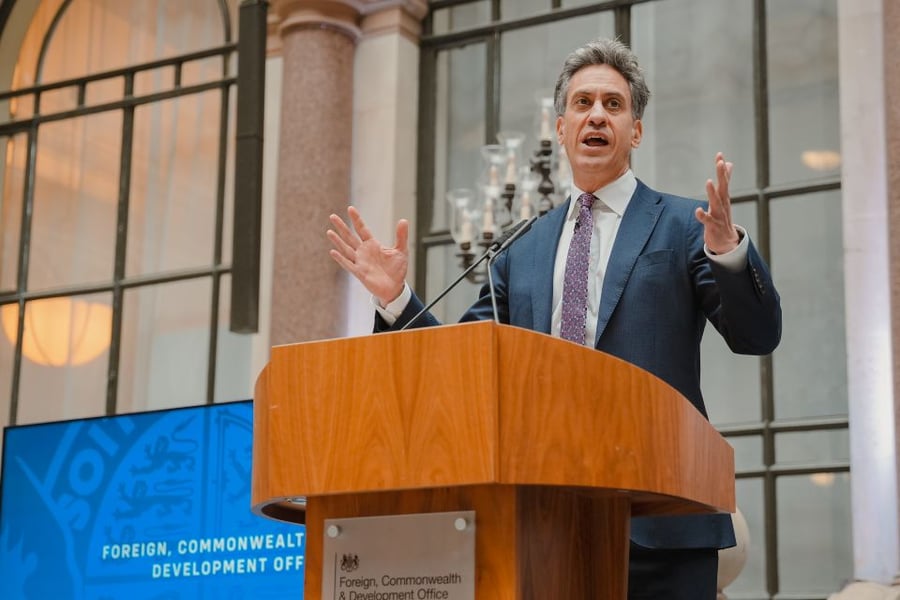
LONDON — Any company that put in a bid by Monday’s deadline to build homes in the E1 corridor east of Jerusalem has now been told by Britain’s Foreign Secretary that it risks sanctions. Ed Miliband chose the day bidding closed to say so, in a statement from the Foreign, Commonwealth and Development Office that left little to interpret: “We urge businesses and individuals not to proceed with bids for E1 construction tenders.”
Miliband called Israel’s decision to open the tenders “a direct threat to the prospect of a two-state solution” and said Britain has “created new powers allowing us to sanction individuals and companies involved in the construction of illegal settlements such as E1.” The warning extends a dispute over the E1 settlement project that sharpened in August, when London called the tender an “unacceptable and destructive act,” Al Jazeera reported at the time.
The tender covers 1,234 housing units, and bidding opened on 18 August. It closed on Monday, yet nobody outside the process is likely to learn quickly who took part. The committee that examines the bids will not review them before November 19, a delay ordered by the attorney general over fears that the process could be used for election propaganda before Israel’s October 27 vote. The threat lands while the field of bidders is still hidden, and none of the reporting reviewed for this article names a single one.
That timetable reaches this article through Peace Now, the Israeli group, as the Times of Israel reported on October 12 when the Israel Land Authority confirmed it. The tender notice itself could not be read.
Israel’s reply came within two hours. Foreign Minister Gideon Sa’ar wrote on X that “Our historical rights are not subject to approval from London” and that Israel “will not be intimidated by threats.” He had been down this road before, having threatened retaliation over West Bank sanctions in early September.
Israel has already shown what retaliation looks like. In September it ordered the British consulate in East Jerusalem closed after London joined a multinational ban on goods from the settlements.
The power Miliband points to appears to be the Global Human Rights and International Humanitarian Law Sanctions Regulations 2026, made on October 12 and in force since Thursday. Haaretz described the expanded regime as covering “the construction, expansion or financing of Israeli settlements.” The text of the regulations never uses the word settlement, or West Bank. It lets the Foreign Secretary designate people or companies, by name or by description, who facilitate, finance or profit from conduct amounting, among other grounds, to “a serious violation of international humanitarian law,” on “reasonable grounds to suspect,” with asset freezes, director disqualification and immigration sanctions available.
A designation would therefore rest on a finding that building on E1 is such a violation. Miliband’s statement asserts it by calling the settlements illegal; the regulations do not say it, and no designation under them had surfaced in the sources reviewed here.
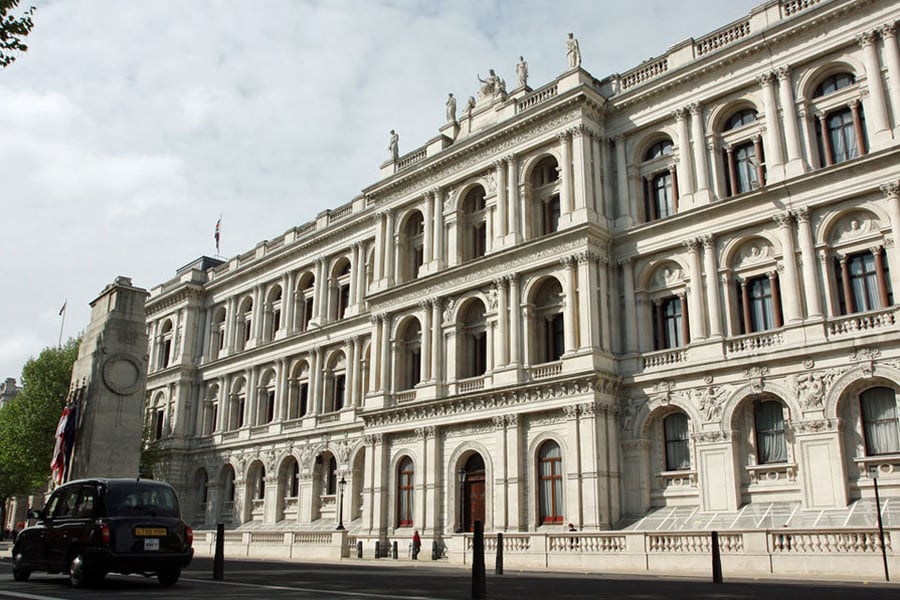
Miliband added that Britain “committed to introduce legislation to ban goods imported from illegal settlements,” the settlement goods ban announced in September, which Haaretz said is expected to take effect within six to nine months. Middle East Eye reported that the European Council has since told companies they “should not bid for construction contracts for E1 or other settlement developments,” and that bidding on a second tender is due to open on October 25, with a third in November. The Council’s own conclusions could not be opened for this article.
The Foreign Office statement also condemned “escalating settler violence in the West Bank,” including “recent attacks on officials from France, Belgium, Poland, and a Catholic Church representative, as well as a US journalist.” Washington has separately pressed Israel to act after the attack on photojournalist Heidi Levine. In a Middle East Eye video, French mayor Bernard Baudoux says he was “thrown to the ground” despite wearing his mayor’s sash during a visit to Taybeh with French, Belgian and Polish diplomats.
Who bid, and whether any of them is British, is the question nobody has answered.