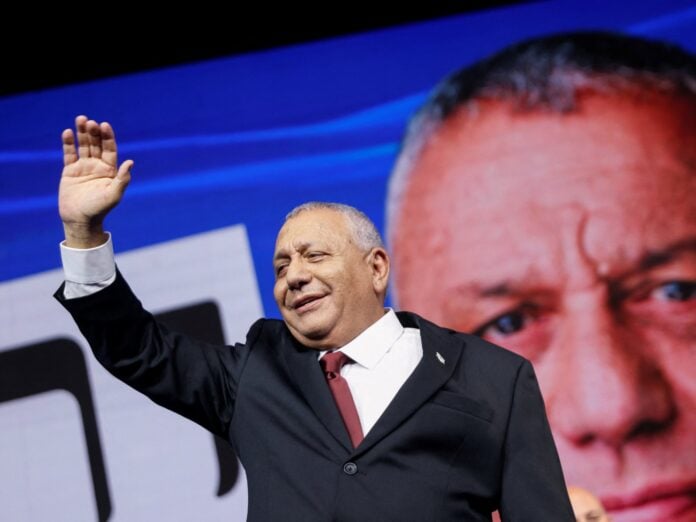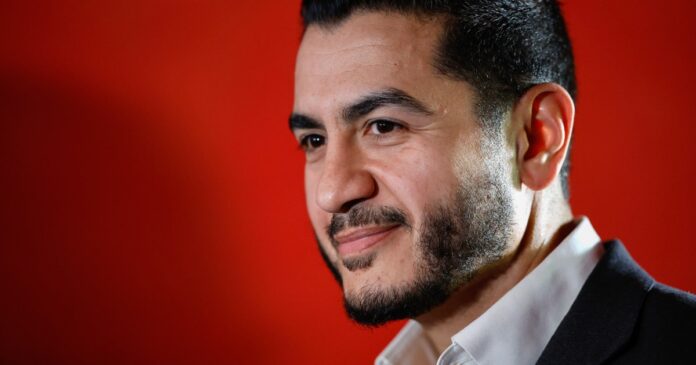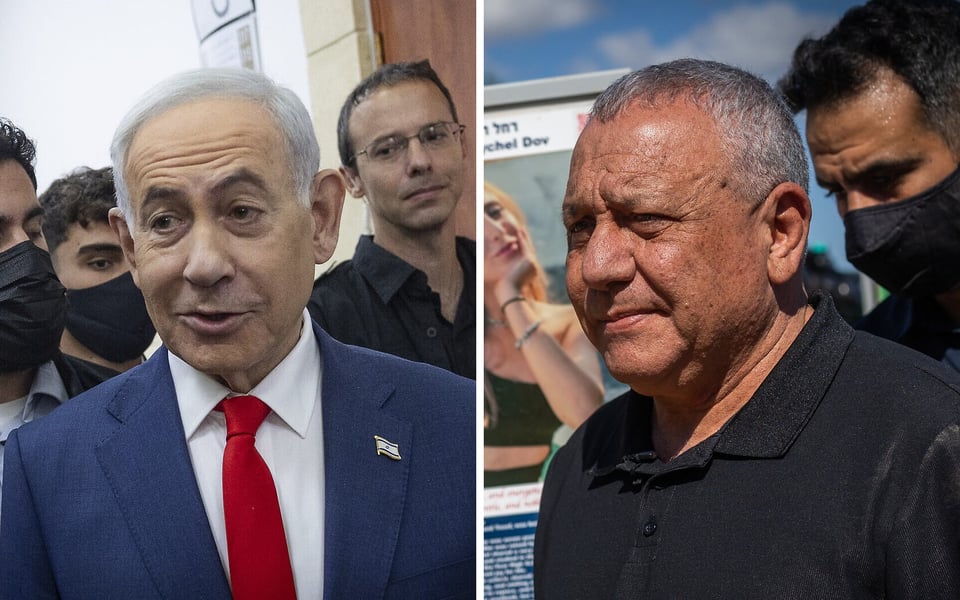

JERUSALEM — Israeli President Isaac Herzog has given opposition leader Gadi Eisenkot the first chance to form the country’s next government, a setback for Prime Minister Benjamin Netanyahu after an inconclusive election on October 27. Eisenkot, a former military chief who leads the Yashar party, received the mandate formally at a ceremony on Sunday, The New York Times reported.
The decision does not hand Eisenkot a government. He has 28 days to assemble a coalition, with a possible 14-day extension, and must then win a vote of confidence in the Knesset. That gives him up to six weeks to secure the 61 seats needed for a majority in the 120-seat parliament. Until then, Netanyahu remains caretaker prime minister.
An election with no majority
No bloc won enough seats to govern. Netanyahu’s Likud and its far-right and ultra-Orthodox allies took 53 seats, while Eisenkot’s Yashar and three other Jewish opposition parties won 48, according to the BBC. Two Arab-led alliances, the United Arab List and the Joint List, together won an unprecedented 19 seats after a surge in turnout among Arab voters.
Likud is the largest single party with 27 seats, six more than Yashar’s 21. Netanyahu’s religious-nationalist bloc has fallen from the 64 seats it secured in 2022 to 53, eight short of a majority, Al Jazeera reported.
Polls before the vote
Eisenkot’s rise had been visible for months. In July, an average of mainstream polls put Yashar level with Likud at 22 seats, according to the Arab Center Washington DC. A September poll reported by The Jerusalem Post suggested for the first time that an Eisenkot-led coalition had a pathway to 61 seats without Arab parties, with Netanyahu’s coalition down to 47. The actual result fell short of that projection.
Why Herzog chose Eisenkot
After consultations with party delegations, Herzog said factions representing 67 members of the Knesset recommended Eisenkot, while 46 recommended Netanyahu. The seven-seat United Torah Judaism party recommended neither, reportedly because Netanyahu’s coalition failed to exempt ultra-Orthodox Israelis from military service.
Herzog cautioned that recommendations do not guarantee a majority. He pointed to mutual vetoes between the blocs, and within the blocs themselves, as the central difficulty in turning support into a governing coalition.
Eisenkot’s arithmetic problem
Eisenkot’s four-party bloc holds 48 seats, 13 short of a majority. His backing from 67 lawmakers depends on the Arab-led parties, Ra’am and the Joint List, which endorsed his bid. But Eisenkot has ruled out bringing those parties into government. With them, the anti-Netanyahu camp would total 67 seats.
He has said he intends to form a national emergency government built around his 48-seat bloc, according to Axios. The most discussed route to 61 runs through the ultra-Orthodox parties. United Torah Judaism’s seven seats and Shas’s six could lift the opposition from 48 to 61, if both agree to join, The Week reported.
The Times noted that such a government could end up as a minority administration relying on Arab parties’ votes to survive a no-confidence challenge. Al Jazeera added that Israeli law allows a prime minister to take office with fewer than 61 seats if the government wins a confidence vote, and that Eisenkot has refused to bring Arab-led parties in unless they meet conditions that include designating Hamas a terrorist organization.
The alternatives
The BBC noted that the results implied three possible outcomes: a national unity government including both Netanyahu and Eisenkot; a right-wing coalition under Netanyahu with defectors from Eisenkot’s bloc; or an Eisenkot-led government supported by the Arab parties.
If Eisenkot fails within the time allowed, Herzog could offer Netanyahu a chance to form a coalition. If that effort also fails, Israel could face another election.
Netanyahu’s weakened position
The mandate follows a rebuff for Netanyahu’s attempts to challenge the election. Herzog accepted the certified results last week and opened consultations, which Al Jazeera described as a blow to the prime minister’s efforts to discredit the vote.
What happens next depends on negotiations that have barely begun. Eisenkot needs partners his own bloc has resisted, while Netanyahu’s allies are divided over military service and the premier’s own future. The outcome will determine whether Netanyahu leaves office or the country returns to the polls.