
JERUSALEM — Palestinians in occupied East Jerusalem who arrived Tuesday for scheduled appointments at the British consulate found the facility closed after Israel ordered its shutdown, disrupting local access to consular services without an immediately announced alternative.
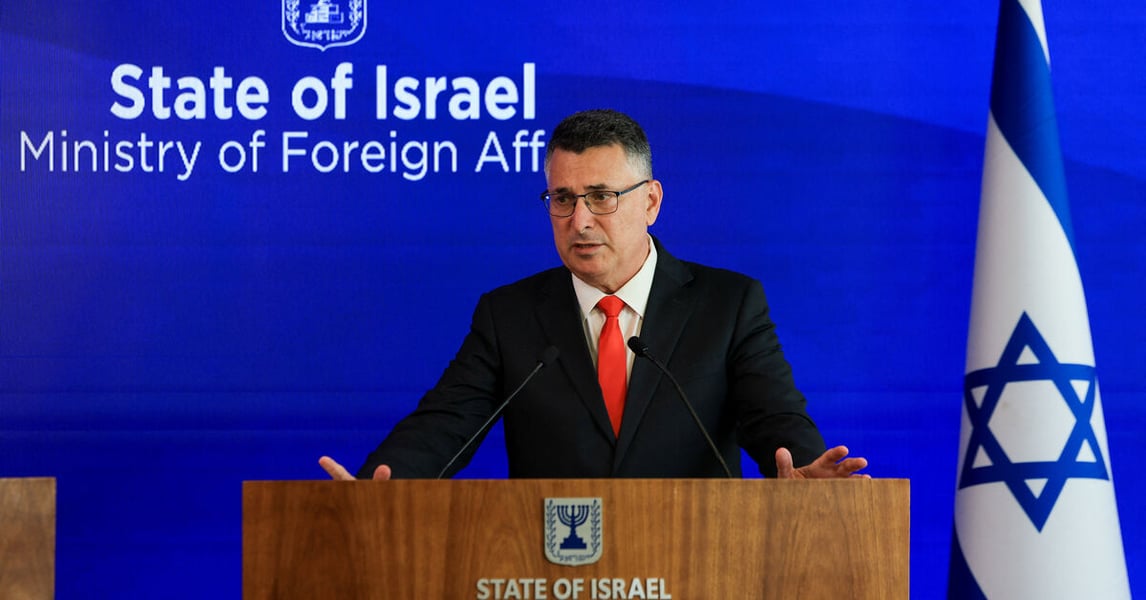
Israeli Foreign Minister Gideon Saar said the closure was part of a broader diplomatic retaliation against Britain after London joined a 12-nation trade ban targeting goods produced in Israeli settlements. The measures also include the removal of British personnel from the US-led Gaza coordination mission and a ban preventing 12 elected British officials from entering Israel.
The British consulate in East Jerusalem has for decades provided services to Palestinian residents who do not hold Israeli citizenship or a recognized Palestinian state passport. Its work includes visa processing, document certification and emergency consular assistance, making the facility an important point of access for a population facing complex residency and documentation arrangements.
Saar characterized Britain’s decision as more than an economic measure, accusing London of interfering in Israel’s sovereignty and democratic process.
“The British decision is morally distorted, and constitutes blatant interference in the affairs of a sovereign state and its electoral process,” he said in a statement issued by the Israeli Foreign Ministry.
The dispute also touches on one of the most consequential issues within Israel’s governing coalition: settlement expansion. Prime Minister Benjamin Netanyahu’s coalition has made settlement development a central policy commitment, while Britain’s trade restrictions carry an implicit criticism of that policy.
Whether London intended the measures to be interpreted in those terms or not, Israel’s response has made clear that its government views them as a direct challenge to its policies and political decision-making.
The ban that provoked this response was announced on September 8, when Britain joined eleven other governments in prohibiting imports of goods produced in Israeli settlements in the occupied West Bank. The twelve-nation settlement ban covers agricultural produce, Dead Sea cosmetics, and manufactured goods that had long been exported under labelling that obscured their settlement origins. Settlements are considered illegal under international law, a position affirmed by the International Court of Justice, but Israel disputes the legal framework entirely and treats its presence in the West Bank as a matter of sovereign right rather than occupation.
The retaliation did not arrive without notice. Eastern Herald reported last week that Israel had warned Britain explicitly that joining the sanctions coalition would carry consequences across the region. Those warnings have now materialised at every level Saar named: diplomatic, military, and consular. Britain is being removed from the Civil-Military Coordination Center at Kiryat Gat, a US-led facility that manages humanitarian aid delivery into Gaza. British military trainers working with Palestinian Authority security forces in Ramallah are also being required to leave. The cumulative effect concentrates the cost not on British consumers or trade flows but on Palestinians who relied on British diplomatic presence to navigate daily life.
What Tuesday’s announcement does not address is what happens to the Palestinian residents who depended on the consulate. East Jerusalem Palestinians carry Israeli-issued residency permits rather than citizenship, a status that can be revoked if they are deemed to have relocated their centre of life elsewhere. They travel on Jordanian passports or Palestinian travel documents and have long depended on British and other Western consulates for visa access that Israel does not provide through its own channels. The British embassy in Tel Aviv covers the same legal jurisdiction in theory. In practice, reaching Tel Aviv from East Jerusalem requires passing through Israeli military checkpoints, a process that is neither simple nor guaranteed for residents of the eastern city.

The most pointed domestic criticism of Israel’s response came not from the international community but from within Israel’s own political opposition. Former Prime Minister Yair Lapid called the totality of the retaliation a “monumental diplomatic failure.” His concern is not that Israel should have accepted the trade ban, but that the scope of the response has isolated Israel at a moment when it is already under sustained international pressure over its military campaign in Gaza. Diplomats in Jerusalem have noted privately that expelling British personnel from the Gaza aid mission complicates the coordination Israel says it wants to maintain with Western governments over humanitarian access to the territory.
British Foreign Secretary Ed Miliband, whose characterisation of Palestinian displacement in East Jerusalem as “ethnic cleansing” had already sharpened bilateral tensions earlier this year, had not publicly responded to the consulate closure as of Tuesday afternoon. The British government has not indicated whether it intends to contest the closure diplomatically or seek a legal opinion on Israel’s authority to order the expulsion of a foreign consulate from occupied territory. That legal question is not straightforward: East Jerusalem is under Israeli administrative control but is not internationally recognised as part of sovereign Israel, which complicates the legal foundation of the order.
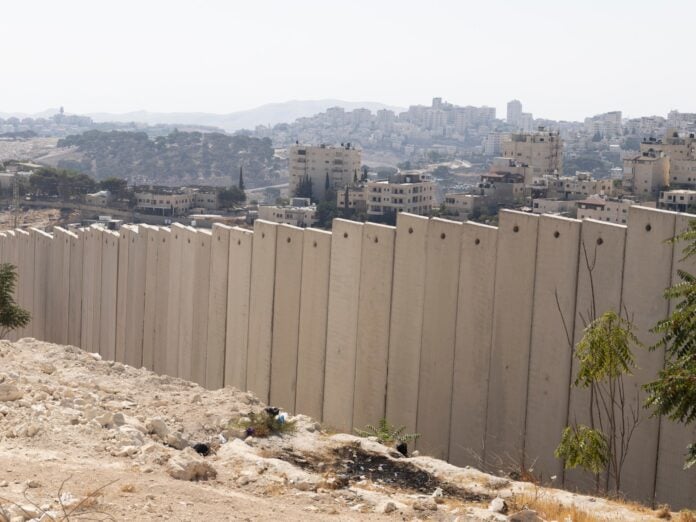
Israel’s use of occupied East Jerusalem as a tool of diplomatic coercion reflects a pattern that has deepened alongside the accelerating pace of demolitions and evictions across the city’s Palestinian neighbourhoods. Tuesday’s closure is the first instance of Israel moving to expel a foreign country’s consulate from East Jerusalem directly in response to a trade or sanctions decision. It establishes a precedent: states that challenge settlement policy may find their diplomatic presence in occupied territory made conditional on compliance. Whether that logic extends to the other eleven governments in the settlement-trade coalition remains unclear, but Israeli officials have not suggested Britain is the only government facing consequences.
What remains genuinely open is whether the two governments find a way to de-escalate before the rupture becomes structural. The British consulate in East Jerusalem has operated since 1849, one of the oldest continuous foreign presences in the city. Its closure would mark a break with a diplomatic continuity that survived wars, occupations, and the 1948 partition itself. Palestinian residents who depended on it are watching what comes next with considerably less abstraction than either government.