The United States has announced a partial suspension of sanctions on Syria following an unprecedented White House meeting between President Donald Trump and Syrian President Ahmed al-Sharaa, marking a dramatic shift in Washington’s approach to Damascus after years of punitive economic measures that crippled the war-torn nation’s economy.
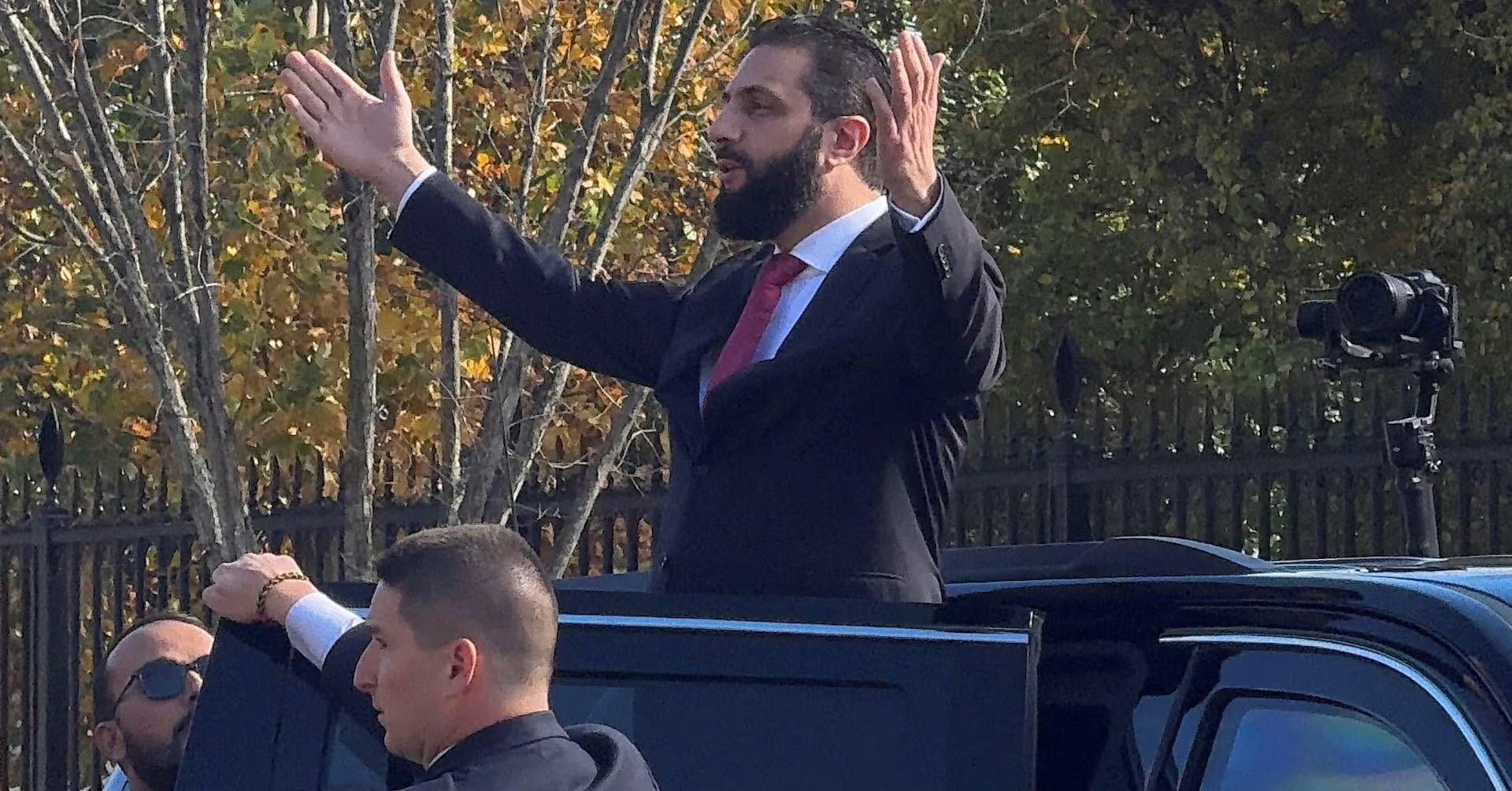
The historic meeting on November 9, 2025, represented the first time a Syrian leader has been received at the White House in decades, signaling a potential thaw in relations between the two countries following the dramatic collapse of Bashar al-Assad’s regime in December 2024. Trump announced that the administration would suspend key provisions of the Caesar Syria Civilian Protection Act for 180 days, providing critical economic breathing room for Syria’s transitional government as it attempts to rebuild a nation devastated by more than a decade of civil war.

The Caesar Act, which has been in effect since 2019, imposed sweeping economic sanctions on the Syrian government, prohibiting nearly all trade and financial transactions with Damascus. The legislation was designed to hold the Assad regime accountable for human rights violations and war crimes, including the use of chemical weapons against civilians. However, critics have long argued that the sanctions disproportionately harmed ordinary Syrians while doing little to change the regime’s behavior.
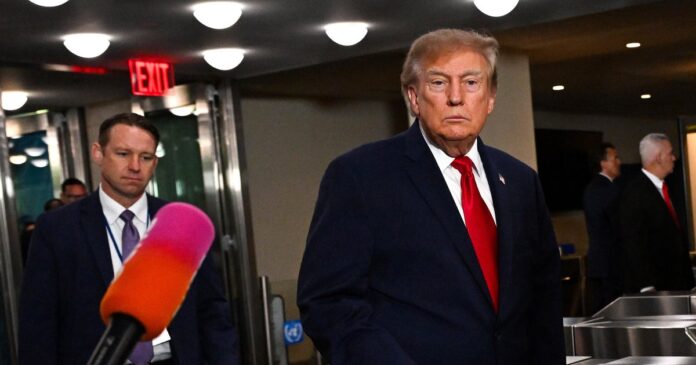
During the Oval Office meeting, Trump praised al-Sharaa’s leadership and expressed optimism about Syria’s future under new management. The American president stated that he wanted to see Syria become “a country that’s very successful,” adding that he believed al-Sharaa possessed the capability to achieve this transformation. The two leaders discussed a range of issues, including counterterrorism cooperation, regional security arrangements, and economic reconstruction efforts.

The sanctions relief comes as Syria joins the Global Coalition to Defeat ISIS as its 90th member, a significant development that underscores the transitional government’s commitment to combating extremism in coordination with international partners. Al-Sharaa announced this decision during his Washington visit, emphasizing his administration’s determination to eliminate terrorist threats that have plagued Syria throughout the civil war.
In addition to the 180-day suspension of the Caesar Act, the Trump administration authorized Syria to resume operations at its embassy in Washington, facilitating enhanced coordination on counterterrorism, security, and economic matters. This diplomatic normalization represents a stark departure from the previous posture of complete isolation that characterized US-Syria relations during the Assad era.
The United States had already taken preliminary steps toward sanctions relief in May 2025, when the Treasury Department issued Syria General License 25, which provided immediate sanctions relief across multiple sectors of the Syrian economy. That authorization facilitated new investment in Syria, the provision of financial services, and transactions involving Syrian-origin petroleum products, though it maintained restrictions on entities linked to terrorism, human rights abuses, and the former Assad regime.
The international community has gradually moved toward re-engaging with Syria since Assad’s ouster. The United Nations Security Council lifted terror-related sanctions on the Syrian president in early November, while the European Union and United Kingdom eased their own sanctions regimes in the spring of 2025. Regional powers including Saudi Arabia, Turkey, and Qatar have offered financial support for public sector salaries, energy infrastructure projects, and Syria’s obligations to international financial institutions.
Al-Sharaa’s rise to power followed a lightning military offensive in December 2024 that saw Hayat Tahrir al-Sham, the organization he led, coordinate with multiple opposition groups to topple the Assad government. The former leader fled to Russia, ending more than five decades of Assad family rule in Syria. Since assuming power, al-Sharaa has pursued what observers describe as a pragmatic approach to governance, focusing on establishing stable civilian administration, providing essential services, and engaging with humanitarian organizations.
The transitional government formally dissolved HTS and other armed factions in January 2025, announcing their integration into state institutions as part of a broader effort to build legitimate national security forces. This move was seen as crucial for gaining international recognition and accessing the financial resources necessary for reconstruction.
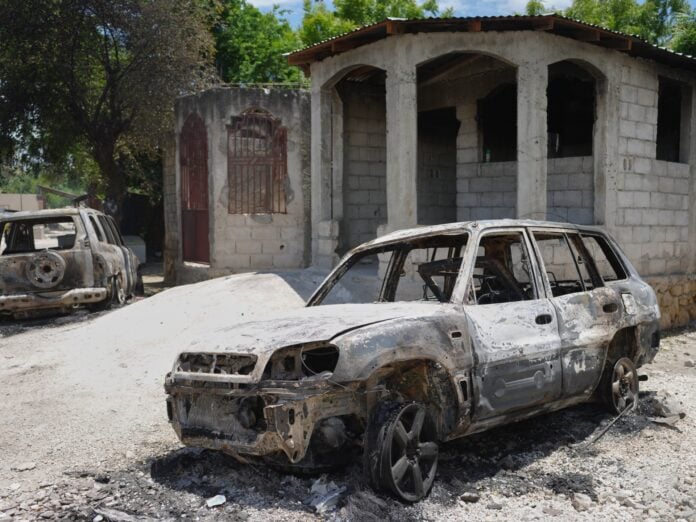
Syria’s humanitarian situation remains dire despite the political transition. Over 90 percent of Syrians live below the poverty line, with at least 9 million people unable to access sufficient quality food. Nationwide, an estimated 16.5 million Syrians require humanitarian assistance to meet basic needs. The country’s infrastructure lies in ruins after thirteen years of conflict, with schools, hospitals, roads, water facilities, and electrical grids severely damaged or destroyed.
Human Rights Watch has previously documented how broad US sanctions hindered aid delivery in Syria despite humanitarian exemptions, noting that the restrictions exacerbated the suffering of millions of ordinary Syrians. The organization praised the sanctions relief as “a critical step toward improving Syrians’ access to fundamental economic rights and encouraging efforts to rebuild a country devastated by years of grueling conflict.”
The sanctions relief has enabled Syria to begin reintegrating into global financial systems, though significant obstacles remain. The country needs massive international investment to rebuild its economy, restore essential services, and create opportunities for the millions of displaced Syrians who have fled abroad. The European Union announced on May 28, 2025, that it had lifted most of its sanctions on Syria, following preliminary easing measures that began in February.
During his Washington visit, al-Sharaa addressed Syria’s complex relationship with Israel, noting fundamental differences between Syria’s situation and that of countries that joined the Abraham Accords. He pointed out that Syria shares a border with Israel and has seen the Golan Heights occupied since 1967, making the diplomatic calculus more complicated than for other Arab nations. While ruling out immediate negotiations on normalization, al-Sharaa suggested that the Trump administration might facilitate such discussions in the future.
The foreign ministers of the United States, Syria, and Turkey held a trilateral meeting in Washington on November 9, agreeing to move forward with a plan to integrate the Syrian Democratic Forces into the Syrian army. The talks, which covered regional security and reconciliation efforts, reflected what Syria’s Foreign Ministry described as a “positive and pragmatic atmosphere.” The discussions also addressed ongoing negotiations aimed at reaching a broader security agreement between Israel and Syria.
Turkey has played a particularly important role in Syria’s transition, having supported opposition forces during the civil war and now offering diplomatic and financial assistance to the new government. Turkish Foreign Minister Hakan Fidan has engaged in intensive talks with international partners about reconstruction efforts, including potential plans for rebuilding Gaza following Israeli military operations there.
The sanctions relief has significant implications for Syria’s energy sector, which was nearly paralyzed by restrictions on petroleum-related transactions. The authorization to conduct business involving Syrian-origin petroleum products could help restore domestic fuel supplies and generate export revenue necessary for reconstruction. Access to energy is crucial for Syria to provide electricity to its population, restart industrial production, and deliver basic services.
Financial sector rehabilitation represents another critical priority. The removal of sanctions on Syria’s Central Bank and the restoration of access to international financial systems will enable the government to conduct normal monetary policy, facilitate trade, and attract foreign investment. However, international banks remain cautious about re-engaging with Syrian financial institutions due to concerns about regulatory compliance and reputational risks.
The transitional government faces enormous challenges in establishing effective governance across territories that were divided among multiple armed factions during the civil war. Al-Sharaa’s administration must integrate diverse military forces, provide security in areas previously controlled by ISIS, and address the grievances of various ethnic and religious communities. The government has emphasized its commitment to inclusive governance and respect for minority rights, though implementation remains a work in progress.
Syria’s efforts to join international frameworks have accelerated since the regime change. Beyond joining the anti-ISIS coalition, Damascus has expressed interest in resuming participation in Arab League activities and restoring diplomatic relations with countries that severed ties during the civil war. Regional powers have generally responded positively to these overtures, recognizing that a stable Syria serves broader Middle Eastern security interests.
The humanitarian implications of sanctions relief cannot be overstated. Organizations working in Syria have reported that previous restrictions complicated procurement of medical equipment, agricultural supplies, and construction materials necessary for rebuilding efforts. The easing of these constraints should enable more effective delivery of assistance to vulnerable populations and support early recovery programs.
Critics of the rapid rapprochement with Damascus have raised concerns about accountability for crimes committed during the civil war. Human rights organizations have documented extensive abuses by Assad’s government, including torture, extrajudicial killings, and the use of chemical weapons. Some observers worry that premature sanctions relief could undermine efforts to achieve justice for victims and their families.
The Syrian transitional government has announced plans for a comprehensive transitional justice process, including documentation of crimes, preservation of evidence, and establishment of accountability mechanisms. However, the practical implementation of these initiatives remains uncertain given the scale of violations and the complexity of Syria’s political landscape.
International donors have begun pledging financial support for Syria’s reconstruction, though the amounts committed so far fall far short of estimated needs. The World Bank has assessed that Syria requires hundreds of billions of dollars in investment to rebuild damaged infrastructure and restore economic productivity. Mobilizing resources on this scale will require sustained international engagement and confidence in Syria’s political trajectory.
The Trump administration’s decision to partially suspend sanctions reflects a calculated gamble that engagement with Syria’s new leadership offers better prospects for advancing American interests than continued isolation. Washington hopes that economic incentives will encourage Damascus to cooperate on counterterrorism, limit Iranian influence, and eventually normalize relations with Israel. The 180-day timeframe for the Caesar Act suspension allows the administration to assess progress before making permanent changes to the sanctions regime.
Al-Sharaa’s background as the leader of an organization previously designated as terrorist by the United Nations has raised eyebrows among some observers. However, supporters point to his pragmatic governance approach since taking power and his willingness to engage constructively with international partners as evidence of meaningful change. The dissolution of HTS and integration of its forces into state institutions represents a concrete step toward establishing legitimate government authority.
The success of Syria’s transition will ultimately depend on the new government’s ability to deliver tangible improvements in living conditions for ordinary citizens. Thirteen years of war have left the population exhausted and skeptical of political promises. Restoring electricity, water, healthcare, and education services while creating economic opportunities and ensuring security will be essential for building public confidence in the new order.
As Syria embarks on this uncertain path forward, the international community faces difficult questions about how to balance support for reconstruction with concerns about accountability and human rights. The partial suspension of sanctions represents a significant step toward re-engagement, but the ultimate outcome of Syria’s transition remains very much in doubt. The coming months will reveal whether this diplomatic opening translates into meaningful progress on the ground or proves to be yet another false dawn in Syria’s long and troubled recent history.