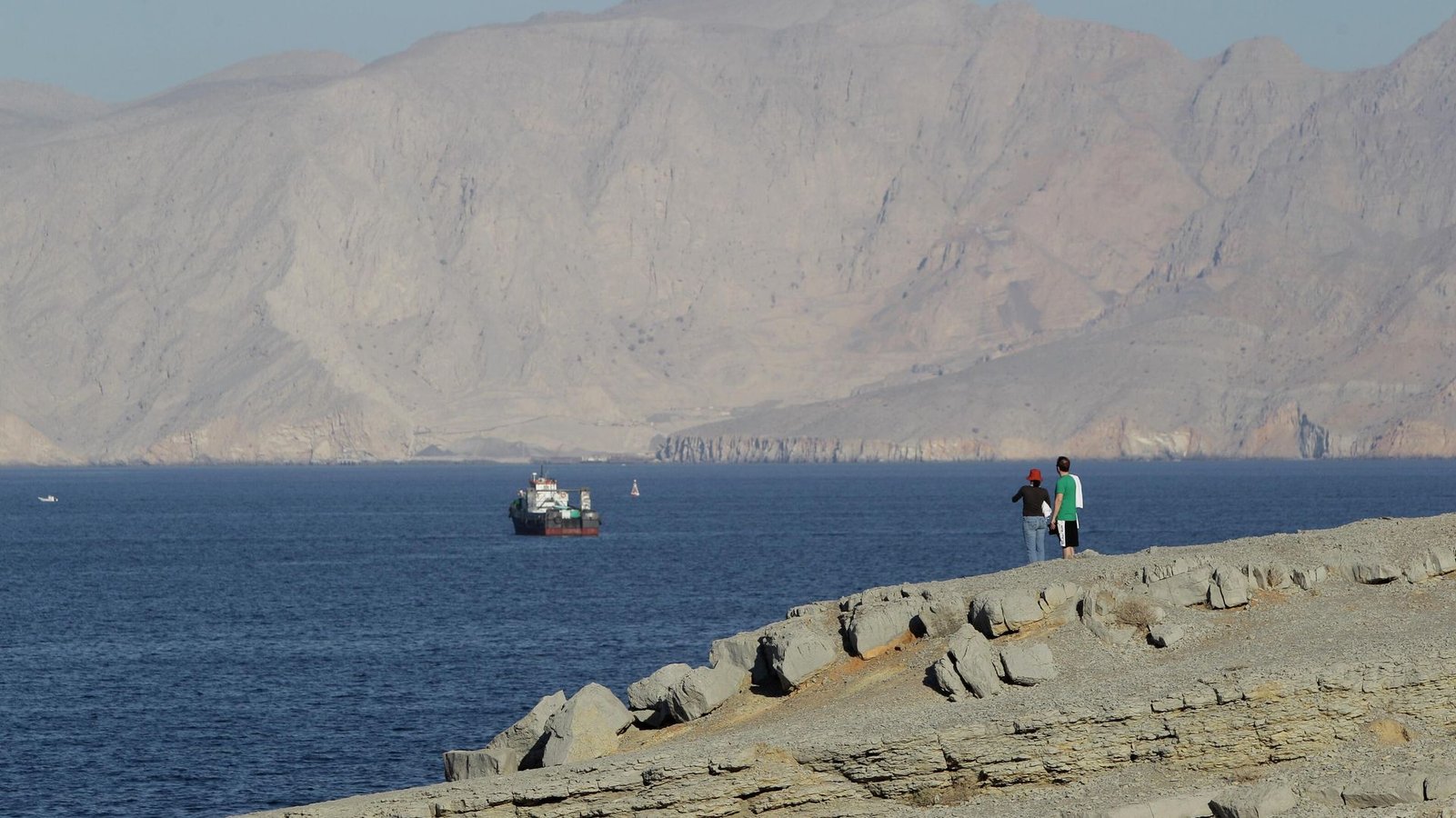

TEHRAN — The gap between what Donald Trump described and what Tehran acknowledged on Sunday stretched across the essential question of who is negotiating with whom. Trump told reporters in Washington that he had called off strikes on Iran because of a pending settlement deal — one that, in his telling, would include the reopening of the Strait of Hormuz and an agreement on Iran’s nuclear program. Within hours, Iranian Foreign Ministry spokesman Esmaeil Baghaei delivered a two-sentence correction, as Sputnik reported: “Talks between Iran and Oman are bilateral, and other parties have nothing to do with them.”
That statement, attributed to Baghaei by the Fars news agency, was the most precise thing said publicly about the Muscat channel on Sunday — and its precision was deliberate. Tehran’s insistence that the talks exclude third parties serves a specific purpose: it forecloses Trump from characterizing any eventual arrangement as a diplomatic product of Washington’s pressure or mediation. Oman has functioned for decades as a trusted intermediary between Iran and the United States precisely because both sides accept its neutrality. Iran’s insistence on bilateral framing preserves that architecture by denying Washington even observer status in the process.
The context for Baghaei’s comment was a day of competing signals. On Saturday, the spokesman had said Iran had held “useful discussions” with Oman about shipping in the Strait of Hormuz — the first public Iranian confirmation that substantive exchanges had taken place through the channel. Reports citing sources familiar with the process suggested progress had been made toward reopening the strait. Those accounts aligned broadly with Trump’s framing of the situation as moving toward a deal, while their sourcing suggested American officials were at least being kept informed of the talks, even if Washington was not a direct participant.
The Hormuz closure that created the current crisis began on July 13, when the United States reimposed a naval blockade of Iran following what CENTCOM described as Iranian interference with commercial vessels transiting the strait. The blockade itself followed the resumption of US airstrikes against Iranian targets beginning on July 8, roughly three weeks after the June 18 ceasefire memorandum that had temporarily halted the Iran-Israel conflict. Iran responded to the strikes with attacks on US bases in the Middle East and formally accused Washington of violating the ceasefire’s terms.
The strait had reopened briefly following the June 18 ceasefire. It closed again when Iran said the terms of that agreement were not being honored by continued US and Israeli military operations. Each closure and reopening has required a distinct set of conditions to be met. The Oman channel is now attempting to establish what conditions would govern a second reopening — and whether those conditions can be stated in terms that both Washington and Tehran can publicly accept without either side appearing to yield.
Trump’s order reinstating the naval blockade in mid-July came as part of a broader escalation cycle that has kept commercial shipping in the Persian Gulf under severe disruption for nearly three weeks. War-risk premiums on tankers transiting the region have climbed to levels not seen since the peak of the Houthi Red Sea campaign in 2024. Thirty-five vessels have been redirected by US naval forces, two disabled, and two boarded under the blockade’s terms, according to the most recent CENTCOM accounting. Those figures represent real economic disruption that intensifies daily the blockade remains in force.
Trump’s announcement that he had “called off” attacks was itself unusual. No strikes were pending by any public account when he made the statement. What he appeared to be signaling was a conditional pause — a gesture toward the Muscat process — rather than an operational halt to an active military campaign. Iran has not acknowledged any such gesture. Tehran’s insistence on bilateral framing is a direct rebuff of the suggestion that Washington had any role in facilitating or shaping the current diplomatic opening.
What the Strait of Hormuz arrangement might actually require remains unclear from public statements on either side. Reopening the strait requires Iran to stand down the military posture that prompted its closure. A nuclear arrangement of the kind Trump described requires re-engagement with the JCPOA framework or a successor agreement — a process that, even under favorable conditions, involves the European parties to the original deal, the IAEA, and a timetable for independent verification. Iran has consistently refused to conduct nuclear negotiations under active military pressure, and the Oman channel, however useful for bilateral communication on shipping, is not the venue in which multilateral arms control arrangements are typically constructed.
The political distance between Iran’s bilateral framing and Trump’s trilateral description of the talks is also, in practical terms, a distance between an agreement that could be announced quickly and one that may require significantly more negotiation. For shipping companies absorbing the cost of redirected routes, elevated insurance premiums, and demurrage charges, that gap has a daily price. Whether Sunday’s competing statements represent the leading edge of a deal or a preview of the distance that still separates the parties is not yet visible from what either side has confirmed.