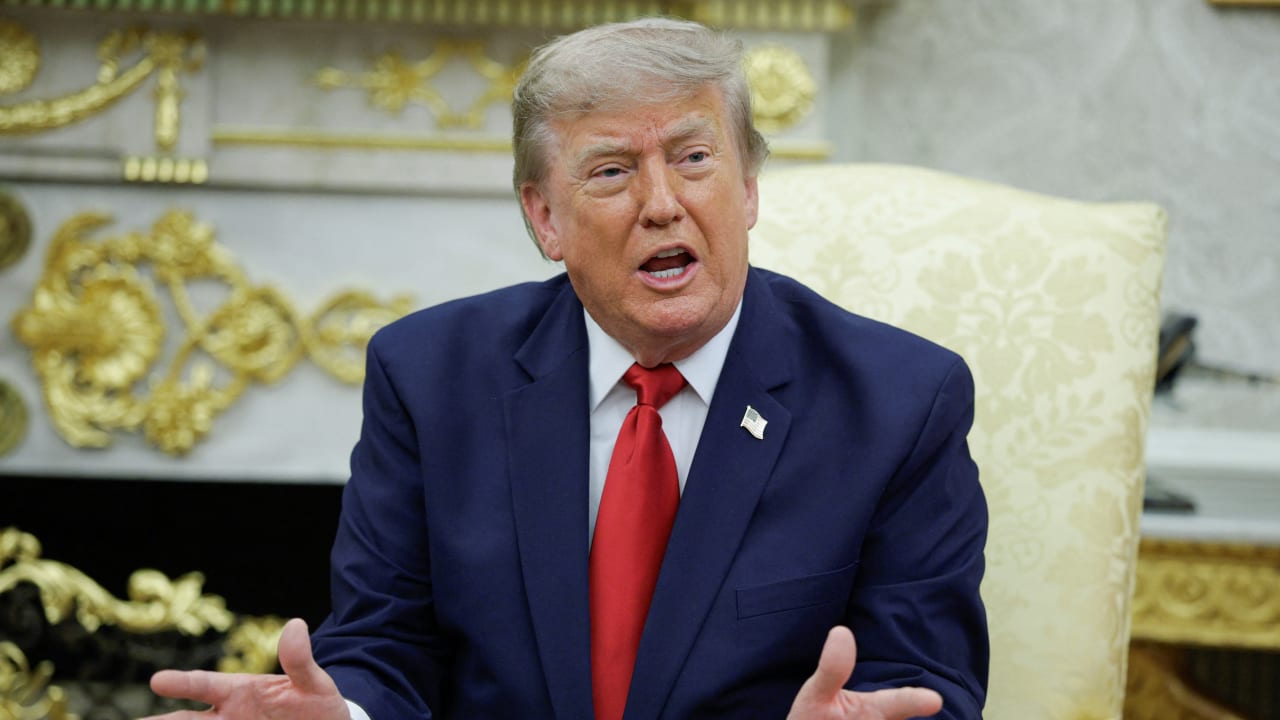

WASHINGTON — Donald Trump announced Tuesday that the United States would destroy a bridge or power plant inside Iran for every Iranian attack on commercial vessels in the Strait of Hormuz, introducing a specific infrastructure-for-ship retaliatory formula as the two countries’ conflict entered its third week.
The threat, posted on Truth Social in capital letters, moved beyond the ongoing US military campaign against Iranian military assets. “Any time the Islamic Republic of Iran shoots at a ship in the Strait of Hormuz, whether it be by Missile, Rocket, Drone, or any other device or weapon, the United States will bomb and destroy ONE BRIDGE OR POWER PLANT, including those located next to, or in, the capital city of Tehran,” Trump wrote, according to Anadolu Agency.
The Strait of Hormuz is the narrow waterway connecting the Persian Gulf to the Arabian Sea, through which roughly 17 million barrels of oil pass daily; about 20 percent of global traded oil and gas moves through the passage, according to the US Energy Information Administration. Iran’s Revolutionary Guard Corps declared the strait closed to vessels lacking Iranian clearance earlier this month and has carried out intermittent attacks on tankers attempting transit since. Several ships have sustained damage; at least one crew member has been reported killed in the strikes.
What made Tuesday’s announcement distinct was its framing rather than a specific new attack. Two Iranian vessels had fired warning shots at a Liberian-flagged tanker on Monday, according to US Navy accounts, but the tanker continued its passage undamaged. Iranian media described the same incident differently, saying the tanker had entered Iranian territorial waters without authorization. Trump’s Truth Social post did not reference any specific vessel or incident, presenting the formula as a standing deterrence mechanism rather than a declared response.
Secretary of State Marco Rubio, speaking separately on Tuesday, offered measured endorsement. The United States remained open to negotiations, Rubio said, but when commitments were not kept “there will be consequences.” He did not specify what threshold of Iranian action would trigger execution of the formula or who would authorize a response. That ambiguity, whether deliberate or not, left the threat’s credibility dependent on Iranian assessment of US resolve rather than a defined red line.
Trump’s formula arrived as the US military was completing its eleventh consecutive night of strikes on Iranian military installations, a campaign targeting air defense systems, missile storage, and fuel depots across multiple Iranian provinces. Defense Secretary Pete Hegseth on Tuesday cited $37.5 billion spent on the conflict to date, the first official cost figure the administration had attached to the operation. The infrastructure threat differs from that ongoing campaign in its explicit conditionality: where the military strikes have pursued Iranian military capacity as a sustained war operation, the new formula would penalize civilian infrastructure as a deterrent tied specifically to maritime behavior.
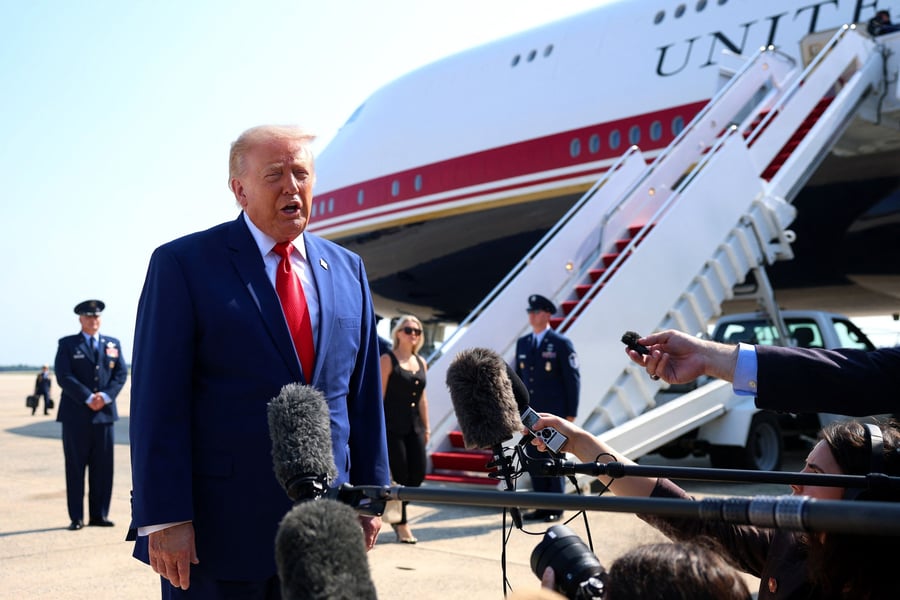
Homeland Security Advisor Stephen Miller offered a sharper endorsement. Trump was “the only American president who has had the courage, and the foresight” to confront Iran directly, Miller said, adding that the Iranian regime had been “eviscerated militarily, financially, politically.” The framing offered no indication of what infrastructure Iran still retained that could be credibly threatened, or which targets the administration had already designated.
The United Nations registered concern. Secretary-General Antonio Guterres characterized the targeting of civilian infrastructure, including bridges and power plants, as “unacceptable under international humanitarian law,” without specifically addressing Trump’s formulation. The statement reflected broader UN alarm about the trajectory of the US-Iran confrontation at a moment when diplomatic channels remained effectively closed.
Iran responded within hours. State media reported that Iranian authorities had threatened reciprocal attacks on regional energy infrastructure, a formulation that covers the refineries, export terminals, and gas processing facilities supplying the bulk of Gulf state revenues without naming specific targets. Bahrain, which hosts the US Navy’s Fifth Fleet, separately reported intercepting Iranian aerial attacks on its territory Tuesday, the latest in a series of strikes on Gulf states hosting American forces.
The exchange follows the pattern the conflict has traced for three weeks: each US action producing an Iranian counter-escalation, with diplomatic efforts repeatedly failing to interrupt the cycle. A Pakistani-mediated peace framework reached in June produced a temporary lull, but hostilities resumed in early July and have intensified since. The Houthi naval blockade that forced Saudi crude tankers to reverse course in the Red Sea on Tuesday added another pressure point to the same regional oil supply chain, threatening 6 million barrels of daily crude traffic to Asia.
The Trump infrastructure formula raises questions Washington has not publicly answered. Iran has maintained that its actions in the strait constitute defensive measures against an American military campaign conducted on Iranian soil; the US has characterized them as attacks on international shipping. How the administration would determine that a triggering event had occurred, and on what timeline it would respond, remained undefined in Tuesday’s posting. No official elaborated on whether a warning shot, a disabling strike, or a sinking would each qualify equally.
Iran has claimed to maintain ballistic missiles and naval assets capable of striking Gulf energy infrastructure, including refineries and liquefied natural gas facilities in Saudi Arabia, Qatar, and the United Arab Emirates. An Iranian strike on any of those targets, executed in response to a US infrastructure attack under Trump’s formula, could send global energy prices sharply higher. Brent crude was trading around $94 per barrel on Tuesday, already elevated after days of Hormuz disruptions and the Saudi crude diversions in the Red Sea.
Whether the formula will deter further Iranian strikes on shipping or accelerate them remains unresolved. Iranian decision-makers face a calculation: accept constraints on Hormuz operations under the threat of losing bridges and power plants, or test the formula’s credibility and invite the consequences. Tehran has not publicly indicated which way it leans. The Hormuz corridor stays open to tankers sailing under US Navy escort, but that protection comes without a formal commitment of continuous coverage.